Why Iran still haunts Western strategy
By Xavier Villar
MADRID – Ghosts are terrifying not simply because they are powerful, but because they endure. They unsettle precisely because they refuse resolution. A ghost is defined by contradiction, a presence that signifies an absence, something that should no longer be there yet persists all the same.
In the Western political imagination, the Islamic Republic of Iran has long occupied this spectral register. It is treated as a remnant of a past that should have expired, a political form defined less by what it is than by what it is presumed to lack: liberalism, secular modernity, strategic compliance. Its survival, in defiance of decades of confident forecasts predicting collapse, is what makes it so disquieting.
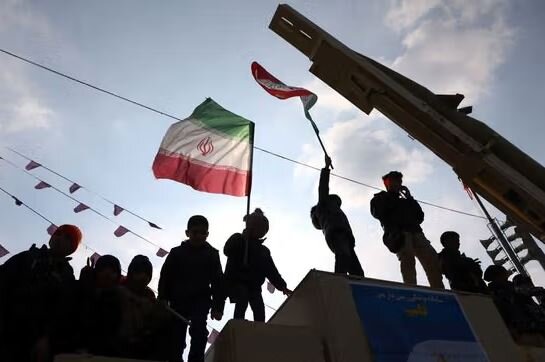
To engage with Iran is therefore to engage with a particular ontology, one that oscillates uneasily between recognition and denial. In Washington and across much of Europe, Iran has been conceptually relegated to history. The familiar signifiers are well rehearsed: clerical rule, revolutionary guards, anti-American slogans. The visual language is equally fixed, from murals of martyrs to ballistic missiles and veiling. These elements are rarely treated as components of a living political system that adapts, recalibrates, and learns. Instead, they are curated as relics, artefacts of an ideological museum devoted to political forms deemed archaic, pre-modern, and ultimately unsustainable.
This spectral framing performs an important psychological function. By classifying Iran as a ghost from a superseded era, Western actors reassure themselves that its influence is temporary and its resistance futile. A ghost, after all, cannot shape the future. It can only linger until it fades. The problem for them, however, is that Iran has shown no inclination to fade. On the contrary, it continues to act, negotiate, deter, and endure. Its persistence exposes the fragility of the narrative that sought to consign it to the past.
The talks currently unfolding in Muscat confront this contradiction directly. Initial reporting, particularly from Iranian media, suggests that negotiations are continuing and may do so for some time. This modest claim, that the talks go on, is in fact the source of the unease. A ghost that merely appears can be dismissed as illusion or nostalgia. A ghost that negotiates, that demonstrates strategic patience, institutional memory, and a disciplined calculus of interests, disrupts the entire logic of spectral dismissal. It forces a reckoning with the possibility that what was declared obsolete is in fact structurally resilient.
For Washington, this presents a deep conceptual challenge. For decades, U.S. policy has oscillated between coercion and conditional engagement, all underwritten by the assumption that the Islamic Republic is a temporary aberration. Sanctions, isolation, and pressure were not merely tools to change behavior, but instruments designed to accelerate an expected end. Negotiation, when it occurs, is often framed as a bridge to normalization, a pathway through which Iran might be coaxed back into the realm of “acceptable” statehood, meaning alignment with the norms of the liberal international order.
This approach misreads the nature of the Iranian polity. Iran’s system is not defined by an absence of modernity, but by a distinct and carefully defended synthesis of sovereignty, religious authority, and revolutionary legitimacy. It is a state that rejects certain premises of modern liberal governance, not because it is incapable of adopting them, but because doing so would undermine the ideological foundations upon which its authority rests. The expectation that negotiation should culminate in Iran’s transformation rather than accommodation ensures perpetual disappointment.
From Tehran’s perspective, the negotiations are not evidence of weakness or spectral decline. They are confirmation of presence. The language of haunting imposed from outside is sometimes embraced, sometimes ignored, but rarely internalized. To be labelled an anomaly is, in a sense, to have succeeded in resisting assimilation. Iran’s missile program, its regional alliances, and its nuclear capabilities are condemned by the West as destabilizing residues of an obsolete worldview. Within Iran’s strategic culture, they are understood as the material conditions of survival in a hostile environment. They are not symbols of absence, but of substance.
To come to Muscat is therefore not to seek absolution or reintegration into a system designed elsewhere. It is to assert that Iran must be dealt with as it is, not as others wish it to be. Negotiation is less an admission of vulnerability than a demand for recognition. Recognition not in a moral sense, but in a strategic one. Acknowledgement that Iran’s security concerns, deterrence logic, and regional role cannot be negotiated away by appeals to an imagined post-revolutionary future.
The continuation of talks thus represents more than a diplomatic process. It is a slow collision between two incompatible narratives. On one side, a spectral account that insists Iran is an anachronism awaiting resolution. On the other, a state that continues to operate with coherence, adaptability, and a clear sense of its red lines. Each round of negotiation erodes the plausibility of the first narrative. Each technical discussion, each procedural compromise, underscores the reality that Iran is not negotiating from the margins of history, but from within it.
This does not mean the talks are likely to succeed in the near term. The gaps remain wide. Trust is minimal. Yet the significance of the process lies less in its immediate outcomes than in what its persistence reveals. The West is gradually being forced to confront a reality it has long resisted. The Islamic Republic is not a temporary disturbance in the international system. It is a durable political actor with its own internal logic and strategic horizon.
The true discomfort of the ghost, in the end, lies not in its otherness but in its demands. The ghost does not exist to terrify. It exists to insist. It wants recognition, restitution, and a place in the story that excluded it. Iran’s sustained engagement in venues such as Oman expresses a similar insistence. It asks not for approval, but for acknowledgment of fact. That it exists. That it endures. That it will continue to shape the environment around it.
Whether these channels will eventually produce a breakthrough remains uncertain. What is clearer is that the haunting will not end through denial. The spectra cannot be wished away, sanctioned into irrelevance, or rhetorically buried. It must be confronted as a permanent feature of the geopolitical landscape. The negotiations continue not because the ghost is disappearing, but because those who once denied its existence are learning to speak to it. Coexistence, rather than exorcism, may be the only path forward.
Leave a Comment