Larijani visits Doha and Muscat ahead of second round of nuclear talks
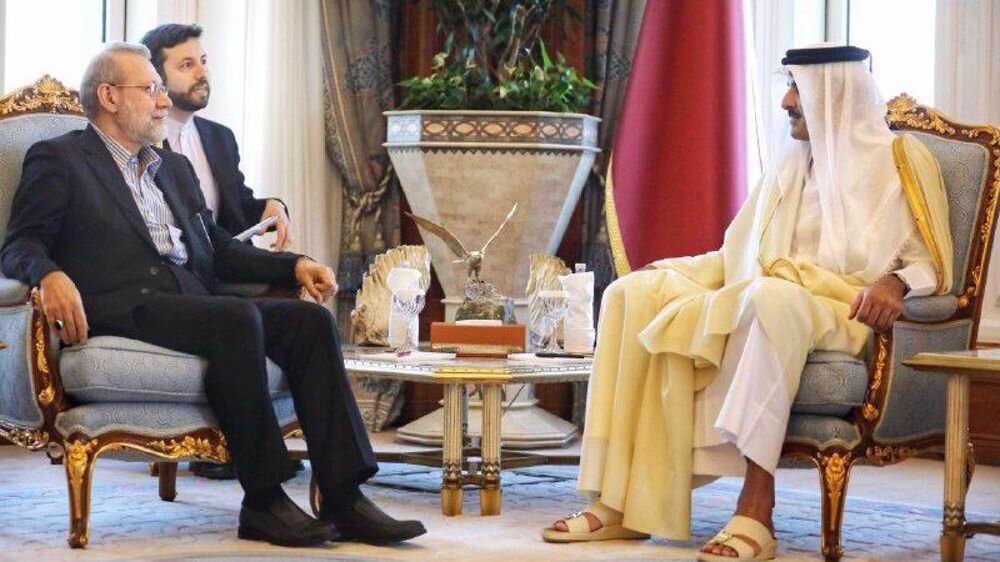
TEHRAN – Ali Larijani, Secretary of Iran’s Supreme National Security Council, held high-level talks in Doha on Wednesday as Tehran continues an intense round of regional consultations amid ongoing indirect negotiations with the United States.
Larijani met with Qatar’s Emir and Prime Minister and Foreign Minister, Mohammed bin Abdulrahman Al Thani, at the Amiri Diwan, where the two sides discussed expanding bilateral economic cooperation and maintaining close coordination on regional developments. With nuclear talks and the issue of sanctions relief underway, Larijani and the Qatari foreign minister also exchanged views on the latest developments in the negotiations.
Iranian sources said that following these meetings, a “separate and significant discussion” began in Doha, focused on recent diplomatic movements related to the nuclear file. Larijani also met with a number of Hamas leaders during his stay in Qatar.
Larijani travelled to Doha after a short stay in Muscat as part of Tehran’s regular consultations with Oman, a country that has played a central mediating role in Iran-U.S. talks for more than a decade. He arrived in the Omani capital on Tuesday morning local time and was received by General Sultan bin Mohammed al-Numani, Oman’s Minister of the Royal Office.
During his visit, Larijani held a three-hour meeting with Sultan Haitham bin Tariq, which sources close to the Iranian delegation described as positive and constructive. He also met with Oman’s Foreign Minister, Badr bin Hamad al-Busaidi, to discuss regional and international developments, as well as the latest stage of nuclear talks between Tehran and Washington.
The visit came as preparations continue for further rounds of negotiations, following a new session held in Muscat on February 6. Both Iran and the United States described that round as a good start. Speaking afterward, Iranian Foreign Minister Abbas Araghchi said Iran’s positions and red lines were clearly conveyed, while stressing that Tehran remains cautious due to Washington’s long record of bad faith.
Larijani’s trip also took place against a backdrop of heightened tensions, including a significant U.S. military buildup near Iran and repeated threats by U.S. President Donald Trump. In remarks shared on social media during his stay in Oman, Larijani warned Americans against the “destructive role of the Zionists,” ahead of Israeli Prime Minister Benjamin Netanyahu’s planned visit to Washington.
“Americans should think wisely and not allow Netanyahu, through posturing, to suggest that he is going to dictate the framework of nuclear negotiations,” Larijani said.
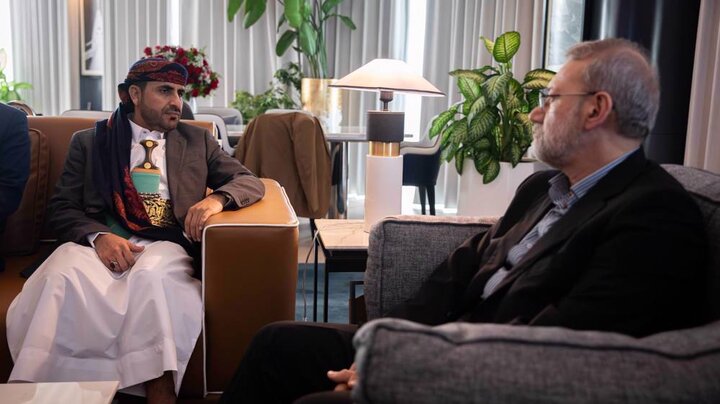
While in Muscat, Larijani also met with Mohammed Abdul-Salam, head of Yemen’s negotiating delegation and spokesman for the Ansarullah movement. Abdul-Salam congratulated Iran on the 47th anniversary of the victory of the Islamic Revolution and praised what he described as the country’s resilience and growing strength under the leadership of Leader of the Islamic Revolution Ayatollah Seyyed Ali Khamenei.
He said that after last year’s 12-day war and recent domestic unrest engineered by the U.S. and Israel, Iran had emerged stronger and more determined. Abdul-Salam warned that any aggression against Iran would have consequences extending far beyond West Asia, a position Ansarullah has repeatedly emphasized along with other Iranian allies in the region in recent weeks.
Iranian officials have said that diplomacy cannot proceed under threat, but have also made clear that Tehran remains prepared for talks as long as its security and core interests are respected. In an interview with Russia Today this week, Araghchi said Iran does not fully trust the United States, but that an agreement remains possible if Washington chooses a realistic path.
Larijani’s back-to-back visits to Qatar and Oman came as Tehran has repeatedly stressed over the years that regional diplomacy is the most effective way to manage tensions. In the past, European states played the role of intermediaries between Iran and the United States.
Leave a Comment