US aggression against Iran triggers new currency era
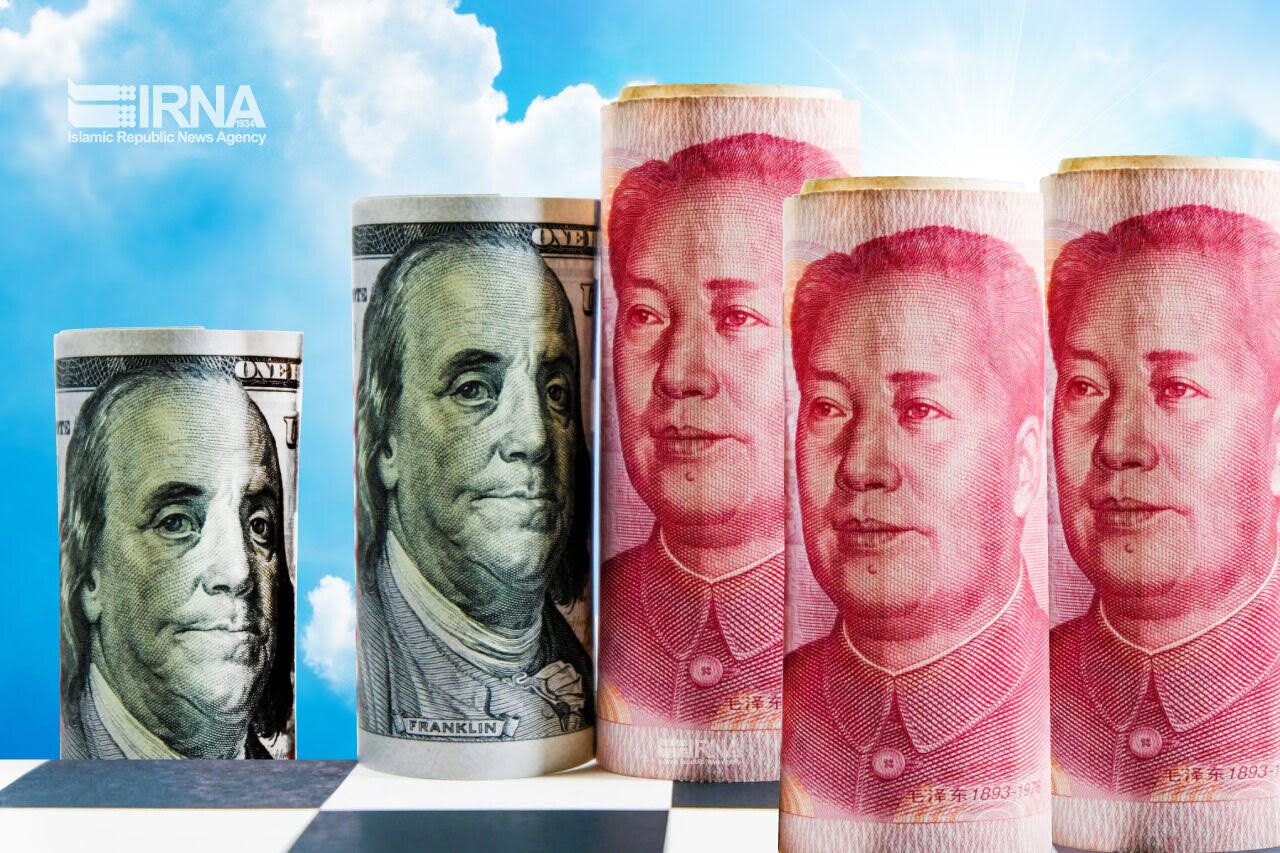
TEHRAN- For decades, America sent the world a clear message: "Accept the dollar, or else." The dollar was not just a currency; it was a weapon. Anyone who crossed Washington's red lines was either expelled from the global banking system, like Russia, or sanctioned, like Iran.
According to an IRNA report, these days, following the aggression of the United States and the Zionist regime against Iran, all economic foundations and assumptions in the world are changing. What has happened in recent weeks, coinciding with Iran's resistance against American bullying, is not a passing shock but the bell tolling for the end of an era – an era defined by America's simultaneous economic and military dominance and its unilateralism.
Donald Trump, the US president who thought he could bring the world to its knees with media rhetoric and military threats, now sees the situation reversed. His policy of maximum pressure, rather than weakening Iran, has narrowed the field for the US dollar. Today, it is not just Iran, China, and Russia fleeing the dollar; even America's traditional allies are packing their bags from Washington's sinking ship.
Kashyap Sriram, a US capital market analyst, reacting to the recent statement by the US Treasury Secretary regarding various countries' requests to create currency swap lines with the dollar, says: "Goodbye to the dollar's unusual behavior in the global economy – and this is no joke; it is a frightening prediction for the future of the West." He adds: "Until yesterday, whenever a crisis occurred in the world, capital would flee toward the dollar because it was known as a 'safe haven.' But now, due to the misguided policies of the Federal Reserve and the US Treasury, the opposite has happened. Instead of making the dollar valuable, America is undermining its value and credibility through its actions. The result? No one views or holds the dollar as treasure or capital. Hence, the dollar can no longer serve as a source of security for the future."
Financial and monetary market observers now say that with the US and Israeli military aggression against Iran, the death knell for the dollar has also sounded. This banknote, once the most valuable currency, is gradually becoming one that no one trusts to preserve value. This is bad news for Americans but excellent news for countries like Iran, China, and other emerging economies.
The Guardian newspaper writes in this regard: "Trump's goal in starting the war was to isolate and weaken Iran. But in practice, this war has transformed Iran from a regional power into a decisive player in the global economy. Iran now has a weight in international equations it never had before the war. Iran has managed to use this crisis to strengthen its ties with non-Western powers. The Strait of Hormuz and the use of the yuan have turned Iran into the beating heart of anti-dollar strategies."
The Economist, in one of its reports, writes: "Chinese leaders are far more optimistic than before about the yuan's future. But what is the reason for this optimism? Crisis. Just as Trump was threatening and tensions escalated, something strange happened in the Chinese payment system called CIPS." The report continues: "Let's speak with numbers: The average daily transactions of CIPS last year were 680 billion yuan. In March 2026, this jumped significantly to 920 billion yuan. Furthermore, on April 2, 2026, it reached 1.2 trillion yuan in a single day. With this dramatic surge in the yuan, the countdown to the end of the dollar has officially begun."
The Economist adds: "The important point about these numbers is that this surge in yuan trade is not random. It coincides with Iran's resistance in the Strait of Hormuz and an all-out economic war, and we must consider Iran's key role in this process. Iran is requiring passing ships to prepay transit fees through the Strait of Hormuz using digital currencies (cryptocurrencies) or the Chinese yuan."
According to this economic weekly, "Iran has set up a modern toll station in the world's most important oil strait. But instead of the dollar, it accepts the yuan. This is a revolution in the global financial system. Iran's national currency, the rial, is not directly traded against the dollar; rather, it goes through the yuan channel. This means America has lost its sole leverage over Iran's economy."
Of course, it should not be overlooked that Iran has long been selling its oil in currencies other than the dollar, and since China is Iran's largest oil buyer, it is said that currency settlements are conducted in yuan.
Meanwhile, the uncertain future of Persian Gulf economies following America's war against Iran has led to some capital flight from the region. According to Chinese banks' reports, cross-border purchases and sales of bonds, stocks, and other investments in March were 40 percent higher than the average monthly figure for last year. Whatever the reason, this fact is undeniable: the yuan's share of China's total international transactions (including goods, services, and assets) rose to over 56 percent in March.
Kyle Shostak, a US investment firm manager, told RIA Novosti: "US military aggression against Iran may drive the global economy into a prolonged recession. Why? Because the world is no longer like 1990. If America attacked before, others were forced to go along. But now China, Russia, and even Asian and African countries have found alternatives to the dollar and the American system." According to him, a prolonged war with Iran, besides causing astronomical oil prices, will cause capital flight from Western markets to the East – a flight already visible in CIPS data, with $712 billion flowing into Chinese markets in March.
This trend is such that even Goldman Sachs, a famous American investment bank, has been forced to revise its forecasts. It raised its oil price forecast for the last quarter of this year to $90 for Brent and $83 for West Texas Intermediate, whereas it had previously announced $80 and $75 respectively. The reason for this change is clear: the unprecedented nature of the oil supply shock. Simply put, oil has become scarce, which for some countries and investment banks means a disaster in the history of oil and economics. This means US sanctions have not removed Iranian oil from the market but have instead enabled Iran to manage its oil with greater power.
It seems the main loser of this crisis is not Iran but rather America itself and those dwarf nations that saw America as their savior – those who believed America was the supreme power and always right. These countries are now being buried under the rubble of Trump's rhetoric. With his threatening language, Trump has dragged the dollar from its peak to its nadir. He has shown that the greatest enemy of the dollar is American politicians themselves, not China or Iran. When you threaten to attack a country, that country has no choice but to separate its financial system from yours. Iran did this, and now China, Russia, and half the world are following the same path. America thought that encircling Iran would kill our economy, but it was unaware that it was wrapping the dollar's noose around its own neck.
EF/MA
Leave a Comment