Vice-presidency for science details supports for space industry development
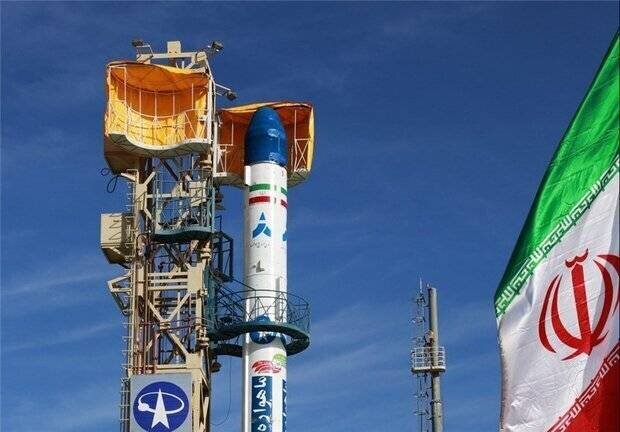
TEHRAN – The Vice-presidency for Science, Technology, and Knowledge-Based Economy has announced plans to support the private sector’s knowledge-based companies active in the space industry to secure their supply chain.
The plans mainly focus on the development of specialized human resources in the space field, the expansion of infrastructures, the development of university technology centers to be turned into knowledge-based companies, the enhancement of intersectoral collaboration, and the design and construction of satellites by knowledge-based companies formed in universities.
The supports come in the form of the first production program, tax credits, grants and facilities, and support for postgraduate theses through the National Science Foundation’s call, which has so far led to the launch of four satellites and the advancement of research activities for four other satellites.
In January, Iran announced the successful orbital deployment and initial testing of three new satellites. According to a statement from the Iran Space Agency, the Zafar, Paya, and Kowsar satellites are now in a multi-week orbital testing phase, having completed their first series of in-orbit checks with an overall favorable technical status.
The agency reported that the evaluation and stabilization of the satellites’ subsystems are proceeding as planned. While all three entered subsystem performance reviews with satisfactory conditions, the Paya satellite required special attention due to an issue during its orbital injection by the launch vehicle. Precise corrective measures were taken to resolve this problem.
Testing milestones have already been achieved. Paya has successfully completed assessments of its power, thermal management, communications, positioning, and stabilization systems, with imaging subsystem tests now ongoing. Kowsar has likewise passed tests for power, thermal control, communications, and positioning, moving on to attitude control checks. Zafar has finished initial evaluations of its power, thermal, positioning, and communication systems, with complementary tests in progress and its rotational stability confirmed.
Upon completion of the current subsystem tests, the satellites will advance to phases involving attitude control and data transmission operations. The agency emphasized that this in-orbit testing is a meticulous, step-by-step process conducted under real space conditions. Summaries of the technical procedures and results will be gradually released to industry specialists and interested parties.
MT/MG
Leave a Comment