Gilan Rural Heritage Museum: a window to culture and life of ancestors
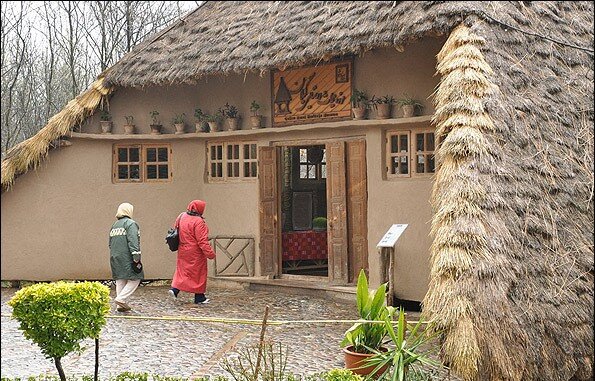
TEHRAN--The Rural Heritage Museum, nestled in the lush forests of Gilan, is a window to the simple and authentic life of rural people of this land in the past century.
According to Miras Aria, the museum was founded after the devastating Roudbar earthquake in 1990 with the aim of recognizing the identity and culture of this land with the great efforts of Mahmoud Taleghani, a prominent professor at Iranian and French universities, who is today called the ‘Guardian of Rural Heritage’ in recognition of his efforts. The complex has currently become one of the most prominent and most visited tourist attractions in Gilan province.
The Rural Heritage Museum, in the heart of the lush forests of Saravan, Gilan, was built by lovers of preserving the culture and knowledge of our ancestors. By artistically reconstructing the rural life of the past century in this northern land, the complex brings a pure experience of living away from the hustle and bustle of urbanization.
Here, the sounds of local music, ancient rituals from baking traditional bread to creating handicrafts, and the taste of local cuisine, along with rhythmic movements, singing, and local games, create moments full of joy and authenticity for visitors.
After a journey along winding roads and over rice fields and rushing rivers, the Gilan Rural Heritage Museum offers tourists a unique gift: the pleasure of living in moments from a century ago, free from the hustle and bustle of the city, which brings a deep sense of peace. Those who have tasted the pure taste of rural life will never forget its sweet memory.
Walking through the museum makes one wonder what has happened to the pure and pure days of the past in the whirlpool of technology and industry. The new generation also touches the original and unadulterated meaning of the village in this space, with a joy that brightens their souls.
It is enough to describe that several structures from years ago, derived from the different architecture of the well-intentioned Gilani villagers, were transported to the forests of Saravan by talented graduates with a love for the culture, rituals, and life of their predecessors, and are still being recreated in the style of the nine villages with the same architecture and life in the same style, vividly depicted in front of the eyes of tourists, and this is still being done.
On a gravel path through the forest trees, guided by wooden signs, you go to the foot of the mountain and at the end, a house that spreads the smell of smoke and firewood and the pure smell of the village in your heart and soul.
“Museums can be considered the main destination of trips today,” is the view of some tourism planning experts. They believe that considering the cultural and historical richness of Iran, creating a large and world-class museum can make the country stand out in the international arena.
Rural tourism is considered one of the most valuable forms of sustainable tourism.
Babak Alidoust, who holds a Ph.D. in rural tourism, emphasized that rural tourism not only contributes to economic prosperity, but also preserves and strengthens local culture and identity. “In this type of tourism, travelers become familiar with the lifestyle, customs, traditional architecture, and local production methods of villages, which in itself is a factor in preserving the tangible and intangible rural heritage.”
Regarding Gilan Rural Heritage Museum, he said: “This eco-museum is an outstanding example in Iran that, by reconstructing the rural life of the last century, has not only created a unique attraction for tourists, but also provided a space for education and transmission of the original Gilani culture to the current and future generations. By reviving the rural identity of Gilan, this museum is an inspiring model for development of rural tourism in other parts of the country.”
Alidoust clarified that spiritual or intangible cultural heritage means all actions, methods of presentation, manifestations and developments, knowledge, skills, tools, handicrafts and cultural spaces related to them, which are one of the important components of national identity.
He continued: “Today, in Gilan Rural Heritage Museum, in addition to the arrangement of rural life of the past hundred years, which is registered in the list of national monuments, rituals, and local games, local cuisines and traditional arts have also been revived.”
The area of the museum site, which is located in the Saravan Forest Park, is 255 hectares; based on the results of studies and the cultural and architectural diversity of the rural areas of Gilan, the cultural-architectural area of Gilan was classified into nine sub-areas, regardless of national and political divisions.
Each of the above sub-areas has been reconstructed in form of a village consisting of authentic and representative architectural types of that area on the museum site, which is located in the central 45 hectares of the museum site.
So far, 28 residential complexes (more than 80 structures) have been reconstructed in the museum, each complex including a house, ancillary buildings (rice storehouse, stable and chicken coop), and a vegetable and summer garden. In addition to these complexes, the entrance building of the technical and logistics office building with administrative use, the researchers' house with residential use, a mosque, a bazaar, three coffee houses, two public toilets, a charcoal kiln, an information booth, a greenhouse, the building of the conservation unit and the unit's guard room, a guard building, a wood warehouse, a warehouse of materials and objects, a carpentry workshop, a blacksmith workshop, a community hall, a school, and a monument to the heroes of Gilan have been built in the museum, of which 35 buildings have been registered in the list of national monuments so far, and the grounds and areas of the museum have also been registered.
According to the head of Gilan Cultural Heritage, Tourism and Handicrafts Department, the establishment of the museum is one of the few efforts that aimed to record, document and reconstruct part of the material and spiritual heritage of the people of this land, which was created with the aim of protecting and preserving the cultural heritage -- rural architecture of Gilan.
The idea that resulted in the creation of Gilan Rural Heritage Museum was formed based on the need to know oneself and one's land; because, according to the founder of the museum, one of the ways to solve cultural and social problems is to reconcile the people of this land with their recent past, because through this, they not only become aware of the invaluable knowledge and technology of their ancestors, but also become familiar with their ethics, beliefs and values in the field of cultural issues.
KD
Leave a Comment