South Khorasan embroidery, a story from tree of life to auspicious knots
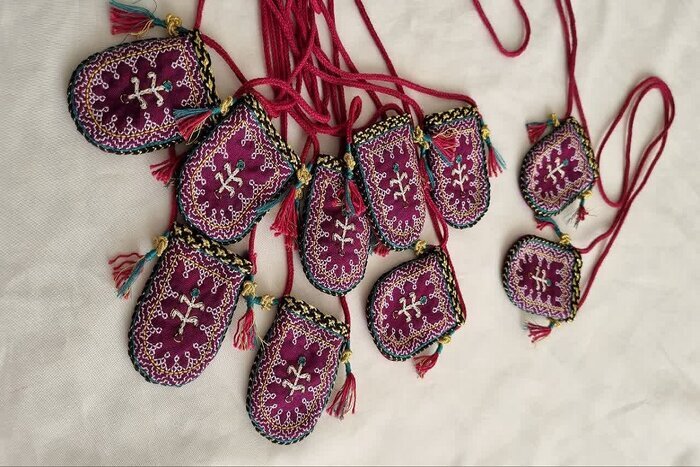
TEHRAN—A kind of traditional embroidery known as Chekan-duzi in the city of Seh Qaleh in South Khorasan province, has been telling the story of life, beliefs, and tastes of the desert people for more than 150 years with symbolic patterns such as the ‘tree of life’ and auspicious knots.
The revival of the forgotten art has not only preserved the spiritual heritage of the province, but also provided an opportunity for the economic empowerment of women and the introduction of the capacities of South Khorasan handicrafts.
According to IRNA, some 300 handicrafts have been identified in the country so far, of which 80 are in South Khorasan, and artisans are currently active in 25 fields and produce the products. Chekan-duzi, with its unique elegance and complexity, is a prominent and unique symbol of the art of eastern Iran.
In Chekan embroidery, women create symbolic designs on simple fabrics with colored threads and delicate stitches that depict the daily life, nature, and cultural traditions of the region. Each stitch is a link between the past and the present and tells a story of the creativity and skill of South Khorasan women.
This art not only has visual beauty, but also provides a huge potential for the development of handicrafts and employment for women.
With the continuous efforts and personal interest of South Khorasan artists, Chekan-duzi field was revived, and by bringing the art back to the daily life, a basis has been created for the economic empowerment of women and strengthening the regional handicraft market.
Zohreh Asadpour, a handicrafts expert in South Khorasan province, said that Chekan is a Turkish word meaning ‘to draw’, and in Chekan embroidery, the artist draws designs on the surface of simple fabrics with colored threads.
She added: “This art is performed with the help of a needle and sometimes a hook, and delicate stitches are placed on the surface of the fabric; in fact, Chekan-duzi is a type of embroidery or stitch embroidery that has been known as ‘Chekan-duzi bag’ since the past due to its special sewing method and the creation of various shapes.”
Asadpour clarified: “The sewing of these bags is more than 150 years old and their main fabric is ‘Vala’: a type of handmade silk fabric in South Khorasan that was produced by combining red, blue and purple colors.”
According to her, Chekan-duzi is mostly used in sewing bags with various uses, including tobacco bags, money, soap and other personal items, and has had a special place in the people's daily lives.
She stated: “The skill of making Chekan-duzi bags belonging to the city of Seh Qaleh in Sarayan county has been registered under the number 2226 on the country's Spiritual Heritage List; an action that can be an effective step in preserving and introducing this authentic art.”
Also, Seyyed Ahmad Barabadi, head of South Khorasan Cultural Heritage, Tourism and Handicrafts Department, emphasized the importance of Chekan embroidery and introduced it as a symbol of cultural identity and the handiwork of the women of Seh Qaleh city.
According to him, the registration of the skill of making Chekan embroidery bags in the country's Spiritual Heritage List is an important step in preserving and introducing the authentic art to future generations.
Barabadi continued: “The revival of this art not only helps preserve traditions, but also develops the economic capacities and employment of women. We have tried to pave the way for legal and educational support for artists with the national registration.”
He clarified: “Holding exhibitions, facilitating the presence of artists in domestic markets, and establishing connections with cultural and tourism centers are among our plans to introduce Chekan-duzi to a wider audience. The goal is to preserve the authenticity of the art while developing economic opportunities for women.”
KD
Leave a Comment