Iran, Uzbekistan discuss removing barriers to bilateral trade
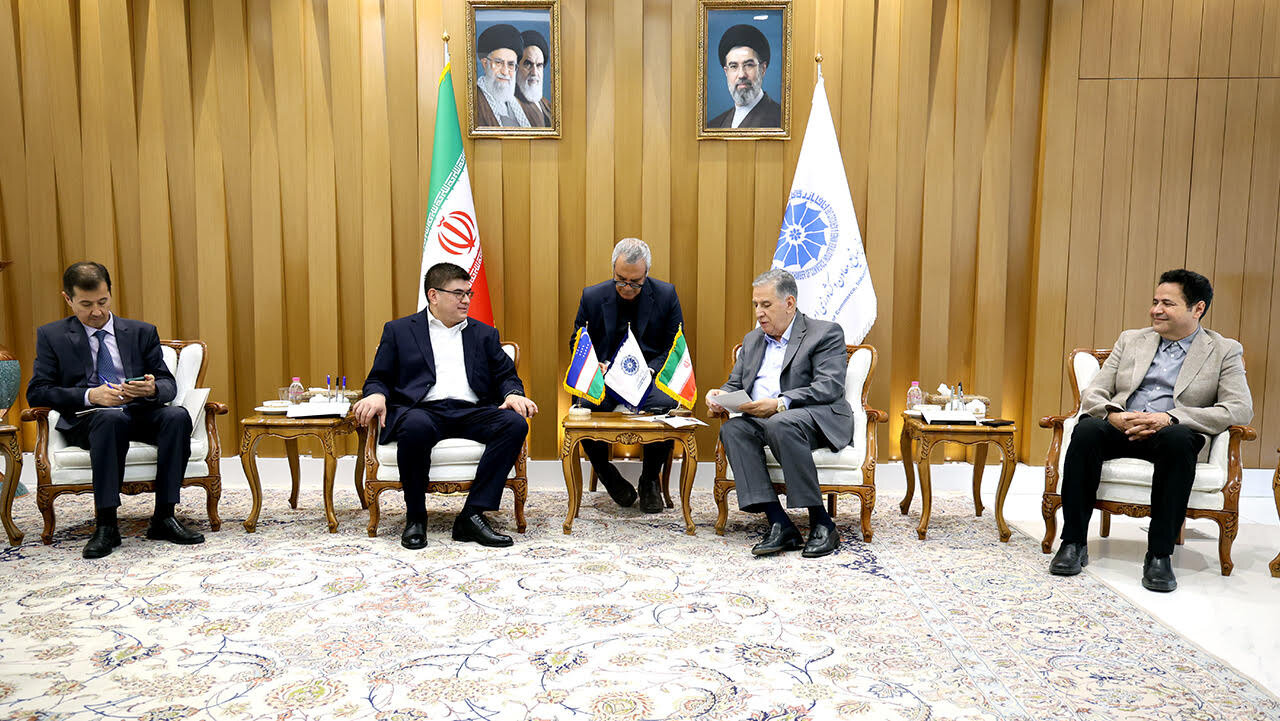
TEHRAN- Samad Hassanzadeh, the head of the Iran Chamber of Commerce, Industries, Mines and Agriculture, spoke at a meeting with the Uzbek ambassador in Tehran about the importance of facilitating and expediting the transit of Iranian goods through Uzbekistan. He stated: "One of the serious requests from the Uzbek side is the visa waiver and facilitation of travel between the two countries, especially for Iranian traders."
The Uzbek ambassador in Tehran visited the Iran Chamber to plan for holding an Iran-Uzbekistan business conference and to examine ways to expand bilateral relations to the level of $2 billion. He met with the head and vice-head of the Iran Chamber of Commerce, Industries, Mines and Agriculture.
At the beginning of the meeting, Samad Hassanzadeh, the head of the Iran Chamber, expressed gratitude for Uzbekistan's support and for sending medical and pharmaceutical packages to Iran during the period of the Ramadan War. He said: "The people and government of Iran will not forget this action."
He continued: "Currently, the volume of relations between Iran and Uzbekistan is not acceptable, and we must work together to increase exchanges between the two countries."
Hassanzadeh referred to the memorandum of understanding for strengthening comprehensive cooperation between Iran and Uzbekistan until 2027 and raising the volume of trade to $2 billion. He added: "Challenges have arisen due to the 12- and 40-day wars and the naval blockade of Iran. In this regard, we request that Uzbekistan take action to facilitate road transport and accelerate the transit route for Iranian goods through Uzbekistan."
The head of the Iran Chamber emphasized: "At the 17th Joint Iran-Uzbekistan Commission and the business conference, emphasis was placed on facilitating the issuance of visas for Iranian economic activists. It should be noted that the issuance of visas by Iran has been unilaterally abolished for the people of Uzbekistan. We hope that this process will also be implemented by the Uzbek government so that Iranian economic activists can travel to Uzbekistan with greater ease."
He pointed to Iran's capacities in the field of technical and engineering services and added: "The establishment of a joint investment fund between Iran and Uzbekistan has previously been agreed upon by both sides. On the other hand, economic activists from the two countries are currently negotiating 29 joint projects in the fields of technical and engineering services, water, and sewage. Given Iran's capabilities in these areas, we seek the necessary cooperation and support in establishing this fund. Iran is fully prepared in this regard."
Hassanzadeh stressed: "In the mining sector, technical and engineering services, agricultural machinery, building materials, and more, we are ready for greater cooperation. Also, in Iran, there are good capacities in the field of power plant equipment, supply of renewable energy infrastructure, petrochemical products, and more for developing cooperation, and we only need management and planning."
The head of the Iran Chamber also proposed the construction of textile factories, steel mills, and greenhouses within the framework of joint investment with the Uzbek side.
Possibility of Iran-Uzbekistan cooperation in hydroponic greenhouse production
Following this, Hossein Pir-Moazzen, the Vice-Head of the Iran Chamber, pointed to the possibility of joint cooperation in the agricultural sector between Iran and Uzbekistan. Speaking about the construction of greenhouses and offshore farming, and the agreements made in this regard between Iran and Uzbekistan, he said: "The two countries have made progress in the field of seed production and hydroponic greenhouse equipment, and specific seeds are being produced in both countries. In line with these productions, it is possible to enter into cooperation in the exchange of seeds, fertilizers, and necessary equipment."
Request to reduce transit tariffs for Uzbek trucks passing through Iran
Subsequently, Fariddin Nasriyev, the Uzbek ambassador in Tehran, spoke about the importance of resolving disputes based on international principles while preserving the interests of countries. He then discussed Uzbekistan's economic conditions and the strengthening of trade relations with target countries.
According to him, reaching $2 billion in trade is a target set between Iran and Uzbekistan, and we must plan to achieve it. In this regard, holding a business conference in Iran is one of the requests that can be effective for familiarizing economic activists of the two countries.
Nasriyev pointed to the importance of face-to-face meetings between economic activists of the two countries and added: "Cooperation and transport facilities between the two sides have been discussed. We are interested in having facilities in Bandar Abbas. Of course, there are some misunderstandings in this area between the two countries that need to be resolved. Last year, the number of Uzbek transit trucks passing through Iran was less than the number of Iranian trucks passing through Uzbekistan, because Iran's tariffs are high. Therefore, we request that these tariffs be reduced."
The Uzbek ambassador in Tehran declared readiness regarding the purchase of oil and its derivatives from Iran. He then spoke about agricultural issues and the possibility of exporting fibers, cotton yarn, and fabric to Iran.
He spoke about the export of textile products from Uzbekistan to other countries and said: "Many world-renowned brands in the fabric and textile sector have established factories in Uzbekistan and are carrying out extensive activities."
Regarding the production of agricultural products such as vegetables, fruits, and fresh produce, Nasriyev said: "Considering the harvest season, Iran and Uzbekistan are not competitors but rather complement each other."
The Uzbek ambassador in Tehran informed of the readiness of the Uzbek government to grant land in free trade zones to Iranian economic activists.
EF/MA
Leave a Comment