‘Iran's transport network has high resilience against crises’
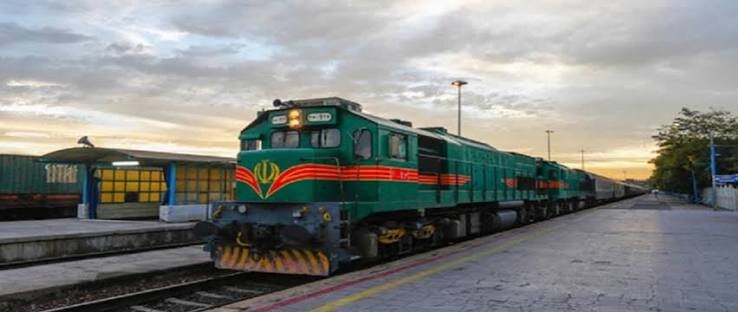
TEHRAN- The chairman of the board of the Rail Transport and Related Services Association, emphasizing the high resilience of the country's transport network, said that through managerial, policy, and software measures — without extensive infrastructure development — freight and passenger capacity on the existing rail and road network can be increased by up to 50 percent.
According to IRNA, Sobhan Nazari said on Monday at a press conference, referring to the importance of the transport network's resilience: The reality is that we are currently facing a kind of competition over resilience. The Persian Gulf is a major international waterway, and imposing restrictions on it does not pressure only Iran, because preventing the transfer of raw materials and goods needed by other countries also affects their economies.
Nazari added: The capacity of the country's rail and road transport network must be assessed on a scale beyond current conditions. Any amount of cargo that enters the country through ports must subsequently be moved via the land transport network, including roads and railways.
Referring to the freight transport trend over the past decade, he stated: The total performance of Iran's road and rail freight transport over the past 10 years has increased from about 211 billion ton-kilometers to 329 billion ton-kilometers. This growth has occurred while the country has faced sanctions and various economic pressures.
The chairman of the board of the Rail Transport and Related Services Association continued: Iran's economy, based on purchasing power parity, ranks among the world's largest economies, and the dimensions of the transport network and its performance are proportionate to this standing.
He said: Examining indicators such as the length of the rail and road network, the number of vehicles, wagons, and trucks shows that Iran ranks among the top 15 to 20 countries globally in many of these indicators, and the dimensions of the country's transport network have also expanded over the past two to three decades.
Nazari added: Although during crisis periods the performance of some sectors, including road transport, may experience temporary declines, the long-term trend of freight transport in the country has been upward. This indicates that Iran's transport network has considerable resilience.
Stating that Iran's road and rail networks rank among the world's largest in terms of length, he said: The multiplicity of road and rail border connections and access to various ports have made Iran one of the countries with high diversity of transport routes.
The chairman of the board of the Rail Transport and Related Services Association noted: Route diversity and network extensiveness have increased the country's resilience against disruptions. In some cases, the transport network's stability has even exceeded initial estimates, and this very feature has prevented the realization of the objectives of pressures imposed on the country.
He emphasized: From a transport perspective, Iran has the capacity to succeed in the resilience competition; however, the rail and road networks are not being utilized productively, and a significant portion of existing capacity remains unused.
Nazari said: Through a set of software, managerial, and policy measures — without the need for extensive development of new infrastructure — freight and passenger transport capacity on the existing network can be increased by up to 50 percent. Therefore, there is no serious concern regarding the network's physical capacity; the main issue is improving productivity and reforming its management approach.
The chairman of the board of the Rail Transport and Related Services Association said: Low productivity and quality in the transport sector is one of the fundamental issues of the country's economy, such that the productivity of trucks and freight wagons in Iran is estimated at about one-third to one-quarter of optimal global standards, and rail network productivity is estimated at about one-tenth to one-fifteenth of global standards.
Sobhan Nazari, referring to the gap between the transport industry and the media, added: The country's media are active in various economic and industrial fields, but transport industry managers and experts do not have extensive and strong connections with the media; therefore, the issues of this sector have not sufficiently become a public concern and demand.
Regarding wagon imports, he stated: Under current conditions, the import of freight and passenger wagons is prohibited, and locomotive imports are possible with certain conditions, but the view of transport industry activists is that at the present time, wagon ownership is more important than wagon manufacturing.
Nazari continued: The rail transport share of the country's freight transport is currently about 8 percent, while in several five-year development plans, it was targeted that the railway's share of freight transport would reach 30 percent and its share in passenger transport would reach 20 percent; however, these targets have not been achieved.
The chairman of the board of the Rail Transport and Related Services Association said: Fleet shortage is one of the reasons for these targets not being met, and the liberalization of wagon imports could meet part of the country's need, but this does not mean ignoring the capacity of domestic manufacturers.
He added: Domestic wagon manufacturers have sufficient capacity to meet the country's needs, and it is not fair to say that domestic production capacity does not exist. The main problem in recent years has been the lack of sufficient orders and the decline in investment attractiveness in the rail transport industry.
Nazari, referring to Article 12 of the Law on Removing Barriers to Competitive Production and Improving the Country's Financial System, stated: Under this article, the government had committed to pay the cost of wagon purchases over several years after the start of operation. Implementing this commitment could increase the internal rate of return on investment and reduce the payback period.
He continued: The government must increase investment attractiveness in this industry by utilizing the capacity of the Organization for Optimization and Strategic Management of Energy.
The chairman of the board of the Rail Transport and Related Services Association added: After creating economic attractiveness and attracting investors, a decision can be made about the need for wagon imports; because imports must be carried out within the framework of real market demand and after utilizing existing capacities.
Regarding the performance of funds and so-called "quasi-governmental" entities, he said: Some of these entities, although they do not have government shares, are still managed by government-style management, and their performance faces severe fluctuations.
Nazari added: In the past year, the subsidiary companies of the Railway Employees' Savings Fund were able to earn 130 percent more profit compared to the previous year. Part of this increase is due to inflation, and another part is due to better performance of the subsidiary companies; however, sharp profit growth in one year can be a sign of performance fluctuations in these entities and does not necessarily mean it will continue in subsequent years.
Referring to the experience of government and quasi-governmental enterprise management, he stated: Large-scale enterprise management always faces management risk. Even in the private sector, a change in CEO can severely affect a company's financial indicators and in some cases endanger the company's survival.
Nazari said: Nevertheless, experience has shown that the private economy is usually managed more nimbly, productively, and diligently. For this reason, it is suggested that funds and similar entities move away from direct enterprise management.
He explained: Instead of funds owning 90 or 100 percent of several enterprises, they can manage their capital in the form of a diversified portfolio of about 200 types of short-term and liquid investments, including company shares, securities, gold funds, and other financial instruments.
The chairman of the board of the Rail Transport and Related Services Association, referring to the impact of fuel prices on competition between rail and road transport, stated: The very low price of gasoline and diesel in Iran has artificially kept road freight and passenger transport costs low, such that passengers and cargo owners easily choose the road option when choosing between road and rail.
He continued: A study of the situation of 20 major and leading economies in the world shows that in many of these countries, about half of the cargo is moved through mass transport methods. In some countries, the combined share of rail and inland waterways in freight transport reaches about 80 percent; this is while Iran has no effective inland waterway, and the railway's share of the country's freight transport is currently about 8 percent.
Nazari, regarding the realization of fuel prices, said: If fuel price reform is carried out prudently, gradually, and accompanied by complementary transport policies, one of its short-term effects could be an increase in public transport capacity, especially rail transport. Of course, before implementing such a policy, public transport capacity must be genuinely developed so that more passenger wagons and buses are available to the public and the possibility of replacing personal car travel is provided.
He added: Another long-term effect of price reform is that other sectors of the economy will also act more rationally in their decision-making. For example, some steel factories have been built in areas that are neither close to water resources nor to a port, nor do they have a good position for export; nevertheless, due to the negligible share of fuel and transport costs in initial calculations, their poor location has appeared economically justifiable.
The chairman of the board of the Rail Transport and Related Services Association stated: The effects of such location decisions may remain on the country's economy for decades or even over a century; because on one hand, limited water resources must be allocated to these industries, and on the other hand, a large amount of fuel is consumed to transport their raw materials and products.
He said: The real price and opportunity cost of diesel are not considered in calculations related to industrial location, because transport costs constitute a very small share of their production costs. For example, in the financial statements of some Iranian steel companies, transport costs may be only about 2 to 2.5 percent of sales revenue, while this ratio is much higher in similar foreign companies.
Nazari added: Hidden subsidies for energy, water, and transport accumulate in the financial statements of some upstream and downstream industries and greatly increase their profit margins. In contrast, in many major industrial companies worldwide, annual profit margins are more limited, and the profitability difference among various industries is not as wide as in Iran.
He continued: The result of this situation is that some value chain links become highly profitable due to energy rents and hidden subsidies, but other links pay the cost; in other words, logistics, water resources, and the electricity grid are placed in the service of the profitability of industries whose location or consumption patterns are not optimal.
Nazari noted: Mandatory pricing and artificially keeping input prices low is not just a short-term issue, but can create incorrect decisions with multi-decade effects. Industrial location is one of those decisions whose error cannot be compensated in one or two years, and correcting its consequences may take several generations.
EF/MA
Leave a Comment