Technofascism is already here; Big Tech built it
Vienna-based philosopher Mark Coeckelbergh talks about Palantir’s fascist-leaning manifesto in interview with Tehran Times
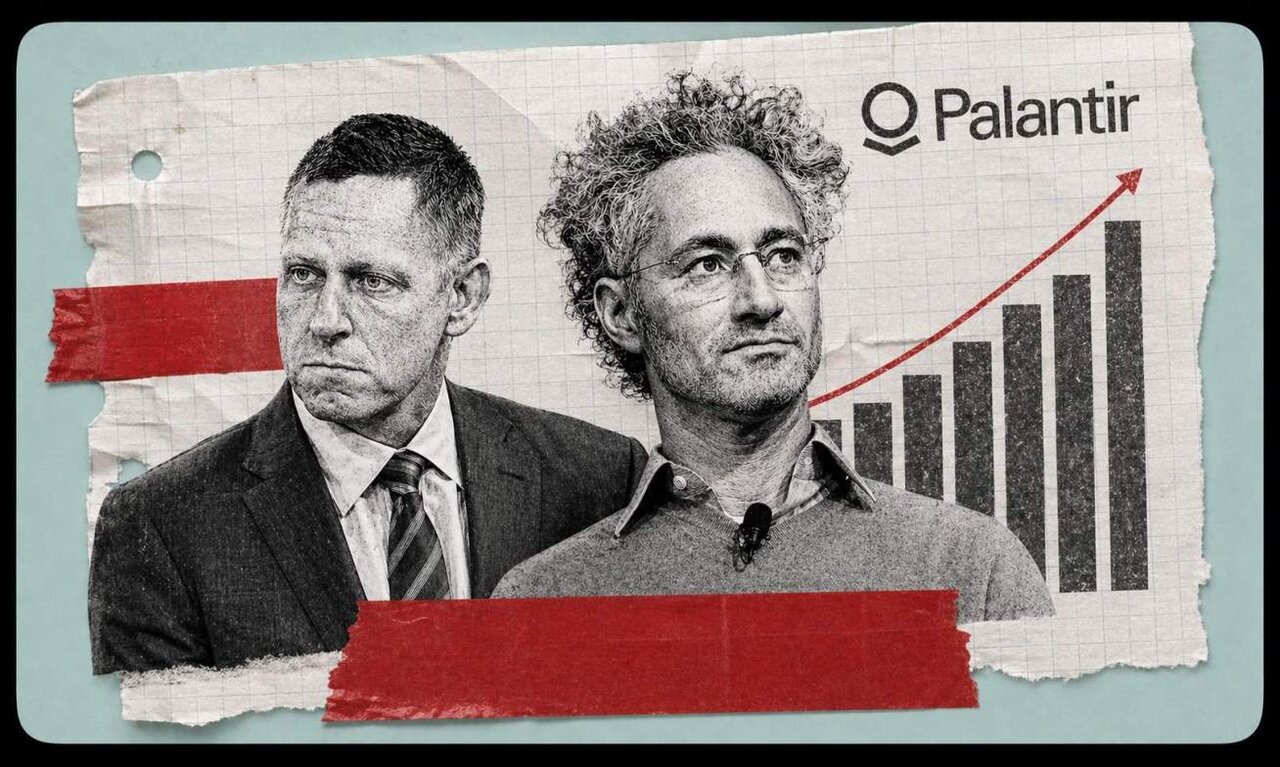
TEHRAN – Mark Coeckelbergh, Professor of Philosophy of Technology and Media at the University of Vienna and a member of the UN’s Independent International Scientific Panel on AI, has become one of the most prominent voices warning against the alliance between Big Tech and authoritarian politics.
His recent article “Technofascism: AI, Big Tech, and the New Authoritarianism” (AI & Society, 2026) examines how figures such as Peter Thiel and Palantir CEO Alex Karp are shaping a post-democratic worldview built on surveillance, militarization, and elite rule.
Coeckelbergh has also traced Karp’s intellectual shift from an early interest in the Frankfurt School to the reactionary politics now associated with Palantir, and has called for a “quiet revolution” toward digital humanism, grounded in education and a stronger democratic knowledge base.
Several of Coeckelbergh’s books have been translated into Persian, including “AI Ethics”, “The Political Philosophy of AI”, “Why AI Undermines Democracy and What To Do About It”, and “Communicative AI,” co-authored with David Gunkel.
Tehran Times spoke with Professor Coeckelbergh about technofascism, Palantir’s ideology, and the prospects for a more democratic, humane use of artificial intelligence.
Below is the full text of the interview:
For an audience hearing “technofascism” for the first time, how would you explain it in simple terms, and how is it different from ordinary authoritarianism?
Sometimes “fascism” is used very loosely, just as a way to say that certain views are undesirable. But I use it in a very specific academic sense, to describe how current technologies are leading to a new form of authoritarianism. The old kinds of authoritarianism we’ve seen historically — fascism, Nazism — had certain features, and we see some of them coming back today. But now, with AI and digital technologies, there is a new possibility for total surveillance and what’s called “algorithmic governmentality,” where ordinary citizens may not even know they are under surveillance, and where authoritarian governments have new tools to crack down on their own citizens.
There are also new myths. In the past, the Nazis had their own myths; now tech people fabricate new ones. These days they’re often based on a very specific kind of Christian thinking — Peter Thiel, for example, talks about the Antichrist, about a coming apocalypse, in the way many tech figures do. It’s a very particular use of religious narratives to support their own views.
We also see a strongly anti-democratic strand of thinking currently in Silicon Valley. I mentioned Peter Thiel — the Palantir manifesto, for instance, shows clear anti-democratic tendencies. Thiel doesn’t believe in democracy. There’s also a glorification of war, which is typically fascist, and figures like Curtis Yarvin, who argue against democracy and have links to people like Thiel.
So, I think a constellation is forming in which Big Tech has gained much more power, combined with these new narratives and myths. Classical fascism also had a form of corporatism — a close connection between big corporations and the state — and we see that again today. These big tech corporations essentially want a post-democratic, post-liberal model in which CEOs and other tech elites decide what happens — effectively taking over the state. Before that full takeover, there is the close collaboration we already see in the US between Big Tech and the current administration, the Trump administration.
You mentioned Peter Thiel. I’ve read your Medium article criticizing the Palantir manifesto and the views of Alex Karp and Peter Thiel. If Palantir, as you argue, is part of Thiel’s response to violence and disorder, what kind of society is he ultimately trying to build through technology?
He’s trying to build an authoritarian society led by a small elite — a tech elite that leads humanity into a new stage of technological development, one in which people like you and me have no say. For him, democracy is a problem — a bug — that needs to be solved through authoritarian means. I’m genuinely worried that people like Thiel currently have a great deal of influence, not only on the American government but increasingly on European governments too. We’re seeing a tendency toward a more authoritarian use of technology, toward militarization, and toward a more generally aggressive kind of politics that fits that picture.
Let’s talk about Alex Karp, CEO of Palantir. Karp came to Frankfurt intending to study with Jürgen Habermas and was influenced by that intellectual environment. Do you see a connection between that background and the thinker he has become?
I think Karp kept a keen interest in social and political theory, but he really moved from an environment that was more liberal and left-leaning toward an ideology that is clearly right-wing, reactionary, and potentially fascist. He changed direction there. I think the dangerous thing is that this ideology, as expressed, for example, in the Palantir manifesto, carries a lot of influence because Palantir sells its products to many Western governments. In this way, both the ideas and the underlying tendency toward mass surveillance and the oppression of people can spread. That poses a real risk for many countries around the world, including Western ones.
Palantir presents itself as a company serving ordinary people — the welder, the truck driver, the soldier. What do you think this image is meant to emphasize?
I think it wants to sell security technology in the broad sense, and military technology, and to do that it has developed an ideology that says you need more militarization and more control in order to gain security. So naturally it promotes these values — security above all — in order to sell its products and to wield influence, both in the US and elsewhere. This may appeal to many people, but they forget that the technology will be used against them in the first place.
Karp argues that democratic countries need technological superiority to compete with their rivals. Where do you draw the line between deterrence and an AI arms race?
The way he frames it — that we need to be better prepared and tougher militarily — rests on a worldview that divides the world into friends and enemies, which is itself a typical authoritarian and fascist way of thinking. He wants people to buy these products in order to make themselves stronger against their enemies, so to sell them, he paints a picture of a chaotic world where enemies could attack at any time.
The message to a country is: you’d better prepare and buy this kind of security and military technology to strengthen yourself. A fascist worldview includes the idea that you should try to be the strongest and defeat your enemies, and I think that’s how this ideology plays out here.
The AI arms race fits into that: for Karp and many others in the US, the Chinese, the Russians, and other powers are seen as enemies or potential enemies in that race, and whoever wins gains dominance. That’s the kind of world — one of clear friends and enemies, where you need to establish dominance — that he wants, and it’s the starting point of his approach for governments like that of the US.
I’ve read some of your other work, and if I’m not mistaken, you’ve connected some of these ideas to Plato and the Roman Empire. What can those older examples teach us about AI today?
What you see in the past is that technology has often been used to support centralized power. Technology has also often been developed as a result of warfare and military use, and military technology has sparked a lot of innovation.
But this also means that with AI, there is a big risk that when it is used for security or military purposes, it can create a world where there is not only more risk of war, but also a significant risk of totalitarianism. In such a system, as a citizen, you are always aware that the government or big companies know everything about you.
Basically, this leads to a situation where your freedom can be violated at any time, where a country might have more security at the cost of its own citizens. Although these militarization efforts currently do not lead to better security overall in the world, even if they enhance the security of the state or the company, they do not enhance the security of people.
Individual citizens can be subjected to surveillance in such a way that there is a lot of knowledge about them and, therefore, a lot of power on the part of governments and big companies.
So, in the end, it is not leading to security but to insecurity: to the feeling that at any time you might be arrested or you might be in trouble because of what you did, what you said, and so on.
This also fits with the view of some of these fascist and reactionary people. They love freedom; they like libertarianism in the U.S., but they want it only for themselves, for an elite. The rest of us, most citizens, have to deal with control, live under surveillance, and do what the government or the CEOs say. They want that kind of strong leadership, and they don’t want democracy.
As a solution to this situation, you’ve called for a “quiet revolution” toward digital humanism. What would that actually look like in practice, and is there any AI project or company you think is doing this right now?
The solution I propose is really about changing society by changing education — making sure there is a solid knowledge base and cultural foundation, so that it makes sense to use AI because that knowledge already exists and can guide the smart use of AI, and so that democracy can function, because democracy also needs a knowledge base. This is long-term work, however; it can’t be done quickly.
In the meantime, I think we do need to regulate these big companies. We need to make sure that some of their power is handed back to democratically legitimate institutions, back to civil society, back to democracy. If that doesn’t happen, this current tendency will only grow stronger in the future.
You’re now a member of the UN’s Independent International Scientific Panel on AI. For an audience hearing about the panel for the first time, what is its role, why was it created, and how can it actually influence governments and companies for the better?
The Independent International Scientific Panel on AI was created by the Secretary-General as a way to build up scientific knowledge about AI as a basis for policymaking. In principle, its task is not to give policy advice directly, but to inform policymakers at the international level, at the UN, about the possible implications of AI — technical, economic, but also social and educational.
What’s really valuable about this panel is that it isn’t composed only of people from the West; it’s a broad panel with members from all kinds of countries, including the Global South. That’s a real advantage compared to many of the panels and advisory bodies I’ve seen in Europe or the US.
I think it can help us think about how to develop AI in a responsible and democratic way, not only within countries but also at the global level — what global governance of AI could look like, and what problems can be addressed at that level that can’t be handled by national panels alone.
If we really want more responsible AI, we need global cooperation, and I’d argue for global governance that goes further than cooperation between nations — a framework that transcends national governments and works toward minimal global rules for AI. That’s very much needed if we want to halt this power grab by Big Tech, and if we must prevent a global order where a few superpowers dominate other nations, reducing them to subordinate states or pushing them toward collapse, becoming failed states.
A global framework is needed for that. While that isn’t the direct aim of this panel, I believe that by building and sharing knowledge about AI and anticipating near-future developments, it can contribute to establishing a kind of global governance structure.
Given what’s happening in the world right now — so many conflicts, especially in the Middle East, and the US aggression against Iran — are you optimistic about the future, that resistance and education will lead to something better, especially considering that AI companies like Palantir are also involved in military technology, and that this worldview essentially means more war and more profit for them?
Yes — currently AI supports these aggressions and creates a situation of war and suffering for people, and I think in the short term I’m pessimistic that we can change that. We don’t currently have a global framework, nor an effective way to stop certain states from taking aggressive action against other states. So in the short term, I’m pessimistic. But in the long term, through better, more effective supranational institutions, but also through better education, and through helping people imagine a world beyond their own community, beyond their own state and the ideologies that frame their political world — if we manage that, I think in the long term I am optimistic that we can move toward more cooperation, more global ways of thinking, and more peaceful ways of thinking. That’s not going to happen anytime soon, but I think we should stay optimistic, because there are many people today, both in the West and elsewhere, who want change and who want peace. We have to stay optimistic and work with the people who want peace and want to improve the situation.
Leave a Comment