Top five Iranian universities of technology to foster scientific ties
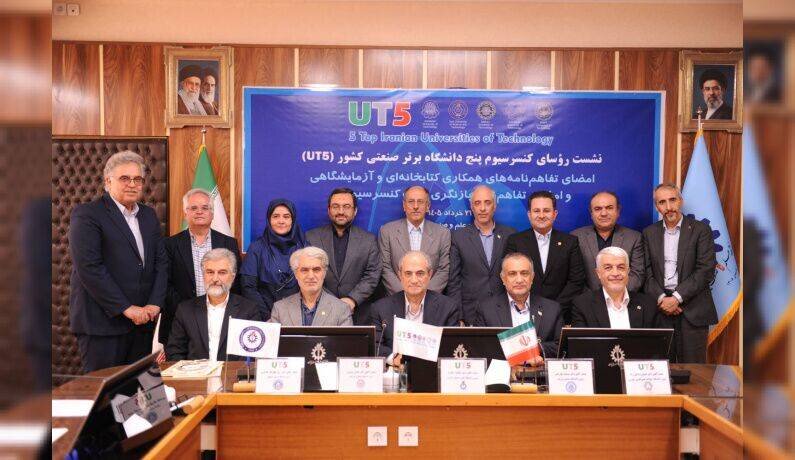
TEHRAN – The top five universities of technology in Iran, namely the University of Tehran, Tehran University of Medical Sciences, Amirkabir University of Technology, Sharif University of Technology, and Iran University of Medical Sciences, have signed a memorandum of understanding (MOU) to promote scientific synergy and strengthen research infrastructures in the country.
Signed by the chancellors of the five universities, called UT5, the MOU focuses on developing collaborations in laboratory and library sectors, IRIB reported.
The participants agreed to expand joint laboratory services by providing mutual access to each university’s laboratory equipment and facilities for professors, researchers, and faculty members. Accordingly, member universities will benefit from a 20 percent discount on the utilization of laboratory services for the implementation of research plans and national projects; the effort aims to increase the efficiency of scientific infrastructures, reduce research costs, and expedite the implementation of large-scale projects.
The MOU will also enhance physical and digital access to scientific resources, specialized articles, databases, and other capacities of the libraries in the five universities for faculty members, researchers, and students.
The chancellors of UT5 also signed an updated version of the consortium’s statute, which highlights the need for the expansion of joint scientific, research, and technological cooperation, optimal use of the capacities of the country’s universities and research institutions, and the development of the role of member universities in addressing the country’s strategic issues.
Moreover, they discussed and assessed the country’s industrial needs in the post-war period and the existing capacities of UT5 in supporting national programs for the reconstruction, modernization, and regeneration of damaged industries.
Attacks on science infrastructures
The strike on the Pasteur Institute of Tehran, a research and public health center with over a century of history and a member of the international Pasteur network, is a prime example of targeting scientific institutions as part of modern warfare.
According to Minister of Science, Research and Technology, Hossein Simaei-Sarraf, over 30 Iranian universities had been directly attacked by the United States and Israel since the war began in late February.
Five university professors and more than 60 students had been killed in the strikes, added Simaei-Sarraf, describing attacks on Iranian infrastructure as “crimes against humanity.”
“The main reason the enemy targeted this sensitive infrastructure was that they did not want us to gain access to this technology,” he said, adding that many Iranians abroad have contacted the university, offering to help fund its restoration.
MT/MG
Leave a Comment