New legal measures under consideration to curb graffiti at Persepolis
TEHRAN – Iranian authorities plan to intensify legal action against graffiti and vandalism at the UNESCO-listed site of Persepolis, a provincial official said on Friday.
Dariush Asadi, head of the Legal and Real Estate Office at the Fars Cultural Heritage, Tourism and Handicrafts Department, said measures were being prepared to pursue offenders who damage the ancient site.
Asadi said the department would take “decisive and comprehensive” action against individuals involved in writing on the walls of Persepolis.
According to IRNA, Asadi added that following a registered report stating that damage was caused by memoir writing on part of the historical walls, the issue was immediately placed on the legal department's agenda and the necessary coordination was made with the World Heritage Base and the Complex's Protection and Security Unit.
Stating that parts of the complex are covered by surveillance cameras, he continued that the exact dimensions of this violation have been documented and the recorded images are being reviewed.
Asadi said that all necessary documents have been collected to identify the offender or individuals, and after completing the legal process, the case will be sent to the judicial authorities for consideration.
He stated that protecting the historical monuments, especially those registered on the UNESCO World Heritage List, is a legal and national duty, and any encroachment on these valuable assets will be dealt without leniency and within the framework of the law.
Asadi emphasized that according to the laws related to the protection of cultural heritage, any destruction, damage, or interference with historical monuments is considered a crime, and the perpetrators will face legal punishment in addition to compensation.
He also called on all citizens and domestic and foreign tourists to contribute to the preservation and protection of the precious heritage with a sense of social responsibility.
Asadi added: “If the public observes any harmful behavior, they should inform the Protection Unit to prevent such cases from recurring.”
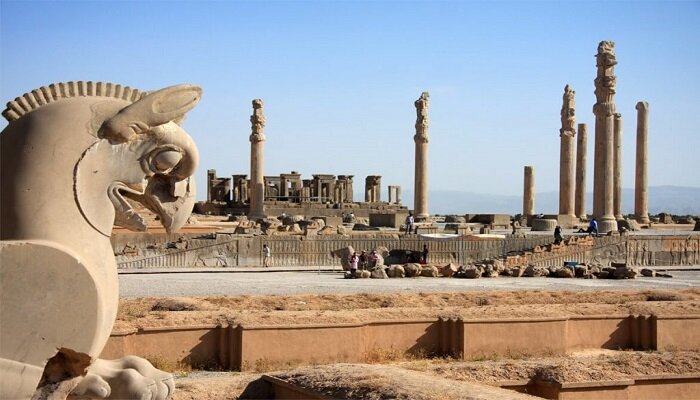
Persepolis, also known as Parseh (or Takht-e Jamshid, “Throne of Jamshid,” in Persian), is an archaeological treasure located in the fertile plain of Marvdasht in northern Fars province.
Founded by Darius I the Great around 518 BCE, it served as the magnificent ceremonial capital of the vast Achaemenid Empire for many years, primarily used for celebrating the Persian New Year (Nowruz) and for hosting representatives from across the empire’s vast territories. This awe-inspiring complex of palaces, treasuries, and audience halls stands as a powerful symbol of ancient Persian power, architectural genius, and artistic achievement.
Its immense historical and cultural value was globally recognized in 1979 when it was inscribed as a UNESCO World Heritage Site, solidifying its status as one of Iran’s most significant and cherished historical monuments.
Today, despite being sacked by Alexander the Great in 330 BCE, its majestic ruins, including towering columns, intricate stone carvings, and monumental stairways, continue to draw scholars and visitors from around the world, offering a breathtaking window into the grandeur of the first Persian Empire.
KD
Leave a Comment