Saless Publications releases Persian translation of Milan Kundera’s “Ignorance”
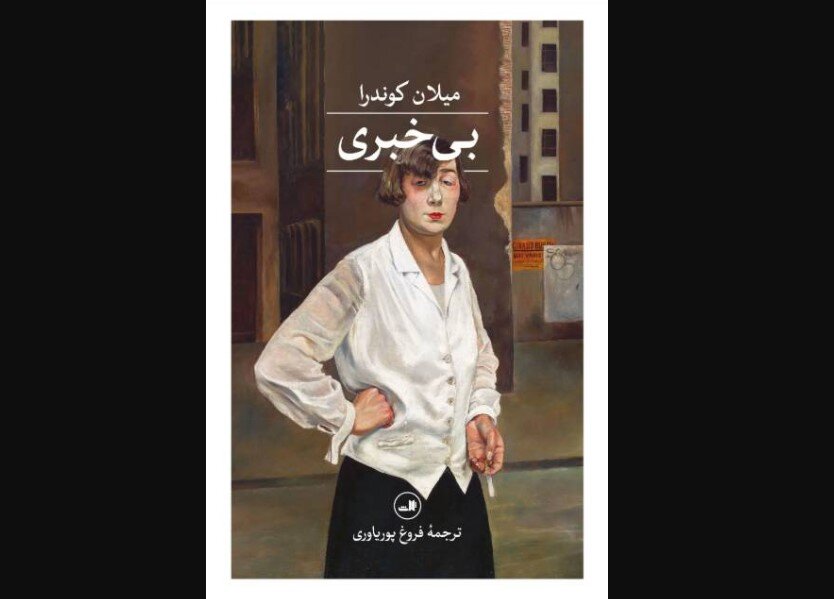
TEHRAN – Milan Kundera’s 1999 novel “Ignorance” has been translated into Persian and been released in the bookstores across the country.
Forough Pouriavari is the translator of the book, which has been brought out by Saless Publications in 128 pages, Mehr reported.
A brilliant novel, it is set in contemporary Prague. Themes of the novel include conceptions of home and homecomings.
A man and a woman meet by chance while returning to their homeland, which they had abandoned 20 years earlier when they chose to become exiles.
Czech expatriate Irena has been living in France since fleeing Czechoslovakia after the 1968 Warsaw Pact invasion. In 1989, when the Velvet Revolution overthrows the governing Communist Party of Czechoslovakia, Irena decides to return to her home after twenty years of living as an exiled immigrant. During the trip she meets, by chance, Josef, a fellow émigré who was briefly her lover in Prague.
Will they manage to pick up the thread of their strange love story, interrupted almost as soon as it began and then lost in the tides of history?
The truth is that after such a long absence “their memories no longer match.” We always believe that our memories coincide with those of the person we loved, that we experienced the same thing. But this is just an illusion. Only those who return after 20 years, like Ulysses returning to his native Ithaca, can be dazzled and astounded by observing the goddess of ignorance first-hand.
The novel examines the feelings instigated by the return to a homeland which has ceased to be a home. In doing so, it reworks the Odyssean themes of homecoming. It paints a poignant picture of love and its manifestations, a recurring theme in Kundera's novels.
It explores and centers around the way that people have selective memories as a precursor to ignorance. The concept of ignorance is presented as a two-fold phenomenon; in which ignorance can be a willing action that people participate in, such as avoiding unpleasant conversation topics or acting out. Yet the novel also explores the involuntary aspects of being ignorant, such as feigning ignorance of the past or avoiding the truth.
Kundera was able to take dizzying concepts such as absence, memory, forgetting, and ignorance, and transform them into material for a novel, masterfully orchestrating them into a polyphonic and moving work.
Milan Kundera (1929 – 2023) was a Czech and French novelist. Kundera went into exile in France in 1975, acquiring citizenship in 1981. His Czechoslovak citizenship was revoked in 1979, but he was granted Czech citizenship in 2019.
Kundera's best-known work is “The Unbearable Lightness of Being”. Before the Velvet Revolution of 1989, the country's ruling Communist Party of Czechoslovakia banned his books. He led a low-profile life and rarely spoke to the media.
He was awarded the Jerusalem Prize in 1985, the Austrian State Prize for European Literature in 1987, and the Herder Prize in 2000. In 2021, he received the Golden Order of Merit from the president of Slovenia, Borut Pahor.
Kundera wrote in Czech and French. He revised the French translations of all his books; people therefore consider these original works as not translations. His other notable novels include “The Joke” (1967) and “The Book of Laughter and Forgetting” (1979).
SS/SAB
Leave a Comment