Post-war era: smart reconstruction, not a return to past: energy expert
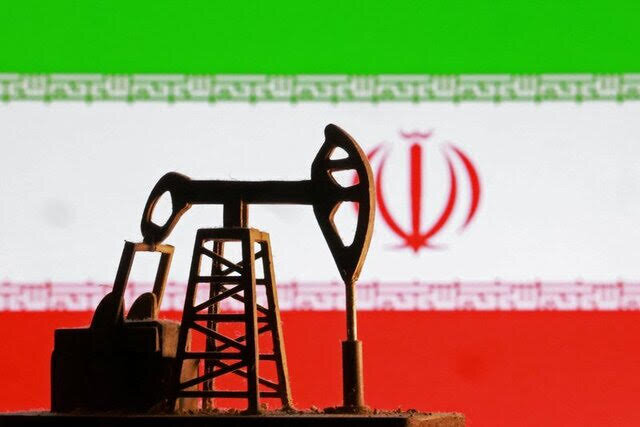
TEHRAN- An oil and gas expert stated: Wars do not only destroy infrastructure; they also transform the logic of investment. Any country emerging from a security crisis faces two choices. The first is merely compensating for past damages, and the second is building a more resilient, competitive, and attractive economy for investment from the heart of the crisis.
According to ISNA, the full text of the commentary by Samaneh Gheybi, an oil and gas expert, provided to ISNA, is as follows:
Iran, too, finds itself at such a point after the third imposed war. Now, the main question is not how much capital we need; the more important question is where and how to deploy the existing capital.
In the post-war environment, government financial resources are limited, the private sector makes decisions cautiously, foreign investors assess the country's risk with greater sensitivity, and global markets continue to face geopolitical fluctuations. Under such conditions, successful investment is no longer the product of intuitive decisions or temporary pressures; it is the result of data-driven governance and the scientific selection of projects.
Studies show that even in an industry like oil and gas—which is considered the main engine of Iran's economy—it is impossible to implement all projects, and choices must be made among them. This selection must be based on the analysis of various scenarios, the economic value of each project, and its resilience to uncertainty.
This logic is not limited to the oil industry. Today, the entire Iranian economy needs such an approach.
If national investments are to be launched in areas such as energy, petrochemicals, the digital economy, transportation, water, communication infrastructure, artificial intelligence, and advanced industries, a portfolio of priority projects must first be formed—projects that generate the highest economic returns, the most employment, the greatest foreign currency earnings, and the most significant impact on Iran's economic security.
The experience of successful countries follows the same path. After major crises, governments have allocated their limited resources to projects capable of activating private sector growth as well. In other words, rather than being the largest investor, the government has taken on the role of investment architect.
For Iran, the new era must also be accompanied by a change in the philosophy of investment. We can no longer prioritize any project merely because of its history, regional pressures, or administrative considerations. Every project must be able to pass the value-creation test from economic, strategic, technological, energy security, employment, and export development perspectives.
One of the most important messages of this analysis is that uncertainty should not be an excuse to halt investment. On the contrary, uncertainty must be incorporated into the decision-making model. Smart investment is one that simulates various scenarios in advance and is prepared for any possible change.
In the post-war environment, this perspective gains double importance. Energy prices may change, trade routes may shift, new technologies may replace old ones, or even the geopolitical rules of the region may transform. Iran's economy must be flexible enough to withstand these changes.
On the other hand, domestic and foreign investors are seeking predictability more than ever before. Capital flows into countries where the project selection process is transparent, data-driven, and defensible. The existence of scientific frameworks for project evaluation reduces the cost of capital and increases investor confidence.
This issue holds particular importance for the Chamber of Commerce as well. The private sector must demand from the government that the list of national projects be compiled based on clear criteria, risk analysis, rate of return, developmental impacts, and economic scenarios. Such an approach fosters healthy competition among projects and directs the country's resources toward the highest added value.
Iran's economic reconstruction after the war depends above all on investor confidence. This confidence is not built through slogans; it is shaped by the quality of decision-making. The more scientific, transparent, and data-driven the project selection process, the more confidently capital will enter the economy.
The future of Iran's economy will not be determined by the volume of capital, but by the intelligence in capital allocation. Countries that have achieved sustainable growth after crises learned to manage their limited resources better before acquiring more resources.
Now, the best opportunity has been provided for Iran to move beyond the reconstruction phase and enter the phase of national smart investment—a phase in which every rial of capital serves to increase productivity, strengthen economic security, expand exports, advance technology, and build a resilient economy for future generations. This is the path that can transform the post-war era from a period of damage compensation into the starting point of a major economic leap.
MA
Leave a Comment