America’s financial stranglehold on Iraq
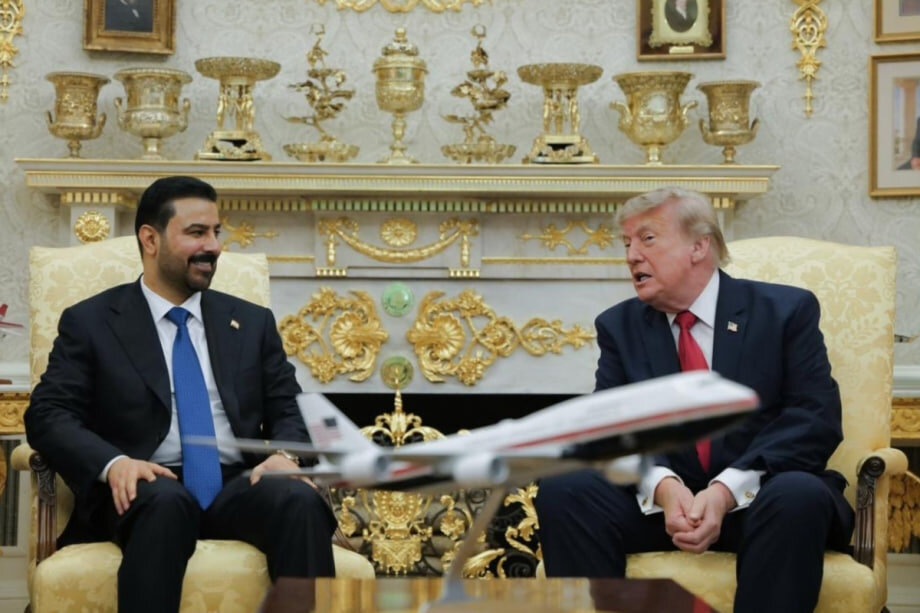
TEHRAN – For more than two decades after the 2003 invasion, Iraq has rebuilt its economy around an unusual financial reality: the world’s fifth-largest oil producer depends on a foreign power for access to the currency that keeps its economy functioning.
The arrangement has increasingly become a source of political and economic leverage for the United States, raising difficult questions about whether Iraq exercises sovereignty over its own financial affairs.
This year, the administration of U.S. President Donald Trump suspended the physical shipment of hundreds of millions of dollars in cash reserves, funds generated entirely from Iraqi oil exports, leaving Baghdad publicly humiliated.
The standoff, reportedly partially ended on Saturday after Prime Minister Ali al-Zaidi gave in to U.S. demands to disarm particular factions and launch performative anti-corruption raids, has ripped the mask off a bitter geopolitical reality.
23 years after the U.S. invasion, Iraq is still financially controlled by America. One of the world’s largest oil exporters in the OPEC+ alliance is forced to beg for access to its own money, highlighting a system of economic coercion that Washington politely calls “oversight” but which looks remarkably like financial occupation.
The mechanics of economic strangulation
At the heart of this leverage lies the Development Fund for Iraq (DFI), established under U.S. auspices after the 2003 invasion. Today, approximately 90% of Iraq’s national budget, derived from crude sales, is deposited directly into an account at the Federal Reserve Bank of New York. This means that the very cash used to pay civil servants, import food, and stabilize the Iraqi dinar must physically pass through U.S. hands.
When the Trump administration blocked a $500 million cargo shipment in April 2026 and halted the regular monthly inflows estimated at over $1 billion, it did not freeze “foreign aid.” It froze Iraq’s own property.
Washington’s justification was two-fold. Officially, the administration claimed it was cutting off funds flowing to “Iran-backed militias” and forcing Baghdad to tackle “systemic corruption.” However, for Iraqi officials, these arguments ring hollow, a case of the pot calling the kettle black, wielded by a nation with a historical track record of global financial wrongdoing.
The hypocrisy of the anti-corruption crusade
Iraqi lawmakers have publicly bristled at the U.S. framing of the conflict as a moral crusade against graft. While corruption is undeniably a plague within Iraq’s political system, officials argue that it is a universal problem, not an Iraqi invention.
“Fighting corruption is great, but why does it have to be tied to the United States?” a senior Iraqi advisor asked during the crisis. Critics point to the 2008 Wall Street bailouts, the systemic influence of Super PACs in U.S. elections, a military-industrial complex riddled with procurement fraud, and the Panama Papers revelations as evidence that the U.S. has no moral high ground to lecture anyone on financial honesty.
By weaponizing a universal governance issue to serve its strategic objectives, Washington has rendered genuine reform impossible. When anti-corruption measures are externally imposed under the threat of economic suffocation, they are viewed not as a path to good governance, but as a tool of subordination. The message from Washington is clear: Iraq must clean its house, but only on America’s terms, and only after it distances itself from its immediate neighbor, Iran.
The resistance vs. proxy narrative
Perhaps the most contentious aspect of the U.S. ultimatum is its designation of Iraqi factions as “Iran-backed militias.” Iraqi officials and leaders of these groups vehemently reject this label, insisting on the term “national resistance.” Their justification is steeped in the brutal historical legacy of the 2003 invasion.
The United States dismantled the Iraqi state, abolished the army, and unleashed a brutal sectarian civil war from 2004 to 2007, a period marked by almost daily terrorist car bombings that tore through markets, mosques, and neighborhoods, turning Baghdad into a city of checkpoints and body bags.
This chaos created the vacuum for Al-Qaeda in Iraq to flourish and ultimately birthed the rise of Daesh, whose reign of terror ironically required Iraq’s neighbor, Iran, to defeat. The official Iraqi estimate is staggering: over one million Iraqis perished directly or indirectly as a result of the unwarranted U.S. invasion and its bloody aftermath.
Officials argue that the resistance movements are not Iranian puppets; they are “Iraqi sons” who emerged to fight an occupying force that has never truly left.
Washington maintains one of the largest embassies in the world in Baghdad. The so-called diplomatic complex is a sprawling, heavily fortified mini-city that resembles a military base.
The compound is stacked with C-RAM (counter-rocket, artillery, and mortar) systems, land-based versions of the Navy’s Phalanx close-in weapon system. Each C-RAM is equipped with a 20mm Gatling gun capable of firing approximately 4,500 rounds per minute, artillery shells, and drones out of the sky.
The system operates with tracking radars and electro-optical sensors to autonomously detect and destroy short-range targets within seconds. This is not the equipment of a diplomatic outpost; it is the arsenal of a forward operating base.
The hypocrisy of America’s position becomes glaring when compared to its allies’ actions. The Zionist regime bombed the Iranian embassy in the Syrian capital Damascus under the pretext that Iranian military personnel were present, a brazen violation of diplomatic sovereignty.
Yet the U.S. maintains its own Baghdad embassy as a heavily armed fortress, conducting unilateral airstrikes and military operations from Iraqi soil without any parliamentary consent in Baghdad. If a diplomatic mission hosting military personnel is a legitimate target in Damascus, why is a U.S. embassy that functions as a de facto military base in Baghdad afforded absolute inviolability? The double standard could not be starker.
Officials argue that international law enshrines the right of occupied peoples to resist foreign military presence.
Iraqi resistance groups targeted U.S. interests during the 40-day American-Israeli aggression on Iran. They did this not because Tehran told them to, but because they see it as their national duty. They believe that if Iran falls, the war will come to Iraq next. For them, hitting U.S. assets is self-defense.
The same groups point out that if they had contained the battle against Daesh inside Syria before 2014, the Takfiri group would have never crossed the border into Iraq. In their view, this policy of striking first before being slaughtered, displaced, and women taken captive in their homeland is now of utmost importance.
Geography cannot be sanctioned
Perhaps the most logical and damning counter-argument from Baghdad is one of simple cartography. Iran is a neighbor. It shares a 1,500-kilometer land border with Iraq, deep cultural ties, religious affinity via Shia shrines, and interdependent trade networks. The United States, on the other hand, is not even on the same continent.
Iraqi officials argue that it is the height of arrogance for Washington to demand that Baghdad sever its security ties with Tehran while the U.S. continues to meddle in Iraq’s domestic affairs.
While Washington frames its military footprint as a stabilizing force, Iraqis view it as the root cause of their suffering. The U.S. has spent decades destabilizing the region, and demands that Baghdad treat its next-door neighbor as a pariah, simply to satisfy American hawks.
The verdict: a client-state exposed
The suspension of dollar shipments has laid bare the fiction of Iraqi sovereignty. Officially, Iraq is an independent republic. In practice, its economic lifeline is piped directly through New York. The Federal Reserve, ostensibly an independent banking institution, has been politicized to serve as an extension of the White House’s “maximum pressure” campaign.
Iraqi officials describe the situation as the ultimate embarrassment.
The United States continues to argue that it is protecting Iraq from itself, from corrupt elites and Iranian influence. But the reality is far grimmer.
Washington is using the most vulnerable part of the Iraqi economy, its cash reserves, as a cudgel to enforce its own regional hegemony. By treating Iraq’s oil revenue as a geopolitical piggy bank, the U.S. has demonstrated a profound contempt for international norms and the very concept of national self-determination.
For Iraqis, the lesson is bitter but clear: as long as their oil dollars pass through the New York Fed, they will never truly be free. The tragedy is that the U.S., which claims to champion democracy and sovereignty, has become the primary obstacle to Iraq achieving either.
Over two decades of occupation, war, financial strangulation, and streets soaked in the blood of innocent Iraqis have culminated in a client-state that cannot even pay its workers without Uncle Sam’s permission. The American empire may be waning, but its grip on Iraqi oil remains an iron fist.
A sovereign nation is expected to exercise independent authority over its finances, monetary affairs, and economic policy. Iraq, however, cannot fully insulate itself from decisions made in Washington because the currency that finances its government, supports its imports, and stabilizes its banking system is controlled by a system it does not own and cannot independently access.
Many Iraqi politicians continue to criticize American interference in their country’s domestic affairs, arguing that financial restrictions give Washington leverage over decisions that should belong exclusively to Baghdad.
Leave a Comment