Floor coverings in Iran: From Neolithic mats to Safavid silk carpets
TEHRAN – During the Neolithic period, the inhabitants of Iranian plateau used reed mats as floor coverings in their shelters and also wrapped the deceased in them for burial. Thousands of years later, during the Safavid era, the use of silk brocade carpets woven by the artisans of Tabriz became widespread.
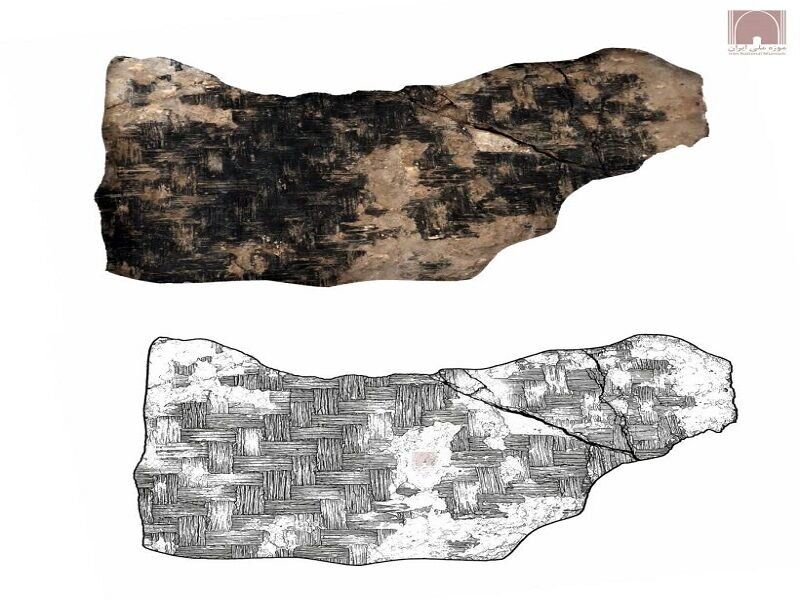
Archaeological excavations at Ali Kosh Tepe in Dehloran county of Ilam province, uncovered a fragment of a reed mat on natural bitumen measuring 13.5 × 22 centimeters, dating to approximately 7,000–7,350 BCE. The find indicates that Neolithic inhabitants used reed mats woven in a “two-over, two-under” pattern to cover the floors of their dwellings, IRNA news agency reported on Wednesday.
The combined use of bitumen and reed mats, which was already common during the Bus Mordeh phase (Phase I), served as insulation against moisture. The ready availability of natural bitumen in the region reflects the Ali Kosh builders' understanding of local environmental resources for moisture control—a tradition that originated in the Neolithic period and has continued to the present day.
The construction materials used in the surviving Neolithic houses at Ali Kosh Tepe indicate that the inhabitants made their shelters with mud bricks lacking chamotte (grog) temper. The walls were constructed without interlocking corner bonds.
Buff-colored mud mortar without chamotte was used, while the interior wall surfaces were coated with plaster. Inside these houses, room floors were first leveled with compacted earth and then covered with a thin layer of greenish clay. Bitumen and reed mats were also used as moisture-resistant insulation.
Burial of the dead wrapped in reed mats inside houses
In addition to using reed mats as floor coverings and for basket making, the inhabitants of Ali Kosh also employed them in burial practices. The deceased were wrapped in reed mats and then buried in a flexed position beneath the floors of residential houses.
The reed plant, the primary raw material for mat weaving, grows abundantly along the rivers of the Dehloran Plain. These findings indicate that the inhabitants of Ali Kosh relied on locally available materials for construction and possessed extensive knowledge of the region's natural resources.
Ali Kosh Tepe is located in the Dehloran Plain of Ilam province and was excavated in 1961 and 1963 by American archaeologists Frank Hole and Kent Flannery.
Today, the "reed mat on natural bitumen" discovered at Ali Kosh Tepe in Dehloran county is preserved at the National Museum of Iran under registration number 2275, IRNA said.
Silk carpets as floor coverings during the Safavid era
Over time, the use of silk brocade carpets woven by the artisans of Tabriz became widespread during the Safavid period. Archaeological evidence indicates that in the 16th and 17th centuries(the Safavid era), a number of Iranians used silk carpets from Tabriz, measuring 213 centimeters in length and 158 centimeters in width, as floor coverings in their homes.
An example of such a carpet is preserved at the National Museum of Iran under registration number 3304. This exquisite carpet has a light olive-colored field. Its main border features a cream-colored background decorated with elegant arabesque designs and floral motifs. The central field is adorned with a medallion bearing a bird motif, while four corner medallions embellished with animal motifs enhance the composition. The weaver filled the spaces between the central medallion and the corner medallions with delicate cloud-band motifs and designed two balanced vase motifs above and below the central medallion.
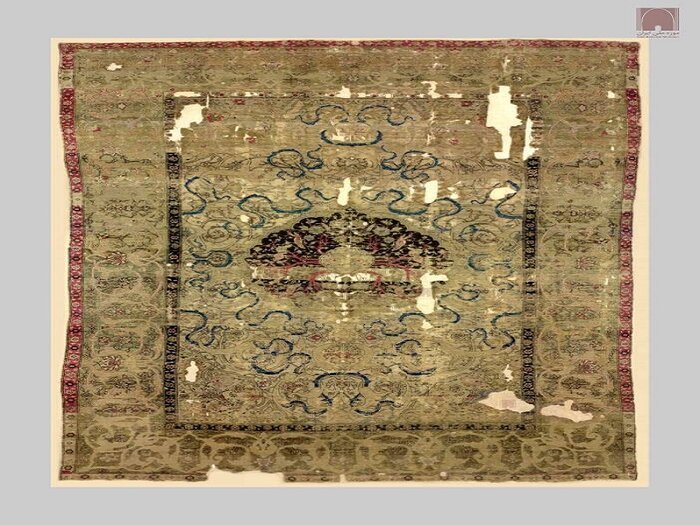
The carpet was woven using a symmetrical knot technique and has silk warp and weft. In addition to natural silk, its pile incorporates brocade threads made of gold and silver, further enhancing its artistic and historical significance.
Finest Iranian carpets woven during the 16th and 17th centuries
During the 16th and 17th centuries, the art of carpet weaving, alongside other decorative arts, received exceptional patronage and support from the Safavid court. Without doubt, the finest and most remarkable Iranian carpets were produced during these centuries, particularly under the reigns of Shah Tahmasp and Shah Abbas. During this period, the distinctive Tahmaspi and Shah Abbasi styles of carpet weaving emerged. Luxurious carpets, fine woven floor coverings, and gold brocade textiles not only represented the highest achievements of their time but were also widely admired in the markets of both the East and the West.
The establishment of royal workshops and organized production in major centers, including the Safavid capital and other large cities, together with the acceptance of commissions from abroad, formed part of the Safavid state's strategic policies. These measures fostered the flourishing of artistic talent and the creation of masterpieces that today are displayed in leading museums around the world. During this period, designs such as vase, garden, inscription, mihrab, and corner-medallion compositions reached their highest level of refinement.
IN that era, a wide variety of woven works, from all-silk carpets to silk warp-and-weft carpets with gold-thread pile, as well as woolen carpets, were produced and marketed.
AM
Leave a Comment