Studying medicine in Cuba: A Palestinian preparing to aid Gaza amid Israel’s assault on doctors
BUENOS AIRES — Muhammad Ali is 21 years old. He is Palestinian, from the West Bank, and studies medicine in Cuba thanks to a scholarship. His story does not begin at a university or in a classroom, but in a territory marked by war, scarcity, and loss. While many young people elsewhere can afford to ignore the harsh reality faced by Palestinians, for him —as for so many others— the horizon is defined by urgency: surviving, protecting one’s family, gaining access to water, medicine, and the most basic necessities.
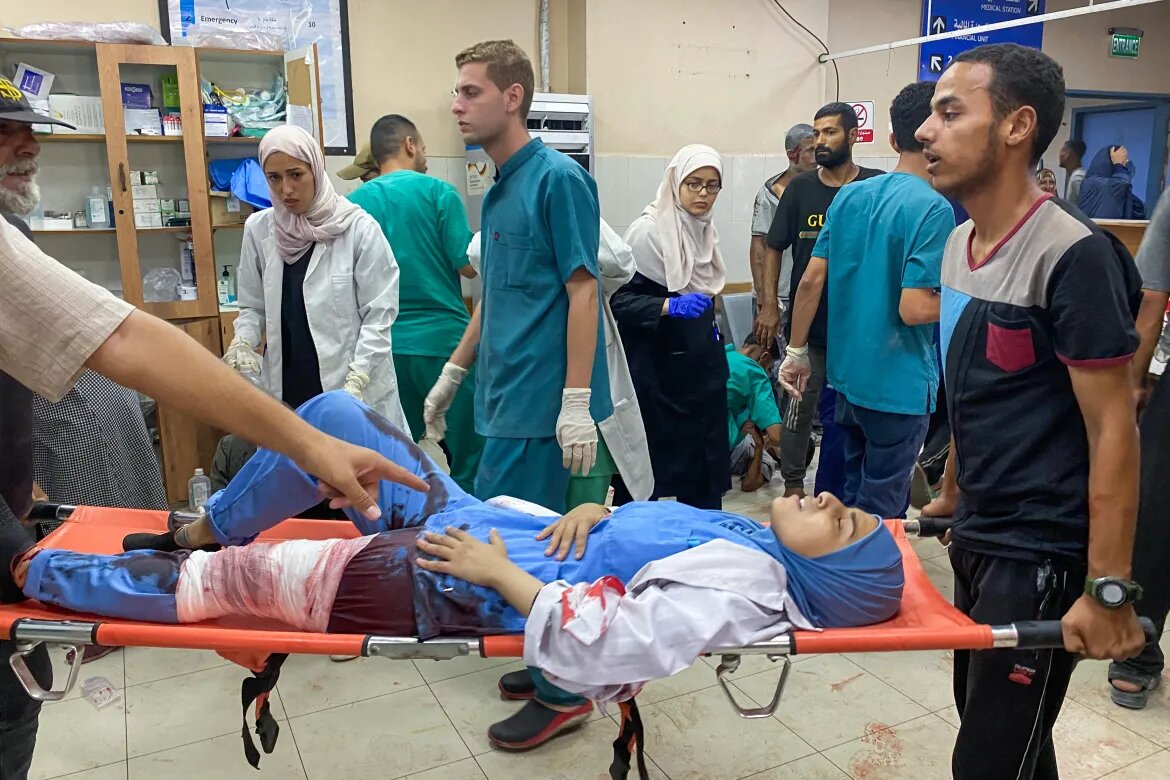
Arriving in Cuba was not a dream choice, but a concrete possibility in the face of limited alternatives. In a country under blockade, with scarce resources yet a renowned medical tradition, he found not only professional training but also a life shaped by patience, resilience, and solidarity. Studying medicine, in his case, is not driven by a romantic vocation or a promise of social mobility, but by a collective necessity: the shortage of doctors in Palestine, especially in Gaza, where even those trying to save lives are being killed.
In this interview, Muhammad Ali speaks about war, the scholarship, displacement, and his education in Cuba, but also about international politics, the blockade, imposed silence, and the figure of Che Guevara as a shared symbol of resistance. His testimony does not aim to offer lessons or final diagnoses; it is the voice of someone studying to heal in a world that insists on making people sick.
What did it mean for you to arrive in Cuba?
Studying in Cuba is an honor for my family and for me. Everyone knows that Cuba has many problems and many limitations with other countries, and the blockade makes the economy very weak. But in the end, when a person finishes their studies in Cuba, it means they have seen everything: the good and the bad. If that person is a doctor —or from any other specialty— when they return home, they have a lot of experience and a lot of patience. Cuba teaches you that: patience.
When did you decide to study medicine in Cuba? Why Cuba?
Honestly, when I was in high school and there was only one month left before finishing and taking the final exams, someone told me there was a scholarship to study medicine in Cuba, and that’s how I applied. We don’t take an entrance exam; we only submit a letter of acceptance. In my case, everything was delayed even more because of COVID.
So you hadn’t planned to come to Cuba; it was a last minute decision.
I had no other option. Studying in my country is very expensive. If I didn’t study medicine, I would have had to study something else in Palestine. That’s why I wasn’t studying anything while waiting to see what would happen.
Are there many Palestinians studying medicine in Cuba?
Yes, but not only Palestinians. In Cuba there are people from all over the world: Colombia, Brazil, Asian countries —from everywhere. Studying medicine is very expensive in general, and the scholarship is an opportunity. I’m not going to judge why each person comes, but that’s the reality.
Why is medicine such a difficult and demanding career?
In Palestine, most people want to be doctors so they can help their families. There are very few doctors there to save people’s lives. There are doctors —I won’t say there aren’t any— but there are few, and many of them are killed. It doesn’t matter if you are a doctor, an elderly person, a baby, or an adult: they don’t care who you are. That’s why there is almost no medical care. The idea I always saw was: “I want to be a doctor so I can help my family.” Of course, everyone has their own reasons: some study for money, others for different motives.
Helping your family, or helping the Palestinian people in general?
Both. Right now, there is a severe shortage of doctors in Gaza. Many people say: “I want to finish my degree so I can go back and help.” You can’t always go back, but that idea is there. In my case, I also had no other option to study abroad: only medicine.
And how is it going for you?
Now it’s going well. At the beginning it’s complicated: the language, the culture… everything is difficult at first.
How do you feel in Cuba as a Palestinian, knowing you come from a country at war?
Palestine and Cuba are one, truly, and have been for many years. Most Cubans know what is happening in Palestine and support us a lot. Every time I go somewhere and say I’m Palestinian, people tell me, “We are with you.” For me, it is an honor to study in a country that cares about what is happening in my country, even if it cannot help materially. Sometimes a kind word gives you strength.
The United States blocks Cuba and also supports Israel’s actions in Gaza. Would you say the same actor is harming both countries?
Yes. The United States strongly supports Israel. We have no defense and no voice. You say one word and your entire family can disappear. That’s why we cannot speak or do anything.
We already talked about Che Guevara. Did you know much about him?
Yes, of course. I have many friends who tell me I’m lucky to be in a country where his history, his books, and the places where he lived are studied. Che is a person no one ever fully finishes discovering.
Did you know he was in Palestine?
Yes. I felt something very strong when I went to see the monument in Santa Clara. I don’t know how to explain it —something changes inside you. I have a cousin named Tshi Ghevara, like Che. He’s almost six years old and lives in Palestine. People there really love Che Guevara. He was a unique revolutionary. He helped many people and tried to change things. That’s what I’ve heard and seen about his history.
Leave a Comment