Wildlife-friendly Qaleh Bala targets UN Best Tourism Villages recognition

TEHRAN - Perched on the edge of Iran’s vast desert landscapes, Qaleh Bala village has emerged as one of the country’s most compelling candidates for the UN Tourism “Best Tourism Villages” label, an initiative that recognizes rural destinations combining cultural heritage, sustainability, and community-driven development.
Located about 21 kilometers from the town of Biyarjomand in eastern Shahrud county, Semnan province, Qaleh Bala is distinguished by its stepped architecture, historic texture, and strategic position at the gateway to the Turan Biosphere Reserve. This protected area is globally significant as the last known breeding habitat of the critically endangered Asiatic cheetah, making the village not only a cultural destination but also a focal point of biodiversity conservation.
The village’s journey toward international recognition has not been straightforward. Two previous attempts to secure a place on the UN Tourism list fell short due to shortcomings in documentation. Now, for a third and final attempt, local authorities and residents have undertaken coordinated efforts to address those gaps, improve infrastructure, and strengthen the village’s application through a comprehensive and community-based approach.
At the heart of Qaleh Bala’s candidacy lies its strong social fabric. Residents have played a central role in shaping a model of sustainable tourism that prioritizes local participation and environmental stewardship. Over recent years, the village has hosted around 20 events spanning cultural, educational, and social themes, while also documenting local traditions and enhancing the visual identity of the settlement.
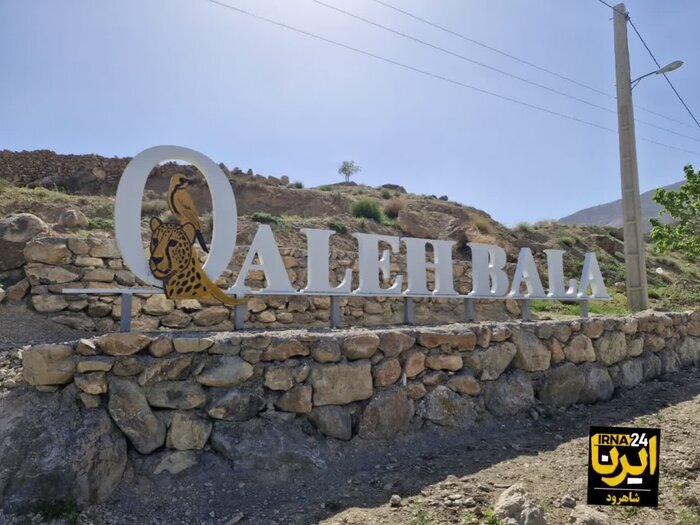
Efforts to improve visitor experience and highlight the village’s identity are visible throughout Qaleh Bala. A newly installed entrance landmark, featuring symbolic representations of the Asiatic cheetah and the endemic Iranian ground jay, serves as a visual statement of the area’s unique ecological richness. Wooden directional signs guide visitors to eco-lodges, natural attractions, and scenic viewpoints, while newly designed alley nameplates incorporate motifs of native wildlife, reinforcing a sense of place and environmental awareness.
Qaleh Bala is often described as a “wildlife-friendly village,” a title reflected in local customs such as the long-standing tradition of “Nazr-e Olufeh” (offering fodder). In this communal practice, villagers collectively provide food for wild animals during periods of drought, demonstrating a deep-rooted commitment to coexistence with nature.
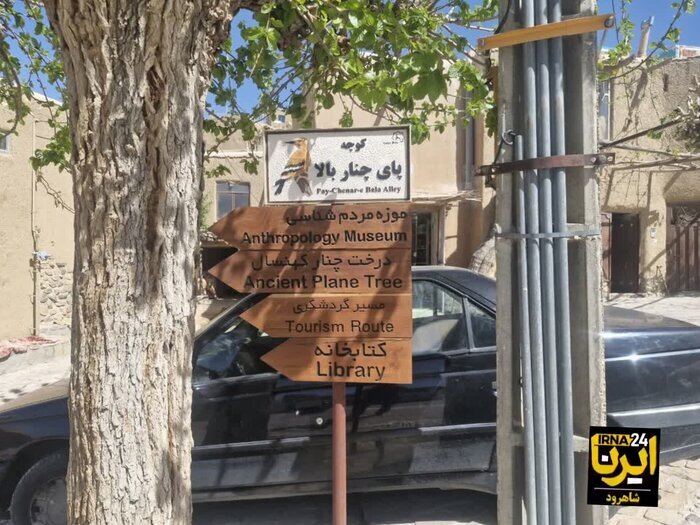
Cultural heritage is equally central to the village’s identity. Traditional ceremonies such as the rain-invoking ritual “Tal-o Mahtal” have been revived, with local women playing a prominent role in preserving and performing these practices. Their participation extends beyond rituals to handicrafts, including kilim weaving, needlework, and efforts to revive silk production through sericulture. The establishment of a handicrafts house in a restored historic building further supports these initiatives.
Education and cultural development have also been integrated into the village’s transformation. The opening of a children’s library in 2025, supported by local women and community members, reflects an investment in future generations and aligns with broader goals of sustainable tourism.
Qaleh Bala’s transformation has largely been driven from within. Faced with challenges such as drought, isolation, and limited infrastructure, residents, particularly younger generations, have taken the initiative to restore traditional adobe houses, develop eco-lodges, and create nature-based tourism experiences. This grassroots approach has revitalized the local economy and helped reverse rural outmigration.
The restoration of historical elements, including an old watermill, further underscores the village’s commitment to preserving its heritage while adapting to modern tourism demands.
As the evaluation process for the UN Tourism Best Tourism Villages program continues, with results expected by early autumn 2026, Qaleh Bala stands as a vivid example of how community engagement, cultural continuity, and environmental responsibility can converge to create a sustainable rural destination. For Iran, its potential recognition could not only elevate the village on the global stage but also contribute to the broader development of tourism in Semnan province.
AM
Leave a Comment