Bajestan: A quiet treasure beyond Iran’s tourist trail

TEHRAN - Set against the plain beauty of eastern Iran’s desert landscapes, the ancient city of Bajestan remains one of the lesser-known destinations of the country, despite possessing a remarkable combination of history, architecture, and natural scenery.
Located in the southern part of Razavi Khorasan province, roughly 300 kilometers from Mashhad, 50 kilometers west of Gonabad and 62 kilometers north of Ferdows, Bajestan lies along the major transit corridor linking southern Iran to Mashhad. For centuries, caravans, merchants, pilgrims, and travelers crossed this harsh yet captivating terrain, transforming the city into an important stop on historical trade routes.
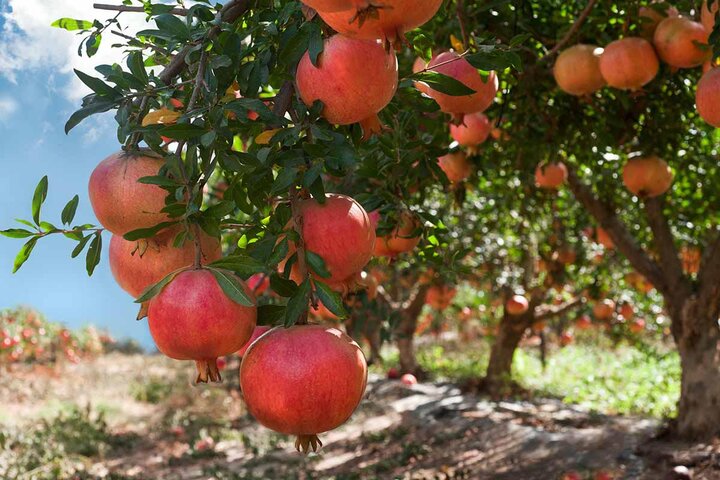
Today, Bajestan is often described as the “land of red rubies,” a poetic title inspired by its saffron farms, pomegranate orchards, and the red marble mountains surrounding the region. During autumn, when saffron flowers bloom across the plains, the landscape acquires shades of purple and crimson that contrast dramatically with the pale desert earth. The region’s dry climate, together with its traditional agricultural systems, has helped preserve an environment that feels both timeless and deeply connected to Iran’s eastern desert culture.
Yet Bajestan’s significance extends far beyond its agricultural identity. The city occupies an important place in the historical memory of Khorasan and is believed to date back to the Achaemenid era. Historians and local traditions alike point to the region’s ancient roots, while archaeological remains scattered throughout nearby villages reinforce the idea that Bajestan has been inhabited for many centuries. The area is also associated with ancient Zoroastrian communities, and some researchers consider it one of the historic sacred regions connected to pre-Islamic religious traditions in eastern Iran.
The city reached particular prominence during the Timurid era. Contemporary accounts suggest that Bajestan enjoyed such prestige that even the armies of Timur refrained from destroying it during campaigns across Khorasan. Later, during the Qajar period, Bajestan prospered as a commercial center thanks to its strategic position along caravan routes connecting central and eastern Iran. The remains of caravanserais, bridges, and mosques throughout the county still testify to that period of economic vitality.
Among the most significant historical monuments in the city is the Bajestan Grand Mosque, an architectural landmark dating back to the reign of Timurid ruler Shahrokh. According to inscriptions preserved within the mosque, construction was completed in 828 AH. Located in the old urban fabric of Bajestan, the mosque reflects the architectural traditions of Timurid religious buildings in Khorasan. Its square courtyard, flanking iwans, carved mihrab, and column-supported Shabestan reveal the refined aesthetic associated with Persian-Islamic architecture of the fifteenth century.
The mosque was restored during the Safavid period, a fact that illustrates the continued importance of the structure over several dynasties. Though less famous internationally than the great mosques of Isfahan or Yazd, Bajestan’s congregational mosque offers visitors a more intimate encounter with Iranian architectural heritage. Its modest scale and desert setting create an atmosphere of quiet dignity rather than monumental grandeur.
Five kilometers from Bajestan lies the village of Mazar, home to one of the region’s most mysterious historical sites: the hand-carved monastery or underground mosque known locally as the Mazar Monastery. Dug into rock beneath an ancient fortress, the structure consists of corridors and chambers carved directly into the earth. Visitors enter through a narrow passageway before reaching a large subterranean chamber supported by massive stone pillars.
The darkness and enclosed design of the site have led researchers to speculate about its original purpose. Local traditions refer to it as a monastery, yet some historians believe the structure may once have served as a Mithraic temple dating back to the Achaemenid era or earlier. The association with Mithraism is strengthened by the underground nature of the complex, since many Mithraic rituals historically took place in cave-like environments symbolizing cosmic creation and rebirth. Whether interpreted as a religious sanctuary or defensive refuge, the Mazar complex remains one of eastern Iran’s most enigmatic archaeological locations.
Equally reflective of Bajestan’s historical importance are its caravanserais, many of which once served merchants traveling through the deserts of Khorasan. The Zein Abad Caravanserai, situated southeast of the city along the road to Ferdows, exemplifies the roadside architecture of the Qajar period. Built on a quadrilateral plan and covering approximately 2,500 square meters, the caravanserai contains accommodation chambers, corridors, and a distinguished royal section intended for elite travelers.
Nearby stands the Fakhr Abad Caravanserai, another four-iwan structure that once welcomed caravans preparing to cross the desert. Its most striking decorative feature is the use of partially fired bricks combined with ordinary bricks to create geometric patterns across the façade. The caravanserai’s design demonstrates how even utilitarian desert architecture in Iran often incorporated artistic sophistication.
Perhaps the most famous of Bajestan’s roadside monuments is the Qasem Abad Caravanserai, a Safavid-era structure located west of the city. Once positioned along the Silk Road, the caravanserai later found itself beside the modern Bafq-Mashhad railway line, linking historical and contemporary transportation networks. Its defining feature is a distinctive four-sided wind tower, regarded as one of the most beautiful examples of desert climate adaptation in Khorasan architecture. Rising above the desert plain, the wind tower once helped cool interior spaces during the intense summer heat, reflecting the ingenuity of traditional Iranian engineering.
Bajestan’s historical landscape also includes the Yunesi Bridge, a Safavid-era brick bridge spanning the Shore River. With nine arches constructed from brick, stone, and sarouj mortar, the bridge represents another example of the infrastructural sophistication that sustained trade routes through eastern Iran. Although modest in comparison with Iran’s larger historic bridges, Yunesi Bridge remains an important reminder of the region’s role in facilitating commerce and movement across difficult terrain.
Further northeast, in the village of Merandiz, stands the Marandiz Grand Mosque, an 11th-century religious structure whose architectural features resemble those found in historic mosques of Khaf, Roshtkhar, and Torbat Heydarieh. The mosque’s courtyard, iwan, domed chamber, and decorative elements reveal stylistic continuities across Khorasan’s medieval religious architecture. Though located far from Iran’s principal tourist circuits, the building forms part of a broader architectural tradition that once flourished across northeastern Iran.
For travelers seeking destinations beyond the conventional routes of Iranian tourism, Bajestan offers a distinctive combination of desert landscapes, caravan heritage, and ancient spirituality. Unlike heavily visited historical cities, Bajestan retains an atmosphere shaped more by local rhythms than by commercial tourism. Saffron fields, abandoned caravan paths, wind towers rising above desert villages, and underground sanctuaries carved into stone collectively create a portrait of eastern Iran that is both historically layered and visually striking.
In many ways, Bajestan embodies the overlooked cultural geography of Khorasan itself — a region where deserts were never empty spaces, but crossroads of commerce, belief, and civilization.
AM
Leave a Comment