Quri Qaleh: Discover one of Asia’s longest water caves in western Iran

TEHRAN - Nestled in the foothills of the Shaho mountain range in western Iran, Quri Qaleh Cave stands as one of the country’s most remarkable natural attractions. Located near the village of Quri Qaleh, approximately 86 to 90 kilometers northwest of the city of Kermanshah and about 10 kilometers from Paveh, the cave is a geological masterpiece that combines natural beauty, ancient history, and ecological significance.
Believed to have formed around 65 million years ago, Quri Qaleh is recognized as the longest water cave in Asia. Stretching for nearly 12 kilometers, the cave remains largely unexplored by ordinary visitors, with only a small section accessible to the public. Nevertheless, the parts open to tourists reveal an extraordinary underground world shaped over millions of years by water and limestone.
The name “Quri Qaleh” is derived from an ancient fortress located near the cave. Historians believe the original name was “Gureh Qaleh,” meaning “Great Fortress” in the local Kurdish language. Over time, the pronunciation evolved into Quri Qaleh. The nearby ruins of the fortress, dating back to the Sassanid era, add a historical dimension to the site and suggest that the area has been inhabited and valued for centuries.
Although local people had long known about the cave, systematic exploration began in the twentieth century. Early investigations took place in the 1950s, while more extensive surveys were carried out during the 1970s by teams of British and French speleologists. These explorers mapped hundreds of meters of the cave before encountering sections where the water rose to the ceiling, preventing further progress without specialized diving equipment. Today, large portions of the cave remain accessible only to expert cavers and underwater explorers.
One of the most fascinating aspects of Quri Qaleh is its spectacular geological formations. Visitors enter a world of towering chambers decorated with countless stalactites hanging from the ceiling and stalagmites rising from the floor. Over millions of years, mineral-rich water has sculpted these formations into shapes that resemble columns, curtains, and natural sculptures. The cave’s underground river, crystal-clear pools, and massive halls create an atmosphere that feels both mysterious and enchanting.
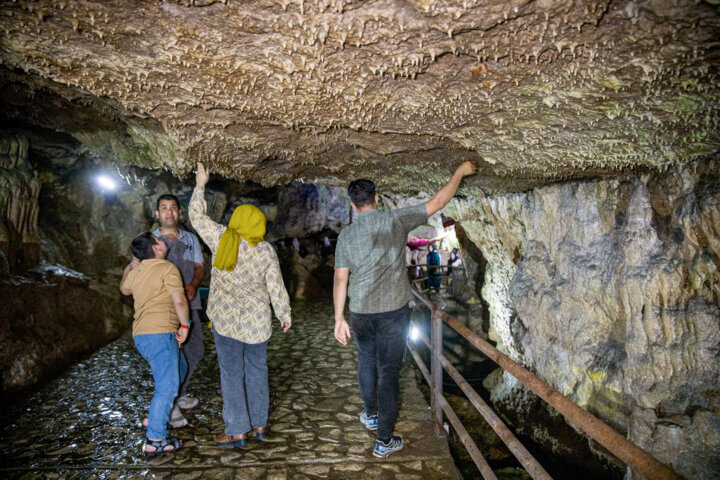
The climate inside the cave remains remarkably stable throughout the year. Temperatures generally range between 7 and 11 degrees Celsius, providing a cool refuge even during the hottest summer months. High humidity levels and the constant flow of underground water contribute to the cave’s unique environment. In some sections, the water reaches depths of up to 14 meters, highlighting the scale and complexity of the subterranean system.
Beyond its geological importance, Quri Qaleh is also a valuable archaeological site. Excavations have uncovered evidence of human activity dating back thousands of years. Researchers have discovered silver plates, pottery fragments, and coins from the Sassanid period (224–651 CE), including coins minted during the reign of Yazdgerd III, the last Sassanid king. Some artifacts bear inscriptions written in Pahlavi, the language used during the Sassanid era, IRNA news agency reported on Thursday.
Archaeological studies have also suggested that the cave may have served as a hunting shelter during the Stone Age. These discoveries indicate that the region has been significant to human communities since prehistoric times, making Quri Qaleh not only a natural wonder but also an important cultural heritage site.
The cave’s ecological value is equally noteworthy. It provides a habitat for rare species of bats, particularly mouse-eared bats, which are seldom found elsewhere in Iran. The presence of these animals underscores the need for environmental protection and responsible tourism management to preserve the cave’s delicate ecosystem.
Today, Quri Qaleh is one of the most visited natural attractions in western Iran. More than half a million people are estimated to visit the site each year, including domestic travelers and visitors from neighboring countries, particularly Iraq. Tourism associated with the cave has become an important source of income for local communities, creating employment opportunities and supporting businesses in the surrounding villages.
Registered as one of Iran’s significant natural heritage sites, Quri Qaleh represents the extraordinary geological diversity of Kermanshah province. Together with other renowned attractions in the region, such as Taq-e Bostan and UNESCO-listed Bisotun, the cave strengthens the province’s reputation as a premier destination for nature lovers, history enthusiasts, and adventure travelers.
AM
Leave a Comment