Iran, Turkey discuss ways to remove challenges in bilateral customs cooperation
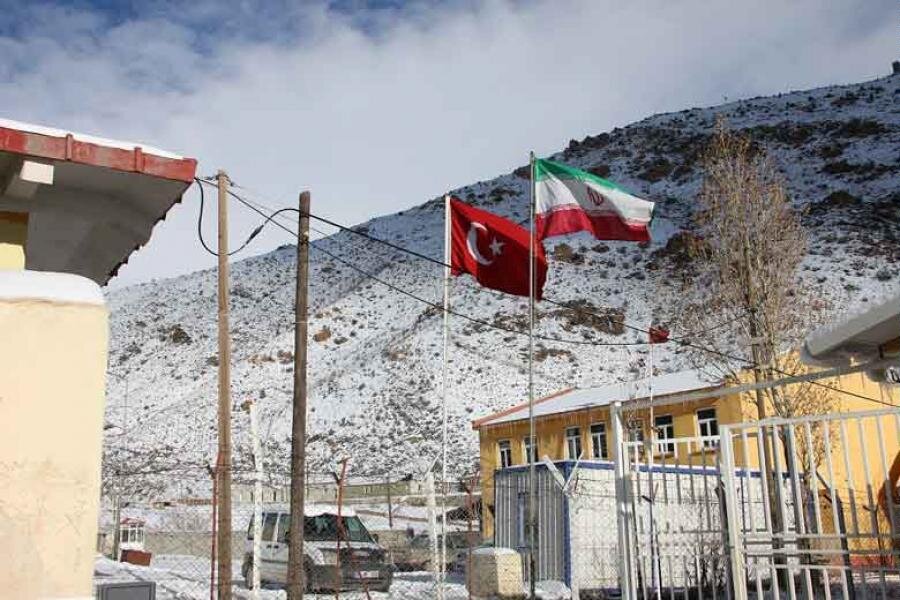
TEHRAN- A joint meeting between the heads of the customs administrations of Iran and Turkey was held at the Bazargan-Gurbulak border.
According to IRNA's report from the Public Relations Department of the Iran Customs Administration, in this meeting attended by Foroud Asgari, Deputy Minister of Economy and Head of the Iran Customs Administration, and Sezai Ucharmak, Head of the Turkish Customs Administration, the two sides agreed to increase the acceptance of trucks from both countries and to form an expert team between the customs administrations of Iran and Turkey to examine the challenges facing the two countries' customs.
Issues related to electronic exchange were also among the other topics of this meeting, which were discussed and examined, and proposals were put forward to remove obstacles.
The report adds that the Governor of West Azarbaijan Province, Iran's Ambassador to Ankara, the representative of the people of Maku, Showt, Poldasht, and Chaldoran, the advisor to the Head of the Iran Customs Administration and Director General of the Central Protection Office, the advisor to the Head and Director General of the International Cooperation Office of the Iran Customs Administration, the supervisor of customs offices in West Azarbaijan Province, and the Director General of the Bazargan Customs Office were also present at this meeting.
On April 17, Iran’s Minister of Agriculture, referring to his trip to Turkey, announced an agreement to expand agricultural and border cooperation between the two countries.
According to IRNA, Gholamreza Nouri, speaking at the Bazargan border crossing and in a conversation with reporters, detailed his recent trip to Turkey and participation in the meeting of Agriculture Ministers of the Shanghai Cooperation Organization (SCO) in Kyrgyzstan, stating: "During this multi-day trip, extensive meetings were held with Turkish officials, particularly the Minister of Agriculture."
He added: "Given the significant increase in Iran-Turkey agricultural relations over the past year, both sides emphasized the continuation of this trend and greater utilization of existing capacities. The Turkish side also declared its full readiness to expand cooperation."
Referring to his meetings with the governors of Turkey's Agri and Igdir provinces during this trip, he said: "In joint meetings with officials of these two provinces, issues related to border and provincial cooperation were examined."
The Minister of Agriculture stated: "In these meetings, it was announced that measures would soon be taken to develop inter-provincial relations through free trade zones, and the Turkish side declared its readiness to cooperate in this area."
Nouri also reported that both sides emphasized the establishment of a joint free zone, saying: "This issue was seriously emphasized both in meetings with Turkish national officials and in meetings with border province governors."
Referring to the government's policies on developing border relations, he added: "The President places special emphasis on strengthening interactions between border provinces and neighboring countries, and the necessary authorities have been delegated to the provinces in this regard, which can help facilitate relations and develop cooperation, including border marketplaces."
According to a report released by the Islamic Republic of Iran Customs Administration (IRICA), Turkey was the third top destination of Iran’s non-oil products in the past Iranian calendar year 1404 (ended on March 20).
In early December 2025, a Tehran Chamber of Commerce, Industries, Mines and Agriculture (TCCIMA) delegation, visiting the Plast Eurasia 2025 exhibition in Istanbul, met with a group of board members and managers of the Istanbul Chamber of Commerce.
In this meeting, both sides, referring to the longstanding friendly, cultural, and economic relations between Iran and Turkey, emphasized strengthening connections through the exchange of trade delegations, participation in exhibitions, and joint investment.
Munur Ustun, a member of the executive board of the Istanbul Chamber of Commerce, referring to the memorandum of understanding signed between the two chambers last year, described the presence of Iranian companies in Turkey and specialized exhibitions as valuable and stated: “The current volume of trade between the two countries falls short of the existing potential.”
He then addressed the impact of global economic developments and the constraints caused by sanctions, and emphasizing the need to facilitate the foreign trade environment and create a secure path for private sector cooperation, said that direct meetings between merchants are an important step to compensate for shortcomings.
Addressing the meeting, Hervik Yarijaniyan, head of the TCCIMA Industry and Mining Committee, stated that with over 47,000 members, this chamber has extensive capacity for cooperation with Turkish economic actors, adding: “The social, political, and cultural relations between the two countries are at a high level, but the level of trade exchange does not correspond with these realities. Therefore, through the exchange of trade delegations, participation in exhibitions, and joint investment, cooperation between the two countries can be strengthened.”
He also invited the Istanbul Chamber of Commerce to travel to Tehran as a trade delegation to further expand the grounds for joint cooperation.
Subsequently, Hesameddin Hallaj, deputy for international affairs and trade development at the TCCIMA, referring to the continuous dispatch of trade delegations in recent years and the active presence of the Tehran Chamber at Plast Eurasia 2025, said: “Face-to-face dialogues between Iranian and Turkish actors can lead to the development of economic relations.”
He also announced the continuation of cooperation between the two chambers based on last year's memorandum of understanding and expressed hope that the Tehran Chamber would soon host a delegation of Turkish merchants.
During this meeting, Kamran Davari-Nikou, Consul General of Iran in Istanbul, referring to the increase in the trade between the two countries to $19.4 billion, said the diversity of Iran's export goods to Turkey has increased from 700 items in previous years to 1,383 items.
Referring to the presence of 45 Iranian companies at the Plast Eurasia exhibition and several dispatched trade delegations, he described this trend as a sign of the high potential for economic cooperation between Iran and Turkey.
Uzcan Tokul, Deputy Secretary General of the Istanbul Chamber of Commerce, in his remarks, deemed the current trade volume between Iran and Turkey insufficient and stated that the Istanbul Chamber would seriously continue its policy of receiving and supporting Iranian trade delegations.
At the end of this meeting, it was also decided that the Tehran Chamber of Commerce would prepare the groundwork for a trade delegation from the Istanbul Chamber of Commerce to travel to Tehran through official correspondence.
The TCCIMA delegation, visiting the Plast Eurasia 2025 exhibition, also met with senior officials of the Istanbul Chamber of Industry, proposing strategic partnerships between Iranian and Turkish private-sector companies, particularly in technology-driven sectors.
During the joint session, both sides highlighted the long-standing commercial ties between Iran and Turkey and agreed to strengthen industrial cooperation through B2B meetings and reciprocal expert delegations.
Mehmet Akif Meral, director of international and EU affairs at the Istanbul Chamber of Industry, introduced the body as an institution with 23,000 members established in 1923. He described past cooperation with Iran as positive, citing a 2013 business mission to Tehran and multiple meetings in recent years on technology, energy and industry.
He said the chamber maintains extensive links with Europe and neighboring markets and actively participates in global exhibitions, including major events in Chicago and the Netherlands.
Meral outlined measures taken in response to U.S. tariff shifts, noting that the chamber supports Turkish manufacturers through market advisory services, specialized training and e-commerce development programs. He added that 40 percent of Turkey’s exports go to Europe, where the chamber plays a central role in maintaining industrial ties.
Hervik Yarijaniyan, head of the TCCIMA Industry and Mining Committee, said current trade levels fall short of the two countries’ long-standing economic links. He called for closer coordination between the Tehran Chamber and the Istanbul Chamber of Industry and invited a Turkish industrial delegation to visit Tehran.
MA
Leave a Comment