Oil minister orders transformation in gas industry
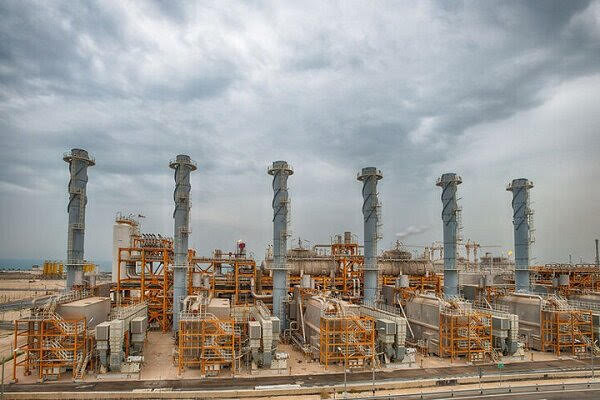
TEHRAN- For the first time, by order of Oil Minister Mohsen Paknejad, the reconstruction of the Assalouyeh and Fajr Jam refineries has been assigned to the Iranian National Gas Company (NIGC) — an important step toward strengthening domestic capability and integrated management.
According to a Mehr News report, Iran's gas industry has entered a new phase of structural transformation with a decision ordered by Oil Minister Mohsen Paknejad. For the first time in the history of this industry, direct responsibility for reconstructing several major gas refineries in the Assalouyeh region, as well as completing the revival process of the Fajr Jam refinery, has been delegated to the National Iranian Gas Company (NIGC) — an action described as a turning point in changing the role and elevating the status of this company.
This decision is not merely an administrative transfer of responsibility but reflects a profound shift in the ministry's overarching view of the NIGC's capacities and capabilities. For years, the management of construction and reconstruction projects for gas refineries was largely under the control of Pars Oil and Gas Company, a subsidiary of the National Iranian Oil Company, while the NIGC primarily played a role in gas distribution, transmission, and operation. Now, with the minister's order, this equation has changed, and the NIGC has entered the field as a development-oriented player.
New approach gas industry: from operation to development
In recent months, Oil Minister Mohsen Paknejad has placed special emphasis on maximizing the use of domestic capability and enhancing the role of specialized companies in the gas value chain. The assignment of responsibility for reconstructing the Assalouyeh refineries and serious participation in reviving the Fajr Jam refinery to the NIGC can be seen as a practical manifestation of this approach.
This decision shows that from the perspective of the ministry's top management, the NIGC is no longer merely an "operator"; it has reached a level of technical and managerial maturity that enables it to take on the role of a "development arm." In other words, decades of experience in operating and managing the gas network have now become a foundation for entering more complex engineering and project-based arenas.
At a time when the development of the country's gas infrastructure has entered a stage requiring both sustainable operation and complex technical execution, this shift in approach can lead to greater agility in decision-making and better utilization of existing capacities. Paknejad has effectively pioneered a new model of responsibility distribution in the gas industry.
Technical capability of NIGC: backing for change
The NIGC is one of the few companies in the region that manages the entire gas network cycle from production to consumption. This company operates thousands of kilometers of high-pressure transmission lines, dozens of pressure boosting stations, and a vast array of mechanical, electrical, control, and instrumentation equipment.
Accumulated experience in refinery overhauls, process equipment maintenance, safety management, leak control, and crisis management under sensitive conditions has given this company's engineers and experts rare operational knowledge. This exact type of knowledge is needed in refinery reconstruction projects — from managing large compressors and gas sweetening systems to controlling input and output lines and monitoring dehydration, stabilization, and gas liquid recovery units.
In past decades, the NIGC has performed similar activities at dozens of refineries and operational centers. Therefore, this company's entry into damaged refinery reconstruction is not a risk without foundation but a step based on extensive experience and proven technical capability — a step that has been accelerated and formalized by the direct order and support of the oil minister.
Integrated management structure: from crisis management to project control
One of the important reasons justifying this new ministry decision is the NIGC's integrated management structure. This company has a vast network of gas transmission operational zones, maintenance planning units, logistics sectors, and crisis management, and over the years has demonstrated its ability to coordinate complex and large-scale operations.
Refinery reconstruction naturally requires halting part of production while maintaining a stable gas flow across the national grid. Under these circumstances, only an organization that simultaneously has project management capability, technical planning, and network stability maintenance can accept this responsibility. The NIGC, with its long experience in managing emergency situations — from sudden pipeline repairs to launching alternative units in winter cold — has proven it possesses such capacity.
Thus, Paknejad's decision to assign refinery reconstruction responsibility to the NIGC is based on a practical reality: this company today has the structure, experience, and managerial capability needed to accept such responsibility and can carry out large projects without serious disruption to the national gas grid.
Reducing dependence and strengthening domestic capability
Another strategic dimension of this decision is its impact on reducing reliance on foreign contractors and strengthening domestic capability. Refinery reconstruction requires complex equipment, advanced technology, and a network of specialists. The strong presence of the NIGC in this field creates new opportunities for collaboration with domestic equipment manufacturers and Iranian engineering companies.
The model taking shape under Paknejad's order is based on relying on the capability of domestic engineers and using domestic companies as main partners in the supply and execution chain. This approach can, in the long term, lead to reduced costs, increased industrial independence, and the development of indigenous technical knowledge, making the country's gas industry more resilient to external constraints.
Assalouyeh and Fajr Jam: major tests of a decision
The reconstruction project of the two major refineries in the Assalouyeh region — known as the heart of the country's gas industry — and the completion of the revival of the Fajr Jam refinery constitute a serious test for the NIGC and, at the same time, for the ministry's new policy. These projects are not merely a set of execution operations; they require precise engineering, safety measures, structural damage repair, new equipment installation, unit commissioning, and continuous risk management.
Success in such projects will place the NIGC's operational capability at a new level beyond its traditional operational domain. At the same time, this success can consolidate and strengthen Paknejad's policy of trusting domestic capability and assigning development responsibilities to operating companies.
A new culture of inter-sectoral cooperation
The NIGC's entry into refinery reconstruction does not mean an end to cooperation with other companies; rather, it can pave the way for a new culture of inter-sectoral cooperation in the oil and gas industry. Executing these projects requires close interaction with Pars Oil and Gas Company, the Gas Engineering and Development Company, and specialized contractors.
If these projects proceed successfully, a new model of project management based on precise division of labor, operational coordination, and increased organizational integration will emerge — a model that, with the support and guidance of the oil minister, can be applied to other development projects in the gas industry.
The entry of the NIGC into the field of gas refinery reconstruction in Assalouyeh and the revival of the Fajr Jam refinery represents a turning point in the transformation of this company's role and in the management structure of the country's gas industry. This transformation, ordered and supported by Oil Minister Mohsen Paknejad, is based on trust in domestic capability, accurate recognition of the NIGC's capacities, and new needs of the energy industry.
This assignment is both a test of the NIGC's technical, managerial, and operational capability and an important benchmark for the ministry's new approach to utilizing domestic capacities. If these projects are successfully completed, it can be said that Paknejad's decision has transformed not only the NIGC's track record but also the future trajectory of the country's gas industry.
MA
Leave a Comment