Iran warns UN that US-Israeli aggression threatens global energy security and supply chains
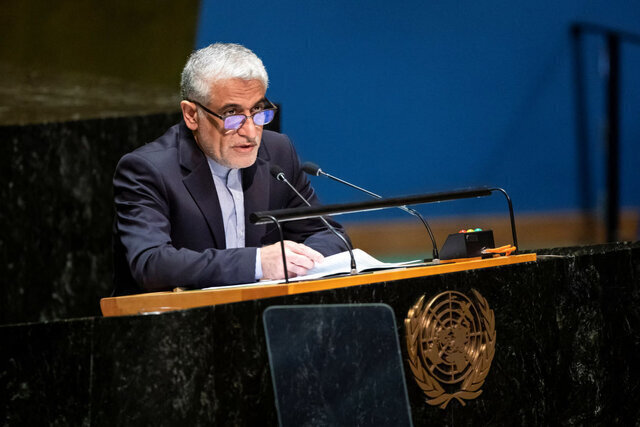
TEHRAN- Iran’s ambassador to the United Nations warned that ongoing military aggression by the United States and the Israeli regime against the Islamic Republic has severely disrupted regional stability, damaged critical energy infrastructure, and now endangers global supply chains and worldwide energy security.
Speaking at a special meeting of the UN Economic and Social Council (ECOSOC) on safeguarding energy and supply flows, held in New York on May 15, Ambassador Saeid Iravani asserted that the root causes of current instability in global energy markets and trade routes are “military escalation and unlawful acts of aggression” imposed on Iran.
He stressed that direct attacks on Iran’s oil, gas, and petrochemical infrastructure, compounded by unilateral sanctions and maritime restrictions, have produced serious consequences for both regional and global economic stability.
“Within less than one year, my country has been subjected to two unlawful acts of aggression in clear violation of the Charter of the United Nations and international law,” Iravani told the council. These attacks resulted in the tragic loss of thousands of innocent civilians, particularly women and children. They also caused widespread destruction of civilian, economic, energy, and environmentally sensitive infrastructure — consequences that will not disappear with the end of military operations.”
The envoy posed a central question to the ECOSOC meeting: not merely how to respond to the current crisis, but what the real roots of these growing instabilities are.
He outlined four key realities:
First, he said, the current instability is rooted in military escalation and unlawful acts of aggression by the Israeli regime and the United States, which have intensified tensions in one of the world’s most strategic energy and trade regions.
Second, direct attacks against Iran’s oil, gas, and petrochemical infrastructure have caused severe economic and environmental damage in the Persian Gulf region and disrupted global energy and fertilizer supply chains, with serious implications for food security and agricultural production worldwide.
Third, unilateral sanctions, coercive measures, and the maritime blockade imposed by the United States have further fragmented global supply chains and increased instability in energy and commodity markets.
Fourth, sustainable regional security cannot be achieved through confrontation or dependence on external powers, but only through dialogue, mutual respect, and genuine regional and international cooperation.
The ambassador reaffirmed that Iran remains committed to constructive engagement and efforts to restore stability, energy security, and normal conditions in the Strait of Hormuz — but only on condition that aggression and military escalation cease and the maritime blockade is lifted.
Leave a Comment