General Hollywood: Pentagon’s propaganda operation on silver screen: Part 1
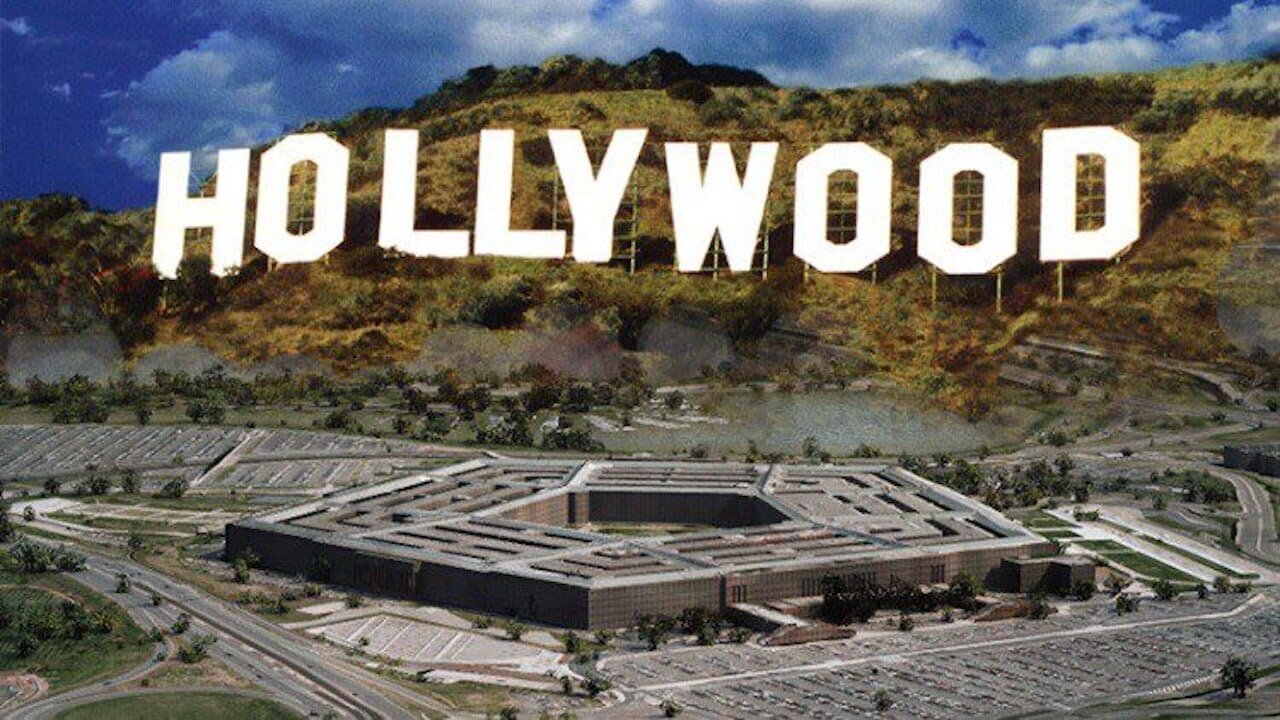
TEHRAN- “10 years from now you'll have Hollywood movies about how bombing an Iranian girls school made US soldiers sad.”
This statement was made by Aidan Simardone, Canadian geopolitical analyst, following the announcement of the US’s brutal attack on an elementary school in Minab, Iran. 120 children have yet to return home from the school — children who had neither Iran’s uranium reserves in their backpacks, nor hidden weapons of mass destruction inside the school.
This horrific crime by the US has sparked massive international backlash and has become yet another example of "human rights, American-style."
Throughout the war-torn and aggressive history of the US, one entertainment industry has always stood alongside its commanders on the battlefield, attempting to justify America’s unnecessary and profit-driven wars to the people of the world: "General Hollywood".
When the US ground assaults on your land are over, General Hollywood’s work has just begun. This is the same unchanging rule that Frankie Boyle, the Scottish comedian, once spoke of:
“Not only will America go to your country and kill all your people. But they'll come back 20 years later and make a movie about how killing your people made their soldiers feel sad.”
My toys, my rules!
Suppose you are a screenwriter or producer and you approach the Pentagon for access to military equipment to help make your war film. In that case, you must submit your script for review to the Hollywood liaison office at the US Department of Defense (DOD).
If you do not accept its requests and revisions, the Pentagon will no longer provide you with its toys. Likewise, you will have to pay all the bills out of your own pocket!
The documentary "Theaters of War" (2022) has specifically examined this issue. Directed by Roger Stahl, professor of communication studies at the University of Georgia and author of the book "Militainment, Inc.: War, Media, and Popular Culture", the documentary shows how the Pentagon dictates storylines and exerts influence over Hollywood to align with the narratives, images, and alternative versions of history that it finds favorable.
Roger Stahl, in an exclusive interview with Tehran Times, stated that Hollywood is largely complicit in US militarism because it is embedded within the same economic, political, and cultural sphere of influence.
“Much like news, there are moments where the stories challenge dominant narratives, but those are exceptions that prove the rule,” he added.
Books such as "Operation Hollywood", "National Security Cinema", "Reel Power", "Superheroes, Movies, and the State", and "Militainment, Inc." show that the Pentagon has long been active in the pre-production and production stages of Hollywood filmmaking and, by providing access to its facilities, personnel, and equipment, has sought to present a positive image of itself in popular cinema.
Autobots for a propaganda mission
The "Transformers" franchise was able to secure more military support than perhaps any other franchise in cinema history. The first "Transformers" film received a record level of military assistance, featuring twelve different types of Air Force aircraft and personnel from four separate military bases. For the second film, director Michael Bay’s list of military requests exceeded 50 items, with the estimated cost surpassing $600,000. According to the Pentagon, the impact of this investment was multiplied through the use of technologies such as the $150 million F-22 fighter jets, which had never before been shown in cinema.
The level of support was so extensive that Ian Bryce, the franchise’s producer, stated: “We would never have been able to make this movie without the willingness of the DOD to embrace this project.”
But why? All of this was due to the DOD’s very early exertion of influence over the project. Production assistance agreements for the second and third "Transformers" films revealed that the scripts had not even been completed by the time those contracts were signed.
According to the book "National Security Cinema", reports from both the US Army and Marine Corps ELOs show their enthusiasm for assisting the "Transformers" franchise. For "Transformers II: Revenge of the Fallen", they held a joint planning meeting with the producers “to discuss the military’s role in the sequel” while the script was still in development.
Stahl stated: “The system of rewards and punishments, official narratives from centers of political power, and audience expectations corral them into certain safe narratives.”
Why is it necessary to be there?
The director of "Theaters of War" talked about the ways in which Hollywood tries to align itself with the Pentagon's narrative framing. He explained that there are ways like simple erasure:
“Hollywood has essentially ignored Gaza. There’s no effort to confront the scale of death – the million in Iraq, 3-4 million in Southeast Asia, hundreds of thousands in Latin America during the 80s – of which most Americans are completely ignorant.”
Stahl emphasized that although there are ways such as the creation of heroic myths and characters, there is also the remediation of unsavory historical episodes:
“The rescue narratives in the wake of Vietnam like "Rambo" and "Missing in Action" were attempts to "save" that conflict from the memory of having "lost the war". "Black Hawk Down" is another good example, as is the wave of recent films about the US withdrawal from Afghanistan.”
The Pentagon wanted the narrative of the epic of American soldiers in Vietnam to go on the screen — but not all of it! So, they always had their favorites.
"The Green Berets" (1968), directed by and starring John Wayne, was one of the Hollywood films of its time that openly supported the Vietnam War. The original idea came from Wayne himself, who wanted to justify the necessity of the US presence in Vietnam to public opinion through a patriotic message. He discussed the idea directly with then–US President Lyndon Johnson in order to make a film that would tell the public “why it is necessary for us to be there.”
The story revolves around a Green Beret officer who becomes involved in direct combat with the Viet Cong while also trying to convince a skeptical journalist of the legitimacy of the American mission.
The Pentagon and the State Department dictated extensive political changes to the film. They demanded the removal of any reference to American forces crossing into Laos, as this could have alluded to the secret bombing of a neutral country. A scene depicting the torture of a Viet Cong prisoner was removed at the Pentagon’s request. Ultimately, the Pentagon itself asked for its name to be removed from the film’s end credits so that the film would not be categorized as an official propaganda production of the US.
The level of Pentagon cooperation was highly significant. The US Army provided the producers with massive amounts of equipment and manpower virtually free of charge (in exchange for less than $19,000). This assistance included 85 hours of flight time with Huey helicopters, the provision of real weapons and heavy equipment. The report also found that “3,800 man-days were involved in support of the film.”
Orange on Blue
In his book "Operation Hollywood", David L. Robb discussed the fate of the television film "My Father, My Son" (1988), a production that did not receive much affection from the Pentagon because of its illuminating approach to the consequences of Agent Orange use in Vietnam.
The film was based on the real and tragic story of Admiral Elmo Zumwalt and his son, Elmo Zumwalt III. During the Vietnam War, Admiral Zumwalt served as commander of US naval forces in the region and authorized the spraying of Agent Orange. His son, a young naval officer, was stationed in the very same contaminated area. Years later, the younger Zumwalt developed cancer, and the film tells the story of the father and son’s joint effort to uncover this bitter truth and fight for government recognition of the effects of Agent Orange. "My Father, My Son" was adapted from a book of the same name written by Elmo Zumwalt and his son.
The request for Navy assistance in producing "My Father, My Son" was elevated all the way to the Secretary of the Navy. However, he claimed that there was no definitive link between Agent Orange and the type of cancer suffered by the admiral’s son, and therefore declined to cooperate with the production of the film.
Fred Weintraub, the producer, estimated that this lack of cooperation increased production costs by $50,000 to $100,000.
Three months after the film was released, Elmo Zumwalt III died of cancer. Following his son's death, Admiral Zumwalt continued his fight to force the government to acknowledge that the cancers of thousands of other Vietnam veterans were also caused by Agent Orange. Years later, Congress and the Institute of Medicine of the National Academy of Sciences released compelling evidence linking this chemical to the exact type of cancer that had killed the admiral's son.
A recruiting video for the Navy!
Another example is "Top Gun" — the Tom Cruise film about elite Air Force pilots that, in the 1980s, became a model for how to sell war and make killing appear glamorous. The makers of “Top Gun” were granted access to US Navy aircraft carriers, a naval air station, and a fleet of F-14 fighter jets and other military aircraft.
As The Washington Post reported: “It’s unlikely the [original] film could have gotten made without the Pentagon’s considerable support. A single F-14 Tomcat cost about $38 million.” This was despite the fact that the entire budget of “Top Gun” was only $15 million.
"Operation Hollywood" notes that John Davis, the American producer, described the film as "a recruiting video for the Navy" and said:
“It really helped their recruiting. People saw the movie and said, ‘Wow! I want to be a pilot.’”
All assistance remained limited to this. While the first film was warmly supported by the Navy, plans to produce the next film in the franchise were halted in the early 1990s because of a major scandal. The 1991 “Tailhook” scandal, which involved widespread sexual harassment by Navy pilots at a convention, caused the Navy to lose interest in continuing its cooperation with the project.
The director of "Theaters of War" explained: “Hollywood also helps to justify conflict by glamorizing the weapons themselves. Think "Top Gun" or Marvel movies depicting high-tech military weaponry fighting alongside superheroes.”
In the following section, we will discuss the significant importance and application of the superhero genre as the Pentagon's international PR.
To be continued.
AH/SAB
Leave a Comment