Israeli army “bleeding” in southern Lebanon
TEHRAN – Israeli news outlets have acknowledged that the Israeli Occupation Force (IOF) is “bleeding in the quagmire” of southern Lebanon after Hezbollah inflicted yet more casualties.
Reports say at least 18 soldiers have been killed since the ceasefire began, amid a complete inability to counter Hezbollah’s explosive drones and growing military and political concern over the lack of a clear way forward.
Israel’s Channel 12 described the situation of the IOF in southern Lebanon and along northern settlements as very alarming, stressing that last week was among the deadliest since the ceasefire took effect. It added six IOF soldiers killed during the past week alone.
Hebrew broadcaster Kan acknowledged that the military establishment has fallen into an operational dilemma and a tactical quagmire due to the “disturbing equation” imposed by Hezbollah through its military operations.
“We are facing a deeply concerning situation regarding the threat posed by Hezbollah’s explosive drones. The (IOF) entered this battle unprepared for this deadly threat,” Kan stated.
It added that soldiers are now completely exposed to this danger, with almost no ability to protect themselves and virtually no effective means of defending against these drones.
Kan further reported that the continuing human and operational losses have led the Israeli military establishment to favor an urgent political settlement that would help it escape both the current predicament and the Lebanese quagmire.
It also pointed to the absence of solutions on both military and political levels. “Even now, unfortunately, there is still no clear horizon for ending this situation, and the forces remain deployed there under highly concerning conditions.”
IOF reserve Major General Isaac Brick warned that continuing the war in its current form is pushing the Zionist regime toward a deep abyss and insisted that victory is unattainable.
Politically, Netanyahu remains without meaningful achievements. His standing among decision-makers close to U.S. President Donald Trump has declined significantly, to the point that he has reportedly been excluded from strategic consultations.
Meanwhile, Hamas has not been defeated and has instead strengthened its position. Hezbollah continues to represent a potent threat, while the coalition the occupation regime sought to build with America and other regional countries against Iran has failed to achieve its intended objectives.
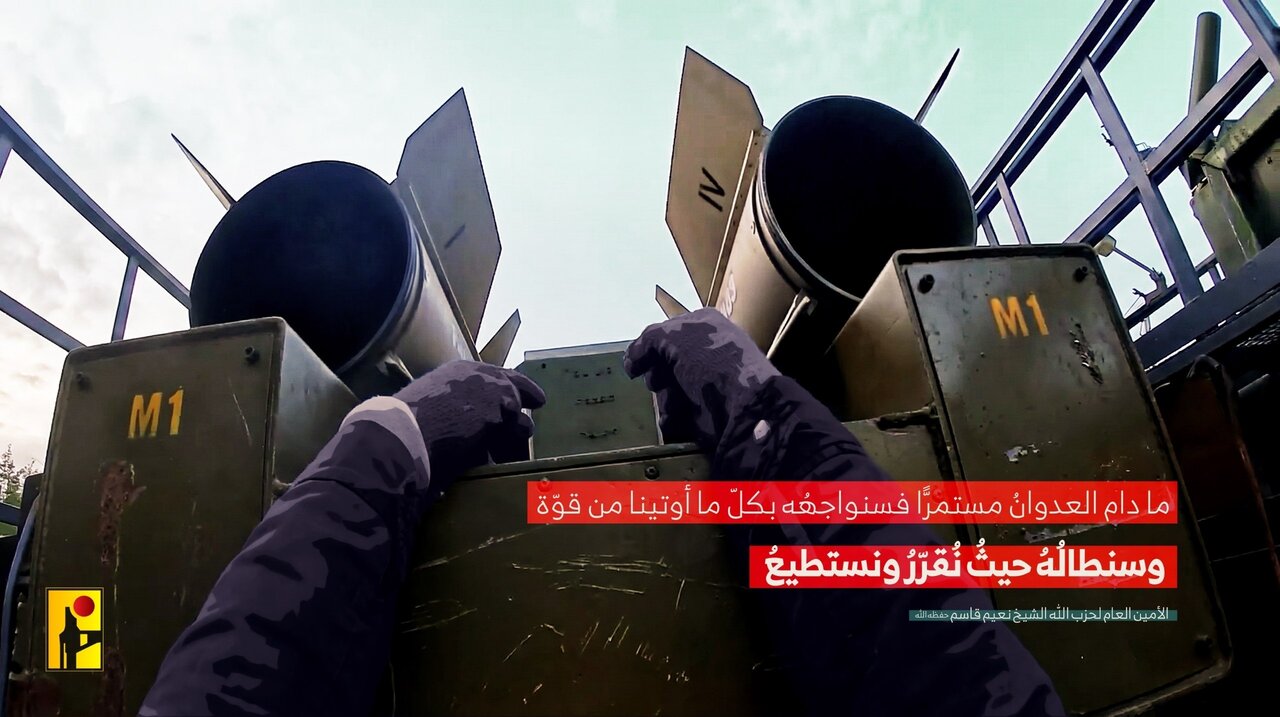
The Hezbollah resistance movement continues to attack the IOF, targeting military vehicles and troop concentrations in response to the ongoing violations of the ceasefire.
As part of its latest operations to confront hostile movements, the resistance movement announced that it struck a Merkava tank on the southern outskirts of the town of Hadatha, using appropriate weapons. In the same area, and in continuation of its operations, resistance fighters attacked a gathering of IOF soldiers, using two Ababil kamikaze drones.
Hezbollah said it attacked concentrations of IOF military vehicles and troops on the southeastern outskirts of Yahmar al-Shaqif with rocket barrages and artillery fire. Resistance fighters struck the same concentration of IOF troops and vehicles once again with artillery shells. The Lebanese resistance front also announced that it had targeted an IOF command post in the town of Naqoura using an Ababil attack drone.
The IOF has acknowledged that four soldiers were wounded after an explosive drone detonated in southern Lebanon. According to Hebrew media, the incident occurred when a Hezbollah explosive drone struck a Humvee carrying several soldiers in the town of Khiam.
On Sunday, the Israeli Health Ministry updated casualty figures recorded since the occupation regime’s military escalation on March 2, stating that the total number of casualties admitted to hospitals since the start of the war had reached 9,026.
The data showed that 1,125 casualties were recorded in hospitals from the northern front with Hezbollah alone following the ceasefire with Iran.
On Saturday, the IOF also acknowledged the death of a captain from the Egoz Unit during combat with Hezbollah. It also confirmed the death of a soldier from the Shaked Battalion of the Givati Brigade.
Meanwhile, Hezbollah has condemned the “cowardly criminal attack” that targeted a Lebanese military vehicle, resulting in the “martyrdom” of two officers and a soldier.
In a statement, the Lebanese resistance front affirmed that the targeting of the military vehicle constitutes a “clear and deliberate crime.” The attack falls within unstoppable raids by the occupation regime against Lebanese citizens, particularly in south and western Bekaa.
Hezbollah said the attack is the “natural outcome” of the Lebanese government’s disregard for national sovereignty, people’s blood, as well as offering “gratuitous concessions.”
It pointed out that "full surrender to the enemy’s conditions in Washington” has encouraged the regime to continue its aggression and shed the blood of Lebanese citizens and army personnel.
Hezbollah extended its deepest condolences and sympathy to the families of the army’s martyrs and to the military establishment, leadership, officers, and soldiers, reaffirming its continued support for the Lebanese army.
The Lebanese resistance front added it stands firmly with the Lebanese army.
While the government engages in infighting during wartime, Hezbollah has positioned itself as a unifying national force committed to national defense rather than political division.
Lebanese President Michael Aoun and Prime Minister Nawaf Salam have lashed out at anybody defending the heroic resistance against Israeli war crimes.
This was proven by recent developments, where Iran declared its absolute solidarity with the Lebanese people and made halting Israeli aggression a precondition for continuing peace talks with Washington. This was reaffirmed in a statement by Iran’s Islamic Revolution Guard Corps on Thursday, June 4, which emphasized that regional stability depends on the immediate withdrawal of the occupation forces from Lebanese territory. The IRGC insisted that Iran’s fundamental condition for accepting a ceasefire is based on reaching a comprehensive halt to hostilities on all fronts, including Lebanon.
Everyone, including top American officials, acknowledged that Iran’s military threats played a crucial role in stopping the IOF from a ground invasion and a widespread bombing campaign of the capital Beirut, where the Lebanese government sits, while many in the region looked on without lifting a finger. However, President Aoun levelled accusations against Iran for the Israeli aggression.
The latest so-called ceasefire agreement was utterly useless from the beginning, as it demanded the disarmament of Hezbollah, which served Israeli interests above all else, paved the way for domestic unrest in Lebanon, and, most importantly, did not require the withdrawal of the invaders from Lebanon.
Although most conditions favored Israel, owing to the official stance of the Lebanese government, President Aoun and Prime Minister Salam failed to exploit the weaknesses of the regime, which had already been unable to achieve its strategic goals in Lebanon due to Hezbollah’s fierce resistance.
This failure was reflected in the “surrender document” signed by the Lebanese delegation in Washington under pressure from President Trump, who diplomatically granted Israel what it could not secure through aggression, killing, and destruction.
Leave a Comment