Iran, Belarus emphasize expansion of industrial, commercial, logistical cooperation
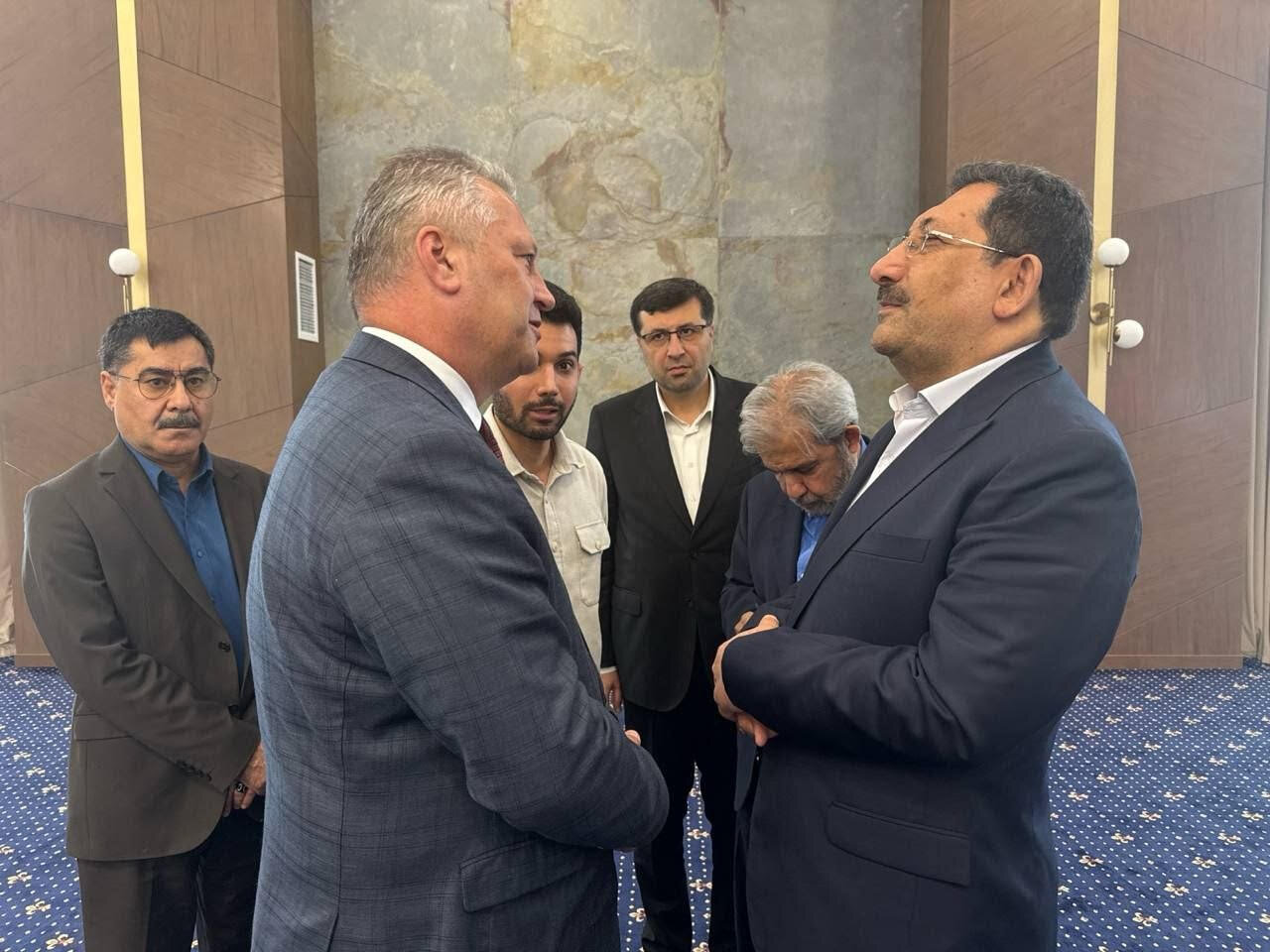
TEHRAN- The Minister of Industry, Mining and Trade of Iran, in a meeting with the Deputy Minister of Industry of Belarus, emphasized the development of bilateral cooperation in the fields of industry, trade, transport, logistics, and joint production.
In this meeting, the two sides, referring to the growing economic relations between the two countries, stressed the need to increase the volume of trade exchanges and identify new opportunities for cooperation in various industrial and manufacturing sectors.
The Minister of Industry, Mining and Trade, pointing to the industrial capabilities of the two countries, cited cooperation in the supply of mining machinery as one of the important axes of joint cooperation and called for expanding interactions among active companies in this field.
During the meeting, the issue of joint tractor production in Iran was examined, and the two sides emphasized utilizing existing technical and industrial capacities to develop cooperation in this sector. Also, areas of cooperation for the joint production of urban and intercity buses and trucks with the participation of companies from both countries were discussed.
The Minister of Industry, Mining and Trade considered the development of transport infrastructure and facilitation of communication among economic activists as requirements for expanding economic relations and stressed the need to establish direct air lines between Iran and Belarus, as well as facilitating the visa issuance process for traders and citizens of the two countries.
In another part of the meeting, the readiness of Iran to export medical equipment, medicine, and health sector products to Belarus was announced, and the two sides emphasized the development of cooperation in this sector.
Furthermore, the development of logistical cooperation and utilization of the capacities of the North-South International Corridor was emphasized as one of the important axes of joint cooperation. The two sides assessed the use of this strategic route as an effective ground for facilitating trade, reducing transport costs, and increasing economic exchanges between the two countries and the region.
At the end of the meeting, the two sides emphasized the continuation of consultations, follow-up of agreements, and strengthening of joint cooperation in the industrial, commercial, and transport fields in order to enhance the level of economic relations between Iran and Belarus.
* Iran, Belarus negotiate development of cooperation in agricultural sector
Iran’s Deputy Minister of Agriculture and head of the Agricultural Research, Education and Extension Organization, during a trip to Minsk, met with the Minister of Agriculture of the Republic of Belarus, on June 5, and discussed the development of relations between the two countries.
Gholamreza Golmohammadi and Yuri Gorlov exchanged views on common areas of cooperation between the two countries in agriculture, applied research, modern technologies, and development of scientific and technical interactions.
In this meeting, which was held in the presence of Alireza Sanei, the Ambassador of the Islamic Republic of Iran to Belarus, the two sides emphasized the need to utilize existing capacities to enhance the level of bilateral cooperation and develop agricultural relations between Iran and Belarus.
The Deputy Minister of Agriculture, who traveled to Minsk to participate in the Agriculture Summit of Shanghai Cooperation Organization member states (AgroSCO-2026) and the 36th International Specialized Agricultural Exhibition Belagro-2026, also met with some other senior scientific and agricultural officials of this country during the trip.
Golmohammadi met and held talks with Piotr Kazakevich, Deputy Chairman of the Presidium of the National Academy of Sciences of Belarus (NASB), at the academy's premises.
In this meeting, the two sides examined the scientific and research capacities and capabilities of Iran and Belarus in agriculture and emphasized the expansion of joint cooperation in various fields.
Soil mechanization and development of smart agriculture, utilization of modern technologies and equipment to increase crop productivity, exchange of genetic resources and seeds, introduction and development of climate‑resistant varieties, restoration of damaged and degraded soils, and implementation of joint research projects were among the most important topics discussed in this meeting.
According to another report, visiting the international specialized exhibition "Belagro 2026" of Belarus at the BELEXPO international exhibition center in Minsk was another item on the Deputy Minister of Jihad Agriculture's agenda.
This event, now in its 36th edition, is the largest specialized agricultural and food industry exhibition in Belarus and every year hosts companies, research institutes, producers, and agricultural activists from various countries around the world.
On the sidelines of this exhibition, the international forum "AgroSCO‑2026: Growth Strategy" was held with the participation of representatives from Shanghai Cooperation Organization member states.
Golmohammadi, as the representative of the Islamic Republic of Iran, delivered a speech at this meeting and elaborated on Iran's perspectives and capacities in the field of agricultural research, modern technologies, and regional cooperation, especially cooperation among SCO member states.
* Iran, Belarus hold 18th Joint Economic committee meeting in Tehran
The eighteenth session of the Iran-Belarus Joint Economic Committee meeting convened in Tehran, in last December, bringing together senior ministers, business representatives and experts from both countries to outline a new phase of commercial, industrial and scientific collaboration.
The meeting was co-chaired by the two countries’ industry ministers.
Speaking at the session, Iranian Industry, Mining and Trade Minister Mohammad Atabak said the committee is expected to produce substantive agreements that will broaden cooperation across economic, commercial, scientific, cultural and investment fields.
He said the implementation of the free trade agreement between the Islamic Republic and the Eurasian Economic Union (EAEU), along with plans for a special economic zone, represents “a turning point” in the commercial and industrial history of member states.
Atabak added that these arrangements give national policymakers and private-sector actors a wider platform to pursue long-term economic development and to deepen regional engagement.
The minister highlighted plans to reinforce legal frameworks, expand university-level scientific cooperation and support business-to-business engagement with Belarus. Years of political and economic interaction—including sector-specific working groups and high-level visits—have helped create conditions for broader joint projects across industry, science, culture and trade.
According to Atabak, the formation of dedicated working groups in industrial, health, medical and agricultural sectors has enabled companies in both countries to advance practical cooperation.
He said the two governments aim to raise bilateral trade volumes in line with their economic capacities and complementary strengths.
* Removing banking and transit obstacles
Atabak noted that banking problems, letters of credit and transit issues for drivers must be resolved quickly to facilitate predictable and efficient trade. He called on private-sector representatives to intensify efforts to understand each other’s markets and build long-term commercial partnerships. Establishing trade centers, exhibitions and consultative councils could accelerate this process, he said.
He also underlined the country’s strategic logistics position in West Asia, saying Belarusian firms could use southern ports as gateways to India, Africa and Southeast Asia.
Atabak said the joint session reflected the strong will of both governments to pursue comprehensive ties. He reiterated the need to resolve banking issues, improve customs and logistical links, and standardize pharmaceutical regulations under EAEU frameworks.
* Belarus emphasizes readiness for joint industrial projects
Belarusian Industry Minister Andrei Kuznetsov thanked the hosts for the organization of the commission and said the presence of his delegation reflects a commitment to strengthening friendly relations. He said expert teams from both countries had contributed significantly to drafting the agreements and preparing implementation plans.
Kuznetsov said Belarus is keen to move quickly on joint agreements and to expand cooperation in economic and industrial technologies, pharmaceuticals, medical equipment, machinery, home appliances, food products and agricultural goods. He underscored the importance of establishing joint production lines, advancing pharmaceutical and medical projects, and updating investment and economic mechanisms.
* Focus on transport corridors, education and cultural exchange
The Belarusian minister identified transportation, transit corridors, scientific education and cultural tourism as priority areas for near-term action. He said academic cooperation—such as joint scientific committees and mutual recognition of degrees—will help strengthen trust and expand long-term exchanges.
Kuznetsov added that reinforcing professional, technical and educational engagement could help increase bilateral trade volumes and broaden the overall scope of cooperation.
In a meeting with Head of Iran’s Trade Promotion Organization Mohammad Ali Dehghan Dehnavi, earlier this week, Belarusian Ambassador to Iran Dmitry Koltsov stated: "We are seriously pursuing increased trade and economic exchanges between Iran and Belarus”.
In the mentioned meeting, the TPO head emphasized the expansion of trade cooperation between the two countries, stating: "Holding the joint committee meeting can facilitate many trade issues between the two countries."
He stressed the development of trade cooperation between the two countries, saying: "There are diverse capacities for trade exchanges between Iran and Belarus, and we strive to expand economic relations between the two countries in various fields."
Dehghan Dehnavi further listed some trade issues that would lead to the development of bilateral trade relations, expressing hope: "The joint committee meeting can facilitate many trade matters between the two countries."
The ambassador of Belarus to Iran, for his part, referred to the importance of the Iran-Belarus joint committee meeting, stating: "The meeting of officials from both countries in this committee is highly significant and will resolve many trade obstacles."
Dmitry Koltsov added: "After this meeting, we intend to have further meetings with the managers of Iran’s Trade Promotion Organization to follow up on the topics discussed."
Highlighting that "we are seriously pursuing increased trade and economic exchanges between Iran and Belarus”, the ambassador expressed hope that “after this meeting, we will witness good measures in expanding trade relations between the two countries."
EF/MA
Leave a Comment