Mining in thought of Martyr Leader; from capacity, advantages of mining to replacing oil
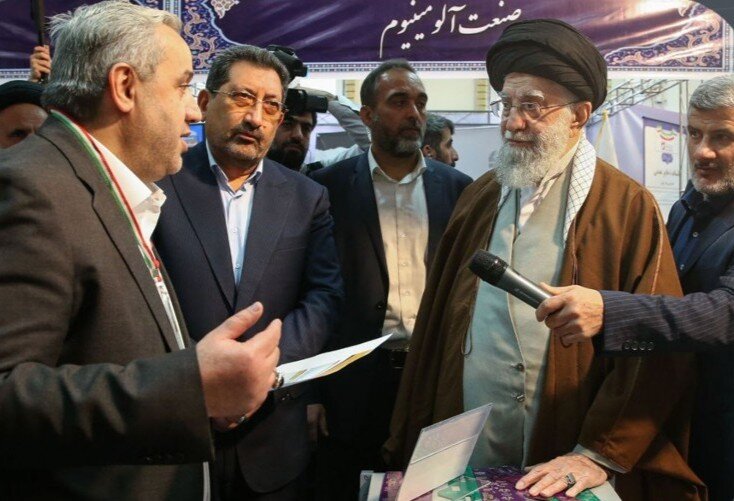
TEHRAN- The head of the board of directors of the Iranian Mines and Mining Industries Development and Renovation Organization (IMIDRO), stating that one of the most important axes of the Martyr Leader's economic thought is dedicated to the position of mining in the resistance economy, wrote: Perhaps the most prominent part of his views is his repeated emphasis on replacing oil with mining. In his view, the country's mines, possessing rare and valuable reserves, are one of the best options for achieving this goal. Of course, this substitution will only be possible if the value chain is developed.
Mohammad-Masoud Samiei-Nejad, Deputy Minister and head of the board of directors of IMIDRO, on the occasion of the farewell and funeral procession of Ayatollah Seyyed Ali Khamenei, the Martyr Leader of the Islamic Revolution, in an exclusive note for IRNA, elaborated on his thoughts in various fields, which is as follows:
Iran is one of the few countries in the world that simultaneously enjoys a wide diversity of minerals, massive proven reserves, and vast unexplored areas. The presence of over 65 types of minerals, tens of billions of tons of proven reserves, and numerous undiscovered capacities have turned the mining sector into one of the country's most important strategic advantages. However, what doubles the importance of this sector is the deep and forward-looking view of the Martyr Leader of the Islamic Revolution towards mining as one of the pillars of economic independence and a substitute for the oil economy. On the occasion of the farewell ceremony for the Martyr Leader of Iran and the arrival of Industry and Mining Day, it is an opportunity to take a look at the thoughts and emphases of this dear Imam and martyr in the field of mining.
A review of his statements over more than three decades shows that mining was not considered merely an economic or industrial activity, but rather a part of the system of national progress, economic justice, and national authority.
From the first years after the revolution, the subject of mines held a special place in his speeches. In the Friday prayer sermons of 1987 (Iranian year 1366), mines, alongside lands, forests, and seas, were introduced as public wealth belonging to all people. In this view, the exploitation of natural resources should be such that the opportunity to use these divine blessings is provided for all members of society, and the monopoly of resources is not held by a specific group.
In later years, the Martyr Leader considered mining one of the main components of material welfare and national development.
In his message on the occasion of the fortieth day of the passing of Imam Khomeini, he listed mining extraction, along with reconstruction, economic prosperity, public health, and scientific development, as signs of the country's progress. This view shows that the exploitation of mineral resources is not merely about generating wealth, but is considered a tool for reducing poverty, increasing public welfare, and ensuring the country's sustainable development.
Alongside attention to mineral reserves, the Martyr Leader always emphasized the role of human capital. His visit to the Sarcheshmeh Copper Complex in 2005 (Iranian year 1384) and his appreciation of the efforts of workers, engineers, and managers of that complex are symbols of this approach.
He repeatedly emphasized that the treasures hidden in Iran's soil turn into national wealth only when accompanied by knowledge, management, innovation, and the effort of the Iranian human force. From this perspective, mining is not only a natural reserve but also a field for the flourishing of national capabilities.
One of the most important axes of the Martyr Leader's economic thought regarding mining is its place in the resistance economy. In a situation where Iran's economy has been under the influence of sanctions and limitations caused by dependence on oil revenues for years, he repeatedly emphasized the necessity of utilizing domestic capacities.
In this regard, mining was proposed as one of the country's most important internal advantages; a capacity that, in addition to generating foreign currency, can provide the ground for the development of downstream industries, extensive employment, and increased added value.
Perhaps the most prominent part of his views is his repeated emphasis on replacing mining with oil. The Martyr Leader stated in various years that Iran must reach a stage where it can continue its development path without worrying about oil revenues. In his view, the country's mines, possessing rare and valuable reserves, are one of the best options for achieving this goal. Of course, this substitution will only be possible if the value chain is developed.
Within this framework, serious opposition to the raw sale of minerals is another constant axis of his speeches. The Martyr Leader repeatedly warned against the export of raw minerals and considered it a cause for losing a major portion of the economic value of these resources.
In his belief, real wealth is created when minerals are processed domestically and turned into industrial products with high added value. This approach not only brings more income to the country but also leads to the development of technology, specialized employment, and the strengthening of knowledge-based industries.
Alongside economic opportunities, the Martyr Leader also paid special attention to the geopolitical importance of mines. He repeatedly reminded that natural resources and underground reserves have always been factors of greed for colonial powers, and many wars and foreign interventions in the world have been formed with the motive of accessing these resources.
From this perspective, the development and proper management of mines are not only an economic necessity but also a part of preserving national independence and dignity.
Despite these emphases, the Martyr Leader at various times also complained about the governments' neglect of the country's mining capacities. He stated that he had repeatedly emphasized the importance of mines, but this sector has still not reached its true place in the national economy.
This criticism indicates that there is a considerable gap between the existing capacities and the actual extent of their exploitation.
Today, when Iran's economy needs diversification of income sources and reducing dependence on oil more than ever, revisiting the views of the Martyr Leader about mining finds special importance. The collection of these statements presents a clear roadmap for policymakers; a roadmap based on broader exploration, attracting investment, developing technology, processing minerals, supporting the private sector, and preventing the raw sale of minerals.
Undoubtedly, mining can be one of the main drivers of Iran's economy in the coming decades. Achieving this goal requires that the country's vast underground capacities be transformed into sustainable wealth through knowledge, investment, and efficient management. As the Martyr Leader repeatedly emphasized, Iran is sitting on a great treasure of mineral resources, and the proper exploitation of this treasure can create a different future for the country's economy.
Leave a Comment