Restoration begins at UNESCO-listed Chehel Sotoun after blast damage
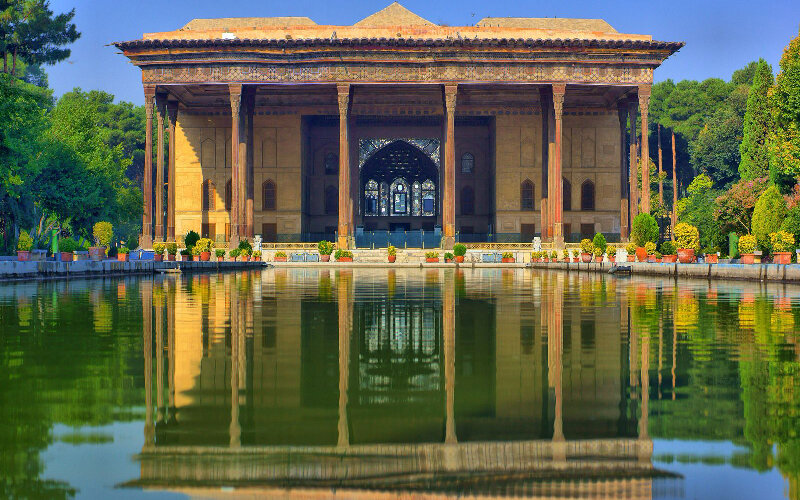
TEHRAN - Restoration work has begun on damaged sections of the UNESCO-listed Chehel Sotoun World Heritage site in Isfahan following blast damage sustained during the recent war with the US-Israeli regime, the site’s director said on Wednesday.
Mostafa Hadipour, director of the Chehel Sotoun World Heritage Base, said the damage was caused by the blast wave from a US-Israeli attack on a building, which is located within the protected buffer zone of the historic complex.
“The restoration and conservation of the damaged sections have now begun after technical assessments, damage evaluation and the procurement of the required materials,” Hadipour told ISNA.
He said one of the most significant losses was the destruction of the decorative brick latticework and entrance structure of the site’s ticket office. Tempered glass windows were shattered, equipment was damaged and parts of the roof above a staff room on the Sepah side of the complex collapsed due to the force of the blast.
Hadipour said the restoration was being carried out using allocated conservation funds by a team from the Isfahan provincial office of the Ministry of Cultural Heritage, Tourism and Handicrafts, following scientific conservation principles.
He said the staff room is among the historic spaces within the complex, with sections dating to the first and second Pahlavi periods. Damaged wooden beams will be replaced with matching timber treated to improve resistance to termites, wood-boring insects and moisture. Other work includes installing metal lath beneath the beams, replastering walls and repairing damaged structural elements.
Hadipour said investigations conducted alongside the restoration had uncovered evidence from different historical periods. During the removal of damaged layers, conservators found a historical wall niche that had been sealed in later periods, as well as traces of earlier painted decoration beneath plaster coatings.
He said the findings would be documented and preserved as part of the restoration process. In some areas, conservators will use a method known as “witness preservation” to retain visible historical layers and evidence of the recent damage for future research.
“Our approach is based on protective restoration and minimum intervention,” Hadipour said. “Only structurally damaged elements will be replaced with compatible materials, while the remaining historic fabric will be stabilized and preserved.”
He said all stages of the project were being supervised by specialists from the Chehel Sotoun World Heritage Base and that the primary objective was to preserve the site’s authenticity and historical identity while documenting evidence of the incident for future generations.
Chehel Sotoun, meaning “Forty Columns,” is a Safavid-era pavilion built by Shah Abbas II in the 17th century in Isfahan. The palace was used to receive dignitaries and ambassadors and now operates as a museum displaying works from different periods of Iranian history.
The surrounding garden forms part of the UNESCO-listed Persian Garden ensemble, which was inscribed on the World Heritage List in 2011. The serial property includes nine historic gardens across Iran and reflects principles of Persian garden design dating back to the era of Cyrus the Great.
AM
Leave a Comment