The vision that outlived the Leader
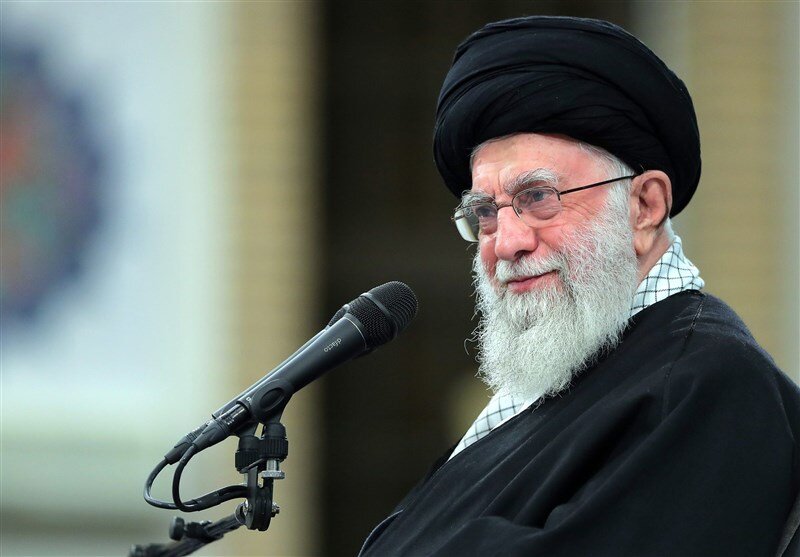
LONDON - The influential results of Sayed Khamenei's strategic achievements that overturned the equation in Iran's favor did not appear during his lifetime. It was as though strategic patience ended with his martyrdom, and as though he had chosen this himself as a plan, so another stage of the revolution would begin after he breathed his last.
No one fully understood the magnitude of his achievements during his lifetime. It was only after his martyrdom that their true significance became apparent. To appreciate them, one must return to the beginning of his tenure as Wali al-Faqih (Guardian Jurist), as well as to his decades-long struggle before the fall of the Shah, his contribution to the Islamic Revolution, and his leadership in the years following its victory. Together, these achievements established him as the strongest and most distinguished natural candidate to assume the position of Supreme Leader.
He took prominent roles while the Islamic Revolution was surrounded by different conspiracies from every side. They included the MEK terrorists, separatist movements, the assassination of senior officials, the imposed eight-year war, and betrayals from within. They were all aimed at toppling the Islamic Revolution.
Sayed Ali Khamenei set before his eyes the goal of institutionalizing state affairs after God had breathed into him an exalted spirit through Ruhollah Sayed Al-Khomeini.
The new leader made it his concern that the institutions, although separate, are tightly built, closely linked and interconnected. He installed a mechanism for gradation between the institutions, according to the level of the decision, with each having its own specialization. This was to ensure the affairs were disciplined and complexities would be resolved, without falling into bureaucracy that hinders movement. This was designed so that if an institution failed or became incapable, it would not affect the functioning of other institutions, and it could be compensated for.
Institutions were directly or indirectly elected, from the top of the hierarchy to its bottom. No institution was above the law. Even for the Wilayat al-Faqih, there is a mechanism of accountability. The Assembly of Experts, which consists of 88 top religious scholars, appoints and holds the Leader accountable. That Assembly itself is elected by the people. Matters may even extend to scrutinizing the Leader's smallest practices, overseeing him, and evaluating his performance in dealing with the problems facing the country.
Therefore, matters encompass the legislative, executive, judicial, and media authorities, with the continual introduction of amendments to whatever is ineffective. This effectiveness comes from bringing together the energies of the nation and its competencies, in a way that leads to activating them, each in its own field.
The unification of the nation's energies should not be founded on religious, doctrinal, or philosophical discrimination, but rather on the principles of citizenship and the needs of the country.
This was in terms of activities in every field, which were organized in a way that Iran became a dynamic, productive, and effective nation.
Ayatollah Khamenei’s greatest concern was guiding people through spiritual connection and activating it in every sphere. This aimed to establish a strong, resilient, and productive independent state, built on faith, determination, and the resources necessary to foster capability.
This was both a declaration and a program of action, delivered publicly before the nation and heard by the world each year on the Day of Arafah (the ninth day of Dhu al-Hijjah). In it, he outlined the year's priorities, defining the urgent objectives for the state and all its institutions.
He also set out priorities for his followers around the world, urging them to focus on the issues that would help elevate the societies in which they lived. This reflected a vision that was practical, realistic, ambitious, and achievable—one that provided broad strategic direction not only for Iran but for the wider nation.
It served as the annual guide that set the country's course for the year ahead, identifying the policies required to achieve national goals within the country's capabilities while advancing its aspirations for development. The guidance encompassed the economic, political, military, and security spheres, directing the government to pursue policies that addressed the genuine needs and aspirations of its citizens.
Achievement is measured by results. When a country is under harsh sanctions in all fields but is able to endure, it shows the Leader's policy was to transform crises into opportunities. That is, transforming this first into a productive movement, and second into parallel channels for circumventing economic siege, thereby granting Iran strength, power, a network of relationships, and a structure.
These parallel lines and threads turned into networks in depth and breadth, and their influence reached a point where dismantling them became exceedingly difficult. The enemy cannot dismantle what it has no knowledge of, except by destroying the thing in its entirety. Perhaps this is what led its greatest arrogant enemy, which had reached a point of despair, to seek the overthrow of the Islamic Republic. The enemy deemed that there was no remedy for this situation, except its total destruction and the destruction of the mind directing it, that is Sayed Ali Khamenei.
What it failed to realize was that this was the connected mind which "held fast to the firmest handhold, which never breaks apart", as the Holy Quran mentions in Chapter 2. Sayed Khamenei had rejected false deities (taghut) and attached to God. By recognizing this matter early, the industry developed, along with self-sufficiency in military and defense industries.
In this field, the Leader sought what was possible and what was needed under conditions of asymmetric capabilities. He sought and achieved what would deter the enemy, not what would merely match it, excelling in defensive means. Iran relied on its accumulation of experience, rather than reliance on other countries that give and withhold, according to what their interests require. This was another qualitative achievement inspired by the martyred Leader in domestic manufacturing and in adaptation to suit necessity.
He did not merely call for action and outline a methodology; rather, he was familiar with many details, even while seeking relationships. It is true that he built upon what already existed, but he focused on planting the seeds of goodness so that they would grow under the care of the oppressed, who longed for the rise of free thought. He loved them, and they loved him. He met with them and encouraged them. He met with the oppressed more often than he met with leaders and officials. And in every field, he left an impact, and when the moment of silence came, he had the greatest impact.
He united the Iranian nation. He unified the struggle against oppression. Through his martyrdom, he swept away the dust of decades of propaganda aimed at distorting Iran's image. In the eyes of much of the world, Iran was transformed from a state portrayed by the West as a rogue nation into a bold, courageous, and rising power.
Leave a Comment