Development of hybrid, electric vehicles, government's new strategy for energy management
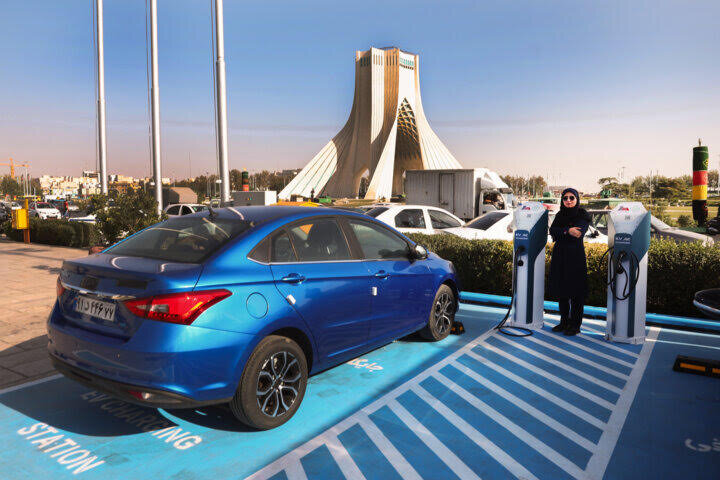
TEHRAN- The development of hybrid, dual-fuel, and electric vehicles is the government's new approach to managing fuel and energy consumption, which not only leads to consumption reforms in the gasoline sector but also brings about a fundamental transformation in the production structure of the automotive industry and a technological change in this field.
President Masoud Pezeshkian's emphasis on accelerating the implementation of reforms related to gasoline rationing, developing public transportation, and increasing the production of hybrid and dual-fuel vehicles indicates the government's new approach to managing fuel consumption by changing fleet technology and replacing vehicles with low-consumption ones.
The government's focus on producing hybrid and dual-fuel vehicles sends a direct message to domestic automakers that, alongside the import of these types of vehicles, the automotive industry in the new model should transform from a "consumer goods manufacturing" industry into an "executive arm of energy security".
The development of hybrid products, given the significant reduction in liquid fuel consumption, can minimize the pressure on refineries and drastically reduce the country's need for gasoline imports in the medium term.
Hybrid vehicles, by utilizing a combination of combustion and electric engines, ensure stable performance on various urban and road routes while simultaneously playing an effective role in moderating the energy imbalance.
The expansion of this technology will not only lead to a gradual change in consumption patterns and market tastes but also, by reducing the government's financial burden in the fuel supply sector, will provide the necessary financial resources for developing new energy infrastructure.
In fact, the increased penetration of hybrid vehicles serves as a catalyst for the successful implementation of fuel subsidy reforms and the creation of a sustainable development cycle in the automotive industry.
The development and modernization of the dual-fuel (natural gas consumption) vehicle fleet is also proposed as a strategic solution alongside hybrid vehicles.
Given that Iran is one of the world's largest producers of natural gas, directing the vehicle fleet and even part of the heavy logistics fleet towards gas consumption also prevents the waste of foreign currency on gasoline imports.
An examination of gasoline consumption in vehicles shows that converting part of the current fleet to dual-fuel and widely producing new vehicles with this technology can compensate for the severe gasoline imbalance by utilizing the "surplus gas capacity". This action, in addition to reducing fuel costs for citizens and industries, reduces the government's economic pressure to supply expensive fuels.
Experts believe that the Ministry of Industry, Mining and Trade, as the body in charge of the automotive industry, and domestic automakers must move away from traditional production models and base their development plans on "alternative technologies". However, this requires special government support in the form of low-interest facilities for fleet modernization towards low-consumption and dual-fuel vehicles, support for research and development to localize hybrid engine components and energy management systems, and a revision of tariffs to facilitate the entry of advanced technologies for producing green vehicles into the country.
Undoubtedly, reducing the fuel imbalance means ensuring energy supply for various sectors and will prevent fuel crises that could lead to the shutdown of production lines or increased logistics costs.
Optimal management of the fuel mix is one of the important axes of the five-year development plan. Within this framework, automakers were obligated to allocate a portion of their production to low-consumption and clean vehicles. Accordingly, targeting the production of half a million electric and hybrid vehicles per year, while reducing fuel consumption, will enhance productivity and the development of new technologies in the automotive industry.
Domestic automakers have produced and marketed products in the field of new technologies. However, alongside hybrid and dual-fuel vehicles, the role of electric vehicles, especially in the public fleet and the scrappage of old vehicles, is also essential. In this regard, electric buses have been produced in the country since last year and have joined the public fleet.
Beginning of hybrid and electric vehicle production in country
In this regard, Amir-Hassan Kakaei, an automotive industry expert, told IRNA: Electric and hybrid vehicles are currently being produced by several domestic automakers in the country, although mass production of these types of vehicles requires resources.
He adds: Introducing electric and hybrid vehicles is not the only solution to reduce fuel consumption and air pollution; rather, other issues such as the aging fleet and the development of public transportation infrastructure must also be considered.
Referring to the aging fleet crisis, Kakaei notes that out of the 27 million vehicles in the country, more than 17 million are considered worn-out, with ages far exceeding the global standard (10 years).
The automotive industry expert states: Our main issue is not merely fixing superficial defects; the fundamental challenge is the aging of the vehicle fleet, which has not been properly addressed in the country's seven-year plans either.
Stating that replacing vehicles with electric ones in Iran does not necessarily mean reducing fuel consumption and "cleaning up" the environment, he says: Our energy mix in electricity production is still based on fossil fuels. While the world is moving towards clean energy, we are even facing a gas shortage (as a relatively clean fuel) and in many regions, we are forced to use mazut. As a result, converting fossil fuels into electricity for electric vehicles merely shifts pollution from the vehicle's exhaust to the power plant's smokestacks and is not considered a final solution for improving the air quality in cities like Tehran.
Kakaei emphasizes that our main problem, before being a technological challenge, is an economic and policy-making challenge. Shifting the priority from "passenger cars" to "public transportation", he suggested: The budget should be spent on developing public transportation fleets, especially electric buses. We have the ability to produce electric buses in Iran, but the lack of attention from policymakers to the real needs of citizens has hindered the development of this sector.
EF/MA
Leave a Comment