Tehran, Astana agree to cooperate on intellectual property
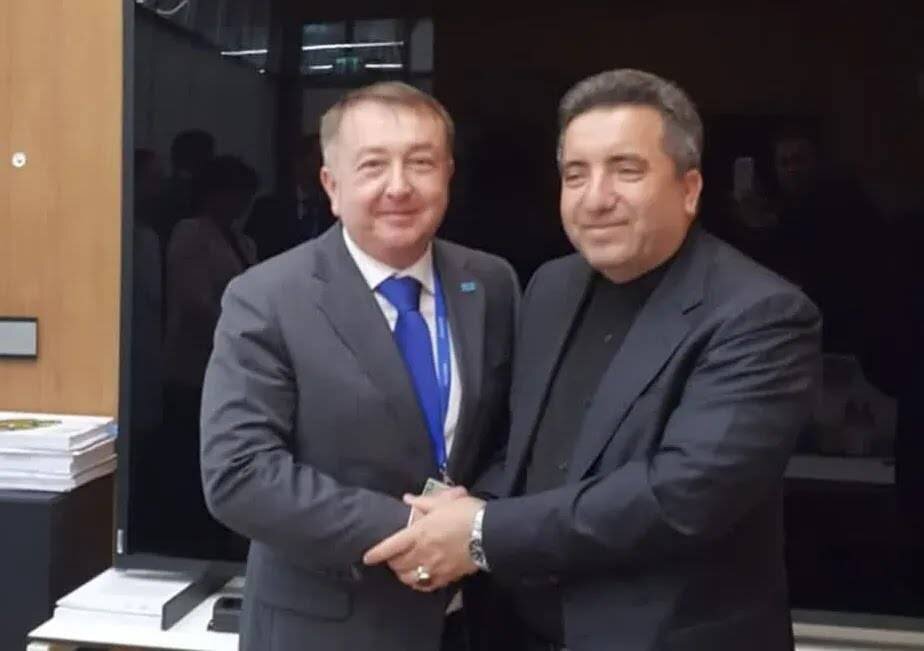
TEHRAN – The head of the State Organization for Registration of Deeds and Property, Hassan Babaei, and Kazakhstan’s Minister of Justice, Sarsembayev Yerlan, have agreed to establish a joint working group to expand collaborations on intellectual property.
The officials met on the sidelines of the Sixty-Eighth Series of Meetings of the Assemblies of the Member States of WIPO, taking place at WIPO headquarters in Geneva, Switzerland, from July 7 to 15, IRIB reported.
The joint working group aims to follow up on the implementation of the provisions of the MOU, coordinate joint programs, and expand specialized cooperation between Iran and Kazakhstan.
Both parties discussed ways to enhance technical and international interactions between the two nations. The officials expounded on measures taken by the two countries and their achievements in registration, legal protection, and development of intellectual property.
They also discussed ways to enhance technical interactions between the two nations.
During the meeting, Yerlan lauded Iran’s long history and valuable experience in drafting laws and implementing an intellectual property rights protection system, and underscored the need to draw on Iran’s expertise, knowledge, legal expertise, and operational achievements to enhance Kazakhstan's intellectual property system.
Highlighting the historical, cultural, and civilizational commonalities between the two countries, he expressed hope that the implementation of the MOU would pave the way for the development of specialized relations, joint research projects, and increased exchange of experiences.
The Iranian official, for his part, said the establishment of a working group will contribute to transforming bilateral agreements into operational plans and tangible results. He voiced the country’s readiness to utilize all specialized, educational, and operational capacities of its Intellectual Property Center to realize the objectives of the MOU.
According to Babaei, the MOU encompasses various areas, including exchanging legal and legislative expertise, specialized knowledge and experience in intellectual property, conducting educational courses, empowering businesses based on geographical indications, developing expert-level cooperation, and enhancing the two nations' institutional capacities.
The official went on to say that benefitting from shared capacities within committees like Standing Committee on the Law of Patents (SCP), Standing Committee on the Law of Trademarks, Industrial Designs, geographical Indications (SCT), Committee on Development and Intellectual Property (CDIP), the Intergovernmental Committee on Intellectual Property and Genetic Resources, Traditional Knowledge and Folklore (IGC) would play an effective role in advancing the shared interests of the two countries in the international arena.
Referring to Iran’s digital transformation plans, including utilizing modern technology, digitizing, automating registration processes, expanding electronic services, and improving digital infrastructure, the official said the two countries can exchange expertise and conduct collaborative projects in these fields.
On the sidelines of the Sixty-Eighth Series of Meetings, the Iranian official also held a meeting with the director general of the World Intellectual Property Organization (WIPO), Daren Tang.
During the meeting, the two sides discussed recent developments in Iran’s intellectual property system, ongoing joint efforts, and explored the potential for the enhancement of interactions.
Elaborating on the country’s measures in 2025, Babaei stated that the signing of the WIPO treaty on intellectual property, genetic resources, and associated traditional knowledge, and accession to the Vienna and Strasbourg Agreements, indicate Iran’s determination to strengthen its participation in the international intellectual property system.
He referred to the implementation of the new Industrial Property Law in Iran as a significant legal and institutional development for the country. The new law has taken into account the standards and obligations outlined in relevant international instruments, paving the way for updating the system for the registration and protection of industrial property rights.
The official went on to say that supporting the intellectual property and innovation ecosystem is one of Iran’s key priorities, and emphasized the need to develop the capacities of specialists in this sector, expand intellectual property services to small and mid-size enterprises (SMEs), and foster more effective connections between the registration system, academic institutions, businesses, and innovation stakeholders.
For his part, Tang said Iran is a country with an ancient civilization, a rich cultural heritage, and significant scientific and innovative capabilities. He underlined the significance of benefiting from these capabilities to develop the intellectual property system and strengthen ties between WIPO and Iran. The official also announced WIPO’s readiness to deepen technical ties with the country.
Following high-level talks in Astana in December 2025, Kazakh President Kassym-Jomart Tokayev and Iranian President Masoud Pezeshkian witnessed the signing of several key intergovernmental documents, The Caspian Post reported.
Agreement on mutual legal assistance in criminal matters; protocol updating international road transport of passengers and goods; cooperation program between the Ministries of Foreign Affairs; cultural exchange program for 2026-2028; memorandum on intellectual property cooperation; strategic cooperation in transport, transit, and logistics; healthcare cooperation; and media cooperation were among the agreements.
MT/MG
Leave a Comment