Trump’s reckless gamble: How American aggression against Iran is crippling global economy
TEHRAN- Just weeks after a fragile ceasefire offered a glimmer of hope for stability in the Persian Gulf, the Trump administration has once again plunged the region—and the world—into a dangerous abyss.
The renewed American military aggression against Iran, initiated on July 7, is not merely a bilateral conflict; it is an act of economic warfare against the entire world. By recklessly tearing up the Islamabad memorandum of understanding and reinstating a naval blockade on Iranian ports, Donald Trump has demonstrated a profound disregard for global stability, prioritizing a misguided and belligerent foreign policy over the well-being of the international economy.
The administration’s actions are indefensible. In a flagrant violation of the recent truce, the U.S. has launched relentless strikes, including attacks on civilian infrastructure. In the southern province of Hormozgan alone, U.S. strikes have resulted in civilian casualties, with reports of roads and bridges being bombed, killing and trapping innocent people. As of July 20, the U.S. has pounded Iran for consecutive nights, an escalation that has seen the bombing of bridges, an airport, and coastal defense systems. This systematic targeting is a clear attempt to cripple a nation and punish its people, not for any legitimate security concern, but to force their leaders into submission. The Trump administration’s claim of moral superiority rings hollow as its actions risk constituting war crimes.
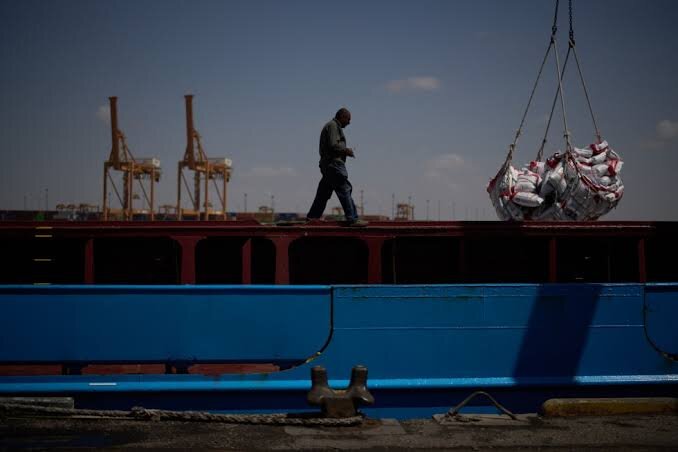
However, the most devastating impact of this folly is being felt far beyond the battlefields of the Middle East. By targeting the Strait of Hormuz—the world’s most vital artery for oil and gas—the Trump administration has effectively held the global economy hostage. The strait, a critical chokepoint for energy flows, has seen shipping grind to a near-halt. This blockade and the ensuing hostilities have sent shockwaves through global markets, driving up energy prices and reigniting inflationary pressures that were only beginning to ease.
The economic damage is quantifiable and severe. The International Monetary Fund now projects global growth to slow to a meager 3% in 2026, down from previous averages. More alarmingly, the IMF expects global consumer prices to increase by 4.7% in 2026, effectively stalling two years of progress against inflation. Oil prices have surged, jumping as much as 6% following Trump’s declaration that the ceasefire was “over”, and have since crossed the $90 a barrel mark. This is not just a statistic; it translates to higher gasoline prices for American families, which have already crossed the $4 per gallon mark, and increased costs for goods and services worldwide.
The consequences are particularly acute for Europe. A simultaneous heatwave has crippled the continent’s river transport, with the Rhine River—a crucial route for coal and oil—seeing water levels drop so low that barges cannot operate at full capacity. This logistical nightmare, compounded by the crisis in the Strait of Hormuz, has pushed energy costs and inflation even higher. In Germany alone, the early summer heatwave has already inflicted an estimated €6 billion in damages, a figure expected to rise as such events become more frequent. Trump’s war is exacerbating a climate-induced crisis, creating a perfect storm of economic disruption.
Furthermore, the conflict has exposed the hollowness of the administration’s strategic thinking. While claiming to target Iran’s military capabilities, the U.S. has merely engaged in a costly and unwinnable war of attrition. The conflict has become a “race against time,” as one analyst put it, a dangerous game where the only certainty is mounting economic and human costs.
Instead of diplomacy, the Trump administration has chosen escalation. Instead of pursuing peace, it has pursued a path that benefits no one, except perhaps those with interests in volatile energy markets. Even U.S. allies and international figures like Russian Foreign Minister Sergey Lavrov have condemned the renewed aggression as a violation of the memorandum and a threat to global economic security. The administration’s myopic policy is a blatant act of international sabotage.
As the U.S. and Iran trade blows, the world watches in dismay. It is time for the international community to unequivocally condemn the Trump administration’s reckless gamble. The path to a stable and prosperous world does not run through the Strait of Hormuz on a warship, but through dialogue and a return to the rule of law. For the sake of the global economy and the lives of millions, this madness must end.
Leave a Comment