Attacks on Iran's infrastructure may amount to ‘collective punishment’: Italian analyst
Chinappi says targeting ports and power networks reflects a hybrid warfare model designed to erode civilian life
TEHRAN - Giulio Chinappi, an Italian political analyst and researcher from the Center for Mediterranean Eurasia Studies (CeSEM), believes the collapse of the Islamabad Memorandum of Understanding reflects not a failure of diplomacy but a deliberate turn toward coercion by Washington and Tel Aviv.
In an interview with the Tehran Times, Chinappi discusses the structural weaknesses behind the memorandum's breakdown, Israel's strategic objectives, Europe's alignment with Washington, and the legal questions raised by attacks on civilian infrastructure.
The following is the full text of the interview:
Only weeks before the renewed attacks, diplomatic channels still appeared to be open. Looking back, do you think diplomacy genuinely failed, or was military escalation becoming the preferred option for one or more of the parties involved?
I would not describe what happened as an inevitable failure of diplomacy. Diplomacy did not exhaust all its possibilities; rather, it was progressively subordinated to a strategy of military and economic coercion. The Islamabad Memorandum of Understanding demonstrated that a negotiated framework was possible. The 14-point document provided for a ceasefire and a 60-day period in which the outstanding disputes could be addressed. Its very existence disproves the argument that there was no diplomatic alternative.
The fundamental problem was that diplomacy was not understood in the same way by the two sides. Tehran regarded it as a reciprocal process that should end hostilities, remove the blockade, protect Iranian sovereignty and create the conditions for separate negotiations on the nuclear question. Washington appeared to regard the ceasefire as a temporary instrument through which it could reopen the Strait of Hormuz and then extract strategic concessions from Iran while retaining military and economic pressure.
In my assessment, escalation became the preferred option for those in Washington and Tel Aviv who were unwilling to accept an agreement between sovereign equals. They expected negotiations to produce Iranian capitulation rather than a balanced settlement. Once it became clear that Iran would not surrender its fundamental rights, military force was reintroduced as a means of changing Tehran’s calculations. The renewed blockade and successive rounds of American air strikes therefore represented a political choice, not the unavoidable result of diplomatic failure. The current military campaign has expanded despite evidence that earlier attacks had failed to force Iran into strategic submission.
The Islamabad Memorandum of Understanding was initially seen as a potential breakthrough. In your assessment, what were the structural reasons behind its collapse, and who ultimately benefited from the failure of that diplomatic process?
The memorandum collapsed because it rested on fundamentally incompatible interpretations. Iran viewed it as the beginning of a reciprocal process leading to the definitive end of the war. The United States treated it more as a provisional arrangement designed to restore maritime traffic while postponing—or preserving—its principal instruments of pressure.
The first structural weakness was the absence of credible enforcement guarantees. Iran was expected to comply with restrictions and security commitments, while Washington retained control over sanctions, the naval blockade and the timing of military operations. This created an inherently unequal arrangement. The second weakness concerned sequencing. Tehran insisted that the cessation of aggression and the removal of the blockade could not be made conditional upon concessions concerning its peaceful nuclear program. Washington instead sought to connect the end of hostilities to nuclear, missile and regional issues.
A third problem was the accumulated deficit of trust. Agreements cannot survive when one party reserves the right to reinterpret or suspend its obligations unilaterally. Iranian officials repeatedly stated that Tehran would respect the memorandum provided that the United States did the same, but subsequently accused Washington of plunging the agreement into crisis through unilateral measures.
Israel’s role must also be considered. Any agreement that ends the war while leaving Iran sovereign, territorially intact and capable of maintaining an effective deterrent conflicts with the more maximalist Israeli objective of permanently weakening the Islamic Republic. For those pursuing regime change or the strategic disarmament of Iran, a reciprocal settlement was therefore less attractive than prolonged confrontation.
In the immediate term, the failure benefited the political and military forces that opposed compromise and sought to preserve the logic of permanent pressure. It also allowed the Israeli leadership to keep the United States militarily engaged in a conflict that serves Israel’s regional objectives. In strategic terms, however, there has been no genuine beneficiary. The renewed conflict has destabilized energy markets, increased fuel prices, endangered navigation and intensified the suffering of civilian populations throughout the region. In the United States, average petrol prices have again exceeded four dollars per gallon as fighting has disrupted traffic through Hormuz.
Several countries attempted to facilitate dialogue between Tehran and Washington before the latest escalation. Why were these mediation efforts unable to prevent renewed military confrontation?
Pakistan, Qatar, Oman and other regional actors performed an important diplomatic function, but mediation has clear limits. A mediator can transmit proposals, reduce misunderstandings and create a negotiating environment. It cannot compel a major power to respect an agreement or prevent a third party from acting as a spoiler.
The central problem was therefore not the quality of the mediation, but the absence of political will among the actors possessing the greatest military power. Pakistan could help draft an agreement, but it could not guarantee that Washington would remove the blockade permanently. Qatar and Oman could maintain channels of communication, but they could not oblige Israel to accept a settlement that preserved Iran’s strategic capabilities. Nor could any mediator provide Tehran with an enforceable guarantee against renewed attacks.
The imbalance of power also weakened the process. Washington continued to regard military and economic pressure as legitimate negotiating tools, while Iran was expected to demonstrate restraint before receiving reciprocal guarantees. Under those conditions, mediation risked becoming a mechanism for managing coercion rather than overcoming it.
Recent conflicts have increasingly blurred the line between military operations and attacks on critical infrastructure. In the case of Iran, are we witnessing a new model of warfare in which a country's economic arteries, transportation networks, and public infrastructure become the primary battlefield. What strategic logic underpins such an approach?
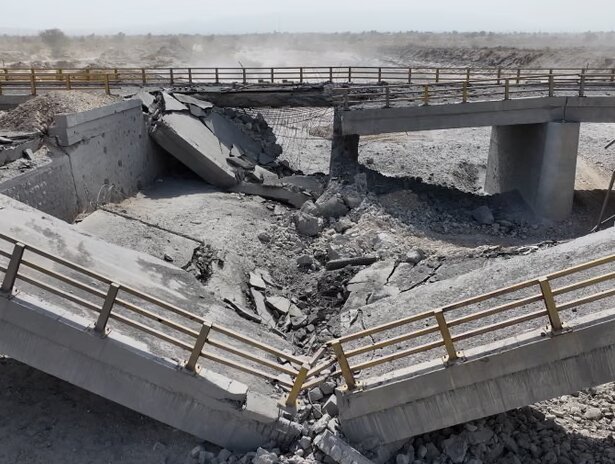
What we are witnessing is a model of total or hybrid warfare in which the distinction between the military battlefield and civilian economic life is deliberately eroded. Ports, airports, energy installations, communication systems, transportation networks, payment systems and maritime routes become components of the war plan.
The strategic logic is to produce cascading effects. Destroying or blockading a port does not affect only military logistics; it interrupts imports, exports, employment and access to essential goods. Damaging an electricity network also affects water distribution, hospitals, refrigeration, communications and industrial production. Striking transport infrastructure interferes with both the movement of goods and the normal life of the population.
The objective is therefore not merely to degrade Iranian military capabilities. It is to turn the daily hardship of civilians into political pressure against the state, creating shortages, inflation, unemployment and social anxiety in the hope that the population will blame its own government rather than the external aggressor. Recent American strikes have concentrated heavily on southern Iran, including ports, coastal installations and transportation infrastructure. They have aggravated electricity and water problems, but reporting from the affected areas indicates that the attacks have not generated the anti-government uprising apparently anticipated by Washington.
This model raises extremely serious legal questions. The International Committee of the Red Cross has stressed that energy systems serving civilians are, in principle, civilian objects. They cannot lawfully be attacked merely to weaken an adversary’s economy, force it to negotiate or influence the political will of its population. The ICRC has warned that deliberate attacks on essential civilian infrastructure may amount to “war crimes”.
What is being presented as strategic pressure is therefore often a form of collective punishment: an attempt to achieve political objectives by making ordinary citizens pay the price.
Can external military pressure realistically alter the strategic calculations of a state like Iran, or does history suggest that such campaigns often strengthen domestic resilience and national cohesion instead?
External pressure can impose enormous economic and human costs, but that does not mean it can achieve its political objective. There is a fundamental difference between damaging a country and compelling it to surrender its strategic independence.
When a state perceives the threat as existential, military pressure usually reinforces rather than eliminates its determination to resist. Concessions made under fire may invite further demands because the aggressor interprets them as evidence that coercion is working. Iranian leaders therefore have strong reasons to avoid creating the impression that bombing produces political rewards.
Foreign aggression can also alter domestic political dynamics in ways the aggressor does not anticipate. Iranian society contains real disagreements over economic management, social policy and institutional questions. Yet people who criticize their own government do not necessarily accept foreign bombardment or regime change imposed from abroad. Recent reporting from Iran found that the attacks had deepened hardship without producing the expected revolt; instead, they generated expressions of national solidarity and opposition to external aggression.
In my view, continued aggression may produce the opposite strategic result from the one intended. It may strengthen arguments in favor of greater military self-sufficiency, deeper cooperation with Russia, China and the BRICS countries, tighter control of Hormuz and even a reconsideration of Iran’s traditional nuclear restraint. A state repeatedly attacked while lacking a nuclear deterrent will inevitably study the experience of countries that achieved greater security only after acquiring one.
European governments have largely aligned themselves with Washington despite growing public criticism. Do you believe Europe still has an independent foreign policy in the Middle East, or has strategic autonomy become largely symbolic?
The European Union’s official statements have concentrated on restoring freedom of navigation through the Strait of Hormuz, ensuring toll-free passage and restricting Iran’s nuclear and ballistic capabilities. European measures have also expanded the sanctions framework against Iranian actors accused of threatening maritime traffic. At the same time, there has been no comparable readiness to sanction the United States or Israel for initiating and escalating military operations, attacking Iranian territory or damaging essential infrastructure.
The asymmetry of the European language is revealing. The European Union’s High Representative stated that Iran was “waging war on the global economy”, a formulation that isolates Tehran’s response from the aggression and blockade that produced the crisis. This is not neutral diplomacy; it reproduces Washington’s interpretation of events.
Europe could have played a different role. It could have demanded an unconditional end to the attacks, defended the principle that the nuclear question must be resolved diplomatically, opposed the targeting of civilian infrastructure and offered concrete guarantees for a reciprocal agreement. Instead, most European governments have treated transatlantic loyalty as more important than international law or their own economic interests.
Strategic autonomy will remain symbolic until Europe is prepared to disagree with Washington when American policy threatens European security, energy supplies and relations with the wider world. At the same time, public criticism is increasing because European citizens are being asked to bear higher energy prices and greater insecurity for a strategy over which their governments exercise little genuine control.
To what extent has Israeli security doctrine influenced the broader regional trajectory?
Israel’s strategic objective is not limited to preventing a specific Iranian military program. It seeks to prevent the emergence of any regional power capable of challenging Israeli military superiority, its undeclared nuclear monopoly and the political order protected by the United States.
This explains Israel’s preference for preventive war, targeted assassinations, sabotage and the permanent degradation of its adversaries’ capabilities. From this perspective, an agreement that leaves Iran sovereign, politically stable and capable of maintaining missile, maritime and regional deterrence may be regarded as inadequate even if it imposes limitations on the nuclear program. Diplomacy becomes acceptable only when it achieves objectives equivalent to strategic disarmament.
The joint American-Israeli attacks launched on 28 February targeted not only military installations but also Iran’s leadership, while President Trump publicly linked the campaign to the possibility of Iranians overthrowing their government. That indicates that the objective extended beyond narrowly defined non-proliferation concerns.
Israeli doctrine has profoundly influenced the regional trajectory by normalizing the idea that anticipated or hypothetical threats may be answered through preventive force. It has blurred the boundaries between defense, punishment and regime change. It has also encouraged Washington to treat Israeli assessments as the starting point for wider American policy in West Asia.
This approach is strategically dangerous. Every attack presented as necessary to prevent Iranian deterrence strengthens Tehran’s belief that only more powerful deterrence can guarantee its survival. Israel’s doctrine may therefore generate precisely the outcome it claims to prevent: a more militarized Iran, a deeper regional alignment against Israel and a stronger Iranian debate over whether conventional deterrence remains sufficient.
What developments will you be watching most closely over the coming months to determine whether the region is moving toward renewed diplomacy or a more prolonged confrontation?
The most important indicator will be the sequencing of any new ceasefire. Will Washington stop its attacks and remove the blockade before demanding further Iranian concessions, or will it once again use the cessation of violence as leverage over the nuclear question? A genuinely diplomatic process must begin with reciprocal de-escalation, not with the demand that Iran negotiate under bombardment.
I will also be watching the status of the proposed 10-day ceasefire and whether it can lead to the restoration of the Islamabad framework. The continued involvement of Pakistan, Qatar and other regional mediators is positive, but their efforts will be meaningful only if the parties accept binding and verifiable obligations.
A second decisive issue is the Strait of Hormuz. Any sustainable settlement must reconcile international navigation with Iran’s legitimate security interests as a principal coastal state. If Washington insists on imposing maritime arrangements militarily while maintaining a blockade on Iranian ports, renewed confrontation will remain almost inevitable.
Third, Israel’s conduct will be crucial. Even if Tehran and Washington reach another temporary understanding, unilateral Israeli attacks against Iran, Lebanon or other components of the regional resistance front could destroy it. A ceasefire that does not restrain Israel will remain structurally unstable.
Finally, the economic front will be decisive. If attacks continue against ports, energy systems, transportation routes and public services, this will confirm that Washington is pursuing a prolonged war of attrition rather than a diplomatic settlement. Conversely, the suspension of attacks on infrastructure, the release of frozen assets, the restoration of normal trade and serious guarantees against renewed aggression would indicate that diplomacy is regaining primacy.
The fundamental choice is therefore clear. The region can move toward a collective security framework based on sovereignty, reciprocity and international law, or it can remain trapped in a cycle in which every temporary ceasefire merely prepares the ground for the next escalation.
Leave a Comment