Strategic vacuum: Why is Trump's economic warfare against Iran doomed to fail?
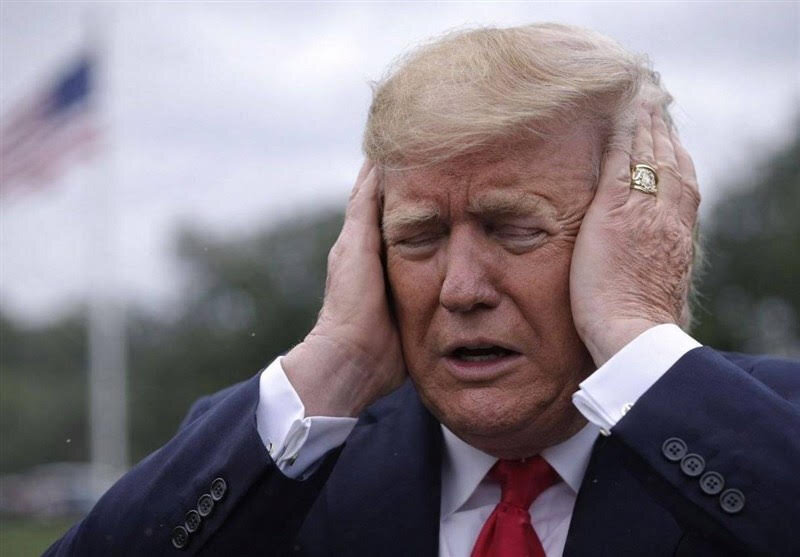
TEHRAN- Six months into his military campaign against Iran, Donald Trump finds himself trapped in the very quagmire he promised to eliminate. What began as a boastful declaration of "decisive action" to crush Iran and effect regime change has devolved into a strategic fiasco that not only fails to achieve its objectives but is inflicting profound damage on the U.S. economy and global stability. The administration's latest gambit—announcing the "largest financial attack in history" against Iran on August 24, a self-styled "D-Day" of economic warfare—appears less a stroke of genius and more an act of desperation from a presidency with no viable strategy left.
The irony is palpable. As U.S. Treasury officials threaten economic Armageddon against Tehran, America's own energy reserves are collapsing. Official data from July 2026 reveals that U.S. crude oil stockpiles, including the Strategic Petroleum Reserve (SPR), have plummeted to their lowest level in half a century—just 41 days of coverage, compared to the historical average of 65 days. Washington has depleted its most powerful tool for market intervention, leaving itself exposed to any future supply shock. This is not strength; this is strategic bankruptcy disguised as aggression.
The root cause of this self-inflicted wound lies in the Strait of Hormuz, the world's most vital energy chokepoint. After nearly six months of severe disruption triggered by the U.S.-Israeli military aggression against Iran, the waterway that once carried one-fifth of global oil and LNG supply has been reduced to a fraction of its normal flow. Daily transits have plummeted from 130 vessels to just a few, and war-risk insurance premiums have soared to 40 times normal levels. Hundreds of ships remain trapped in the Persian Gulf, and global oil flows have collapsed from 21 million barrels per day to a trickle. Iran, facing a U.S. naval blockade, has responded with controlled restrictions on the strait, creating a standoff that punishes everyone.
The economic devastation is global in scope. Asia, which historically received 80 to 90 percent of Hormuz-shipped oil and LNG, is enduring its largest energy shock in history. Japan, South Korea, India, Pakistan, and Bangladesh face crippling fuel shortages, soaring inflation, and industrial paralysis. European nations grapple with surging gas and electricity prices, while African countries dependent on food and energy imports confront acute shortages. The World Bank and institutions like Wood Mackenzie and Capital Economics warn that prolonged disruption could shave 0.5 to 1 percent off global GDP growth—a staggering blow to an already fragile world economy.
But perhaps the most telling consequence is the blowback on the United States itself. Trump's "maximum pressure" campaign has not broken Iran; it has made the regime more resilient. Airstrikes have weakened Iran militarily but strengthened its internal cohesion. The war has destroyed Iranian infrastructure and claimed lives, yet for most Americans, the conflict remains a distant abstraction—except at the gas pump, where prices have surged, and in the inflationary pressures now spreading through the U.S. economy. The SPR depletion is not a sign of American might; it is a warning that Washington has overextended itself and lost its ability to respond to future crises.
Trump's strategy rests on a fundamental misunderstanding of Iran. The Islamic Republic is simultaneously ideological and pragmatic. It resisted U.S. pressure for decades; it will not capitulate to coercion. Instead, by controlling the Strait of Hormuz, Tehran has demonstrated that it can impose reciprocal costs on its adversaries—and those costs are now painfully evident.
The administration's D-Day economic offensive is not a game-changer; it is a last gasp. Trump has repeated the same flawed playbook that has failed U.S. presidents since 1979: pressure as a substitute for strategy, military bluster as a cover for diplomatic bankruptcy. But this time, the consequences are not confined to Iran. The global economy is reeling, U.S. strategic reserves are depleted, and America's credibility is eroding with every empty threat. Far from breaking Iran, Trump's war has exposed the limits of American power and inflicted greater harm on the United States and its allies than on the intended target. The red light is flashing—not for Tehran, but for Washington.
Leave a Comment