CBI governor to Trump: Iran has foreign currency, and enough of it
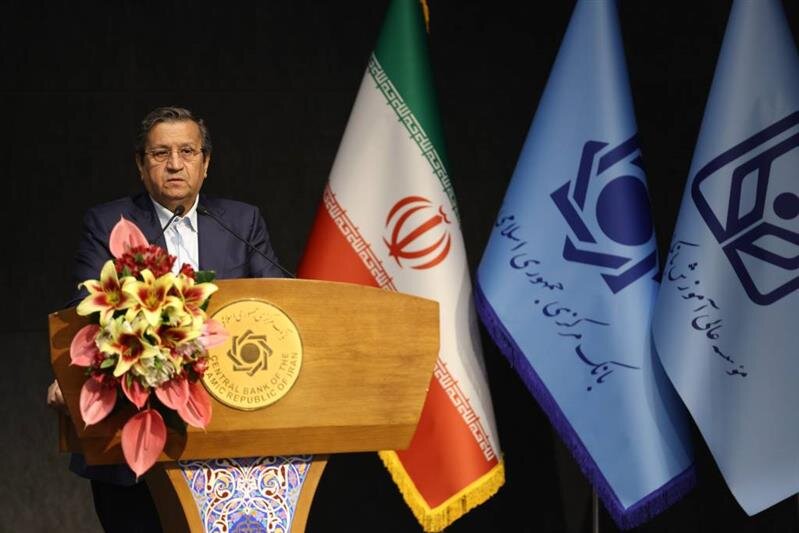
TEHRAN- The 36th Islamic Banking Conference commenced on Tuesday morning (September 1, 2026) at the Central Bank's Abbasabad Museum Garden building, with the presence of Abdolnasser Hemmati, Governor of the Central Bank of Iran (CBI), members of the Central Bank's Jurisprudential Council, and a group of senior managers and experts from the country's banking system.
Abdolnasser Hemmati, Governor of the Central Bank of Iran, stated at this conference: "I say with certainty that the claim that Iran has entered economic collapse is not true."
He added: "The process of collecting claims and foreign currency resources of Iran continues, and in addition, we also have domestic reserves. We also have resources at our disposal that, for various reasons, it is not possible to disclose their details."
Hemmati said: "I say to the President of the United States: Iran has foreign currency, and it has enough of it."
The Central Bank Governor, at the Islamic Banking Conference, rejected foreign media claims regarding a monetary deadlock and economic collapse, and reported the supply of $18 billion in foreign currency since the beginning of the year for livelihood and production, readiness to supply up to $2 billion to the market, and a 69% surge in bank facility payments. He announced: "By employing monetary and prudential tools, inflation momentum has been controlled.”
According to the Public Relations Department of the Central Bank, Abdolnasser Hemmati, at the 36th Islamic Banking Conference, elaborated on the latest status of the country's key monetary, forex, and credit macro-variables, inflation containment programs, the resilience of the payment system, and innovative solutions for financing the real sector of the economy.
He honored the efforts of the elite and research community in integrating jurisprudential standards with banking operations and added: "Full compliance of monetary processes with Islamic Sharia is a strategic objective that has also been emphasized in the new Central Bank law; the Central Bank's Jurisprudential Council and its esteemed jurists supervise these processes regularly and continuously, and the entire banking system is committed to pursuing specialized meetings and implementing practical measures within this framework."
The Central Bank Governor, explaining the multifaceted responsibilities of the Central Bank in the country's economic system, stated: "The duties of the monetary policymaker are concentrated in five fundamental areas: the monetary sphere, the credit sphere, the foreign exchange sphere, the regulation of supervised institutions, and the payment system. Each plays a vital role in the daily lives and livelihoods of the people, and any disruption in them will directly affect the economic stability of society."
Hemmati, describing the difficulties arising from economic siege, regional tensions, and oppressive sanctions, emphasized: "Creating financial stability is simple in words, but in practice, behind every decision and action of the Central Bank lie hours of intensive expert work and crisis management. In the early months of the year, many experts and analysts, seeing the dimensions of sanctions and the siege, predicted that Iran's economy would enter a hyperinflation corridor; but we did not allow these predictions to materialize."
He recalled: "Although inflation and high prices have imposed a heavy burden on people's daily lives and livelihoods, and these hardships are tangible, the Central Bank, using monetary tools and supervisory and prudential methods, was able to control the momentum of inflation in the months of May and June. Our current strategy is to control and break the momentum of inflation, so that after stabilization, the path to reducing the inflation rate will be steadily smoothed in the economy."
The Chairman of the Money and Credit Council, regarding the hostile media atmosphere surrounding the economic deadlock, noted: "All the media and psychological efforts of the enemy were to induce economic collapse in Iran. I tell the people with complete honesty that economic conditions and managing livelihoods have become difficult, but collapse has never happened and will not happen; these claims are merely psychological warfare, and its dust will soon settle."
The Central Bank Governor, in response to some statements by American officials regarding Iran's lack of access to financial and foreign exchange resources, announced: "These claims are completely baseless. Unblocked reserves, sustainable resources, and numerous oil and non-oil revenues are available to the Central Bank. Since the beginning of this year, over $18 billion in foreign currency has been supplied and paid for the import of essential goods, medicine, animal feed, and raw materials for production lines."
Hemmati, emphasizing the policymaker's maneuvering power in demand management, explained: "The Central Bank has not remained passive in the face of weekly announcements of new sanctions. Last week, we operationalized the allocation of $500 million to the market, and now I officially announce that the Central Bank is ready to inject up to $2 billion in foreign currency if needed to manage and stabilize the market."
Referring to his field visits to industrial lines and factories in Khuzestan province (Ahvaz and Dezful), he emphasized: "Contrary to the discouraging portrayals of foreign media, the wheels of production in the country are turning seriously, and banks are supporting producers with maximum focus."
Hemmati identified boosting employment as one of the Central Bank's critical priorities after inflation containment and continued: "Given recent events and temporary damage to some infrastructure, to compensate for the decline in employment, we need to focus on labor-intensive units. For this purpose, the Central Bank is finalizing a credit package that will allocate targeted resources to support Small and Medium Enterprises (SMEs) in the second half of this year, to increase the momentum of job creation and stabilize employment opportunities."
The Chairman of the Money and Credit Council described the development of Supply Chain Financing (SCF) tools, including GAM notes and factoring, as a golden solution for supporting industry without fueling money creation, and explained: "Supply chain methods provide the liquidity needed by industries without increasing the monetary base and without creating inflationary pressures.
MA
Leave a Comment