Israeli warplanes slaughter civilians, obliterate hospital in southern Lebanon
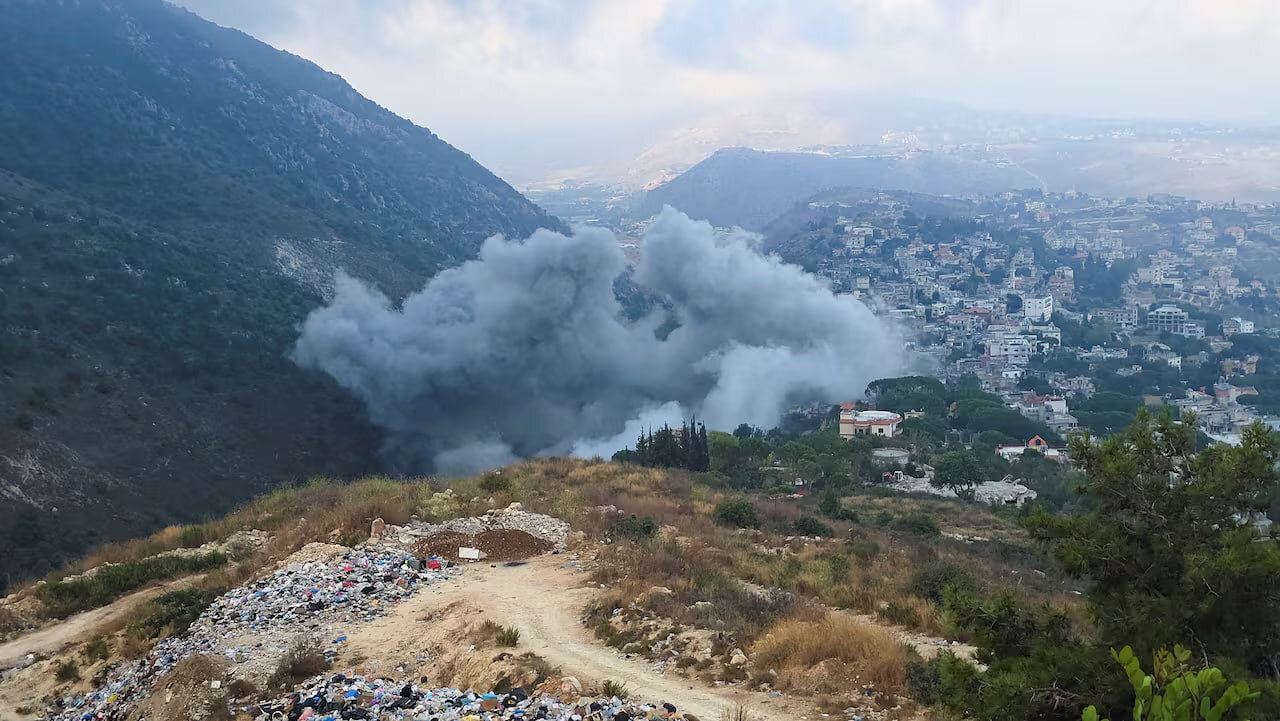
TEHRAN — Israeli warplanes ripped through residential districts in southern Lebanon at dawn on Sunday, killing four civilians and wounding 20 others. Israeli strikes targeted populated areas across the Nabatieh district, hitting Nabatieh al-Fawqa, Kfar Remman, and Arab Salim. Women and children bore the brunt of the assault.
Two women died in Arab Salim when a strike leveled a villa. Four women were wounded in Kfar Remman as another building collapsed under artillery fire.
Israeli forces also obliterated Al-Ghandour Hospital in Nabatieh al-Fawqa. The medical facility had suspended operations due to relentless bombing.
Its destruction removes a healthcare asset from a region deliberately starved of survival infrastructure by U.S.-supplied munitions.
The strikes took place despite a U.S.-sponsored framework agreement signed on June 26 that ostensibly provides for a gradual Israeli withdrawal, a commitment that remains unfulfilled as the occupation deepens and the death toll mounts.
Resistance drones disrupt underground sabotage
Tel Aviv faces severe tactical friction on the ground. Israeli engineering units tried transporting heavy explosives into subterranean tunnels beneath the eastern flank of Ali al-Tahir Hill.
They wanted to trigger massive detonations. The objective was optical. Israeli commanders hoped to manufacture a propaganda victory claiming the destruction of Hezbollah’s underground infrastructure.
The Resistance dismantled this plot. Hezbollah launched precision suicide drones at Israeli troop concentrations.
One drone incinerated a military transport vehicle loaded with explosives just as it approached the tunnel entrance.
Contrary to Israeli claims of operational control, local observers report zero Israeli military movement atop Ali al-Tahir Hill as of Sunday.
Scorched earth retreat and institutional panic
This battlefield paralysis coincides with institutional chaos in Tel Aviv. The Israeli military abruptly launched an unannounced readiness drill dubbed “Dawn 2.0”. Concurrently, the army ordered Zionist citizens to urgently flee Egypt, Jordan, and Qatar.
These maneuvers expose a widening internal rift. Prime Minister Benjamin Netanyahu blames military commanders for the stalled offensive. The army is pushing back.
Leaked military maps show a proposed forced withdrawal. The plan would shrink the occupation footprint to a narrow strip two to four kilometers deep.
Knowing they cannot hold territory against Hezbollah ambushes, Israeli troops accelerated a scorched-earth campaign. They are indiscriminately demolishing civilian homes in Bani Hayyan, al-Mansouri, and Houla before they pull back.
Hezbollah condemns U.S. complicity, Lebanese government failure
Hezbollah leadership views these maneuvers as the flailing of a defeated army. Senior parliamentarian Hussein al-Hajj Hassan publicly mocked the diplomatic pressure campaign, declaring that surrender is absent from the Resistance’s vocabulary.
Additionally, in a statement issued Saturday, Hezbollah condemned Israel’s campaign of “killings, bombings, destruction and systematic demolition of houses and villages,” accusing the United States of providing political and military support.
The group said ongoing strikes are carried out with “full cooperation, cover and planning by the United States,” aimed at pressuring Lebanese authorities to serve Israeli interests.
Hezbollah also criticized the Lebanese government’s approach to direct negotiations, arguing that continued occupation and bloodshed proved the framework failed.
“The continuation of the occupation, aggression, and the spilling of Lebanese blood” undermined claims of progress.
Since March 2, Israeli attacks on Lebanon have killed over 4,360 people and wounded more than 12,300 others, with incursions extending over ten kilometers into sovereign Lebanese territory.
Leave a Comment