How has Yemen’s role reshaped the regional conflict?
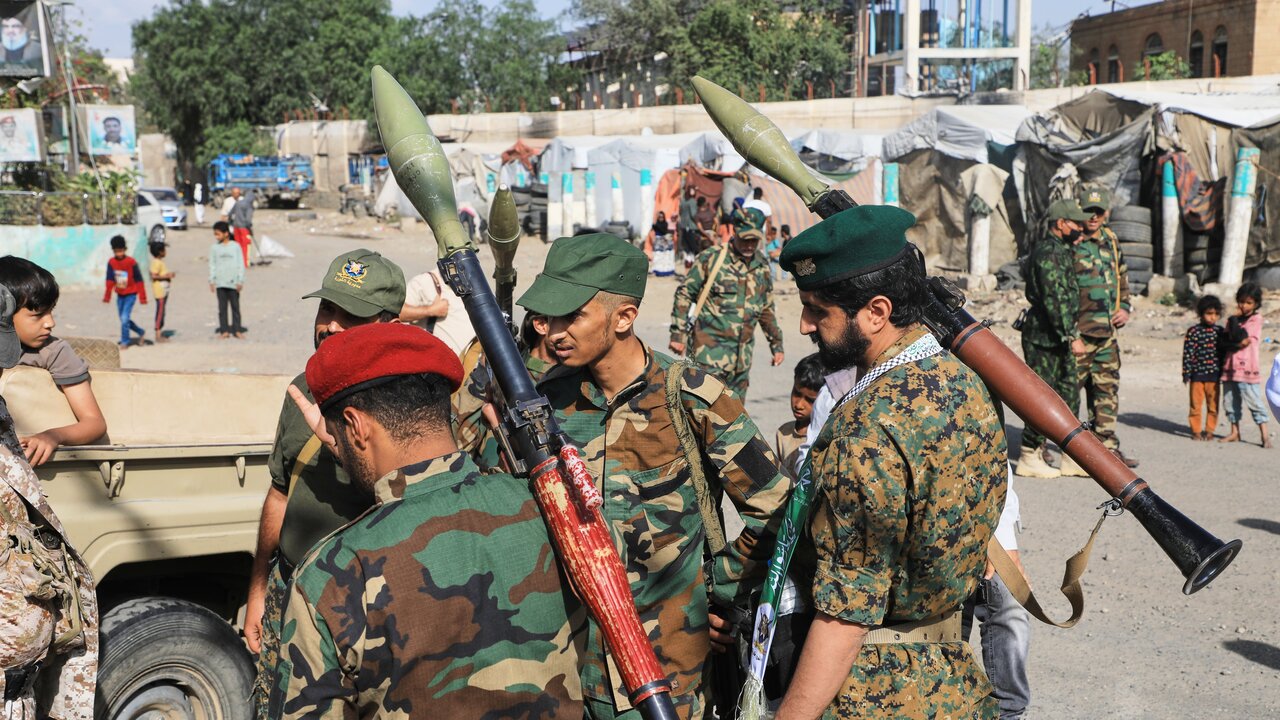
TEHRAN – Yemen, which was long viewed as the weakest link in the Arab world, is now influencing shipping and energy and holds one of the most sensitive cards in West Asia.
The fall of Mokha to Ansarallah, alongside the seizure of Mayyun Island, was not just another development in a long-running war. Mokha lies roughly 75 kilometers from the Bab el-Mandeb Strait, meaning that any shift in the balance of power there extends beyond Yemen’s borders to one of the world’s most important maritime passages.
On September 10, 2026, UN envoy Hans Grundberg warned that Yemen faced its most serious risk of returning to full-scale war since the 2022 truce, amid escalating fighting along the western coast.
The war that began over control of the Yemeni capital gradually took a different direction: from Sanaa to Taiz, from the Saudi border to the coast, and from cities to islands, ports, and maritime routes.
The farther the conflict moves away from the question of the Yemeni state, the closer it comes to the question of geography. This is what makes Yemen today different from the Yemen that Saudi Arabia and the UAE waged war against in 2015.
The war that moved beyond Sanaa
When Saudi Arabia and the UAE began their military intervention in Yemen in 2015, the main objective was to prevent Ansarallah from consolidating its control over the Yemeni state and to restore the former government to Sanaa.
The prolonged war changed the nature of the conflict, and Yemen was no longer a battlefield between two clearly defined sides. Multiple local forces emerged, each with its own interests, calculations, and external networks. The south became an issue in its own right, the western coast developed into a separate theater, and ports and islands became central elements in the balance of power.
This created differences between the Saudi and Emirati visions. Saudi Arabia viewed Yemen primarily through the lens of national security and its land border, seeking to prevent the emergence of a power along its southern frontier.
The UAE, by contrast, developed a stronger focus on the coast, ports, islands, and maritime routes, while building close relationships with local forces in the south and along the coast.
This did not mean that Riyadh and Abu Dhabi immediately moved from alliance to hostility. But the coalition that brought them together in the war did not erase their differing interests over what kind of Yemen should emerge from the conflict.
Here lies one of the paradoxes of the Yemeni war: the closer allies came to achieving military gains, the larger the political questions became about the future of those gains.
Saudi-Emirati rivalry in Yemen has become increasingly visible in recent years. At the end of December 2025, Saudi Arabia bombed sites in Mukalla, saying the targeted weapons and equipment had reached the UAE-backed Southern Transitional Council. The development reflected the scale of divergence between the former war partners.
For this reason, interpreting the fall of Mokha simply as an “Ansarallah” victory over Saudi-backed forces is not enough. Mokha reveals something deeper: the Yemeni front is no longer a single front, and control of territory has become tied to a broader competition over influence, strategic location, resources, and maritime routes.
Allies in war, rivals for influence
At the beginning of the war, it was easy to place Saudi Arabia and the UAE in one camp and Iran in the opposing camp. But that picture has changed.
Iran remains a key player in the Yemeni equation. The political and reported military support that Tehran has provided to Ansarallah has given Iran leverage over Red Sea security.
Reducing Ansarallah to nothing more than an Iranian ally oversimplifies the Yemeni landscape. The movement has its own domestic agenda and calculations, and operates within a complex Yemeni conflict that has lasted for years.
On the other hand, Riyadh is no longer facing a single adversary. It is facing an armed movement with missile and drone capabilities and extensive experience in asymmetric warfare. At the same time, it faces a network of competing Yemeni forces, while Emirati influence itself has become a factor that cannot be ignored in Saudi calculations.
Mokha is not simply a Yemeni port. It is part of a highly sensitive coastal strip stretching toward Bab el-Mandeb. Whoever controls the coast does not necessarily need to control all of Yemen to possess regional leverage.
In geopolitics, power is not always measured by the number of cities a state controls, but by the locations from which it can influence others. This is why the western coast has become more important than many of the inland fronts.
Ansarallah understands this equation well. The shift of military pressure toward Mokha and Mayyun means moving closer to a point from which local military power can be transformed into an international bargaining chip. At this point, Yemen has moved from a regional issue to an international one.
When Bab al-Mandeb enters the equation
Perhaps this is the most important point for understanding the current transformation. Yemen is not simply located in the south of the Arabian Peninsula. It sits at the intersection of the Persian Gulf, the Red Sea, the Horn of Africa, and the Suez Canal.
Bab al-Mandeb is the southern gateway to the Red Sea, and any disruption there affects shipping between Asia and Europe.
Estimates cited by the Associated Press indicate that roughly 12% of global trade passes through this strategic waterway. This means that the Yemeni conflict can impose costs on the global economy without even controlling the capital.
Here lies the power of asymmetric war: a party may not have a huge naval fleet, but it can have the ability to threaten commercial ships, disrupt a shipping route, raise insurance costs, or force companies to change their routes. (Whoever can disrupt the route does not always need to own the route.)
The Red Sea has already experienced significant repercussions from Ansarallah attacks on shipping, prompting shipping companies to reduce their use of the route and turn to longer and more expensive alternatives.
The latest development is even more sensitive. Control of Mokha and Mayyun brings the conflict geographically closer to Bab el-Mandeb. The UN confirmed that the Ansarallah offensive along the western coast was accompanied by rapid changes on the ground, despite extensive Saudi airstrikes.
If Bab al-Mandeb turns into an open front, Egypt will watch traffic through the Suez Canal, Saudi Arabia will be monitoring the security of its exports and ports, Persian Gulf states will be watching trade flows, Europe will focus on supply-line security, and the U.S. will once again face a difficult question: How much appetite is left in Washington to confront Yemen again?
Leave a Comment