Trump vilifies Senate hopeful El-Sayed with Islamophobic rhetoric
Trump mocks Jews mulling to vote for El-Sayed
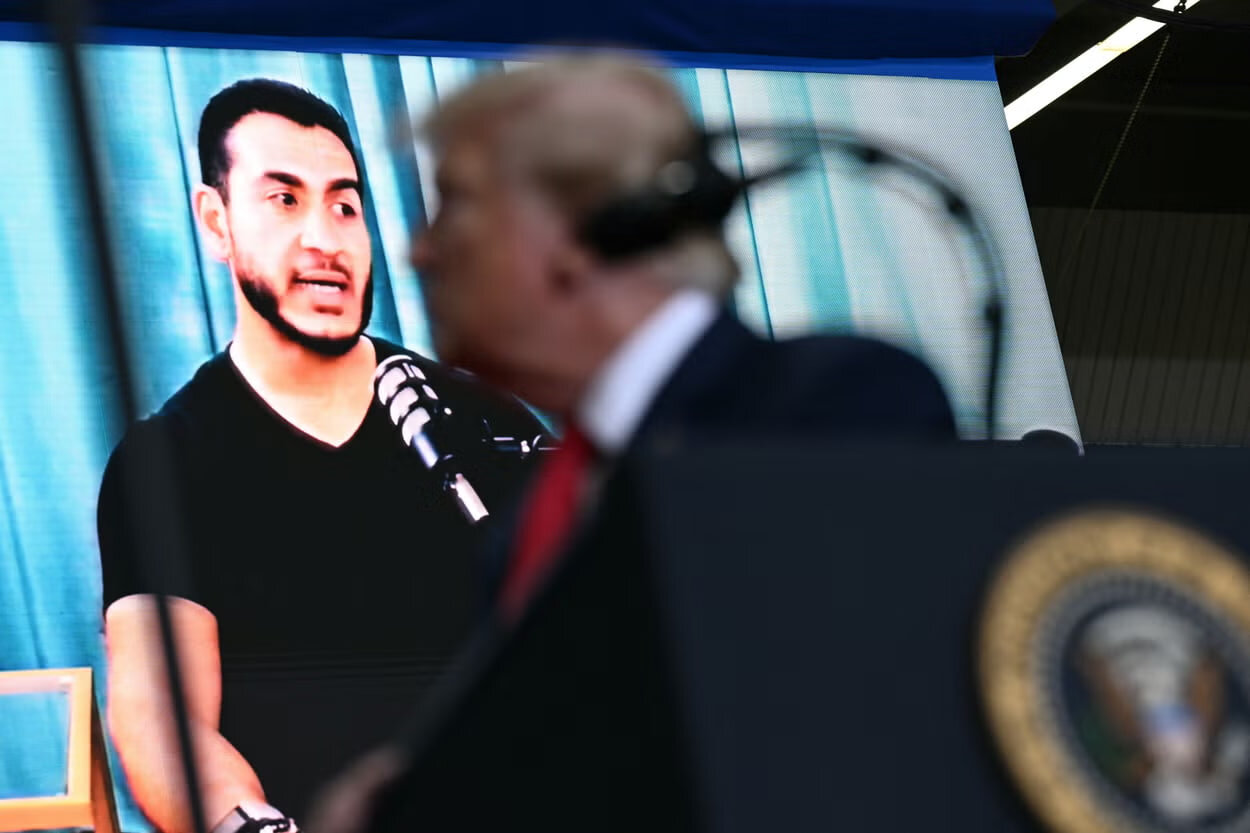
President Trump turned to Islamophobic stereotypes to motivate Michigan Republicans on Sunday, claiming at a rally that Dr. Abdul El-Sayed, the Democratic Senate nominee, if elected, would bring a wave of jihadists to the United States.
“If Abdul and the Democrats win, they will open the floodgates and invite hordes of jihadis to our shores, creating a nightmare of violence and terror until you cannot even have a Christmas,” the New York Times quoted Trump as telling more than 4,000 supporters gathered in Port Huron.
Through such inflammatory rhetoric, Trump is seeking to mislead the American public while crossing all bounds of decency and morality.
He called Dr. El-Sayed, whose family immigrated from Egypt, a “jihadist Muslim Brotherhood member,” a baseless claim. He then contrasted Dr. El-Sayed, a Muslim who was born in the United States, with his Republican opponent, Mike Rogers, who is white and also born in the United States.
“I call him apple pie,” Trump said of Rogers, who is 63. “He’s like, perfect, this guy. He’s like central casting. He’s what your state is all about.”
Trump’s comments, coming in a key midterm battleground nine days before the elections, underscored the dark themes and personal vilification he and his allies have embraced as part of their closing pitch. And while he has often used crude and racist language, Trump’s message in Michigan seemed aimed at overtly stoking a fear of Muslims to get voters to the polls.
But a broader question about Trump’s rally here — which followed several in North and South Carolina, Georgia and Florida, among other stops — is whether his presence helps or hurts Republican turnout in a year when polls show deep dissatisfaction with the president. His audience in Port Huron seemed enthusiastic, and thousands strained to take Trump’s picture as he took to the stage. But he held the rally in a conservative district of a state that pollsters believe is swinging back to Democrats.
Trump’s deep unpopularity has complicated Republicans’ path to victory. While Trump carried Michigan by two points in 2024, just 34 percent of likely voters now approve of him, according to a New York Times/Siena poll conducted in mid-September.
Polls indicate that Dr. El-Sayed, 41, has a narrow edge over Mr. Rogers in a race that will be pivotal to determining control of the Senate.
Trump’s attacks on Dr. El-Sayed on Sunday, questioning his loyalty to the United States, began before he got on Air Force One outside of Washington and accelerated after he landed in Michigan.
Trump also disparaged Jewish voters who were considering voting for Dr. El-Sayed.
“Any Jewish person that supports this guy should be ashamed of themselves,” Trump said, adding that he “cannot understand how anybody who’s Jewish can even think about voting for this guy.”
Hundreds of Jewish voters in Michigan publicly announced they were backing Dr. El-Sayed, while others have said they are voting for Rogers or threatened to withhold their support.
Dr. El-Sayed has repeatedly disavowed the Muslim Brotherhood, an Islamist political movement, and has said comments about his name and faith are attempts to distract from voters’ economic woes. His aides have said claims of ties to overseas terrorist groups are racist and Islamophobic.
Trump deepened his critique as the day went on, saying that someone with Dr. El-Sayed’s background “would be screened and unable to get a seat on an airplane. They certainly should not give him a seat in the United States Senate.” He also said that Dr. El-Sayed should not be given access to classified information.
At his own rally on Sunday in Grand Rapids, Dr. El-Sayed said the Republican strategy was “to point at me and my name and my faith. But my name and my faith are not the reason you can’t afford your gas.”
Trump and some other hardline Republicans fail to realize that such incendiary remarks against their political opponents, particularly those of Muslim background, could backfire and alienate a large segment of the American public.
Leave a Comment