“The Systems Thinking Playbook” published in Persian
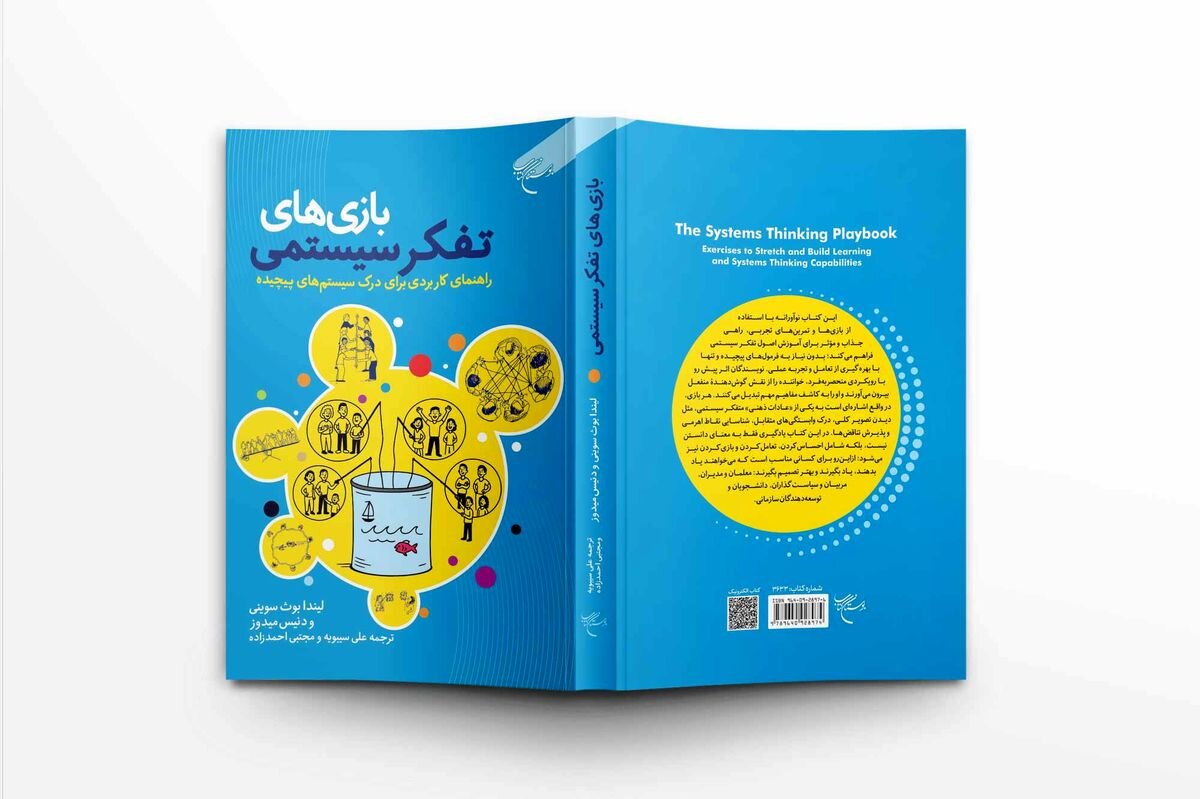
TEHRAN – The Persian translation of the book “The Systems Thinking Playbook: Exercises to Stretch and Build Learning and Systems Thinking Capabilities” written by Linda Booth Sweeney and Dennis Meadows has been released in the bookstores across Iran.
Translated by Ali Sibooyeh and Mojtaba Ahmadzadeh, the book has been brought out by Bustan Ketab Publishing House in 392 pages, ILNA reported.
To get to know the concept of sustainability and playfully master the behavioral elements related to it, it is essential to realize that we are part of a common humanity and that our lives are inextricably linked. This not only results in social responsibility but also cooperation and common thinking.
The book by Sweeney and Meadows provides great help in this process, which presents a lot of exercises on how to teach these complex topics based on systems thinking.
This book has become a favorite of K–12 teachers, university faculty, and corporate consultants. It provides short gaming exercises that illustrate the subtleties of systems thinking.
The thirty games are classified by these areas of learning: Systems Thinking, Mental Models, Team Learning, Shared Vision, and Personal Mastery. Each description clearly explains when, how, and why the game is useful. There are explicit instructions for debriefing each exercise as well as a list of all required materials. A summary matrix has been added for a quick glance at all thirty games. When you are in a hurry to find just the right initiative for some part of your course, the matrix will help you find it.
Linda Booth Sweeney and Dennis Meadows both have many years of experience in teaching complex concepts. This book reflects their insights. Every game works well and provokes a deep variety of new insights about paradigms, system boundaries, causal-loop diagrams, reference modes, and leverage points.
Each of the thirty exercises here was tested and refined many times until it became a reliable source of learning. Some of the games are adapted from classics of the outdoor education field. Others are completely new. But all of them complement readings and lectures to help participants understand intuitively the principles of systems thinking.
SS/SAB
Leave a Comment