Israel lacks troops and ammo for a prolonged war
TEHRAN – The Israeli military is depleted and overstretched, unable to sustain multi-front warfare without American support.
A deep gap exists between what the Zionist regime says politically and the reality on the ground. The Israeli Occupation Forces (IOF) are dangerously weak at their core. They face severe shortages of both manpower and ammunition, and it is fully dependent on America. This stops the regime’s military from achieving decisive wins on several fronts at once.
Field and logistical data from recent military operations, specifically the 12-day war in June 2025 and the one that began on Feb. 28, show this deep strategic gap. On one side, the political discourse of the Israeli regime claims it can operate on seven fronts at the same time. On the other side, the operational reality reveals critical limits in manpower, specialized ammunition, and the ability of the IOF to spread intelligence attention across different arenas.
Today, the regime is not fighting a traditional war. Instead, it is running a harsh policy of rationing resources. Depleted stockpiles and declining military readiness force the IOF to follow engagement rules that were never part of its original plans.
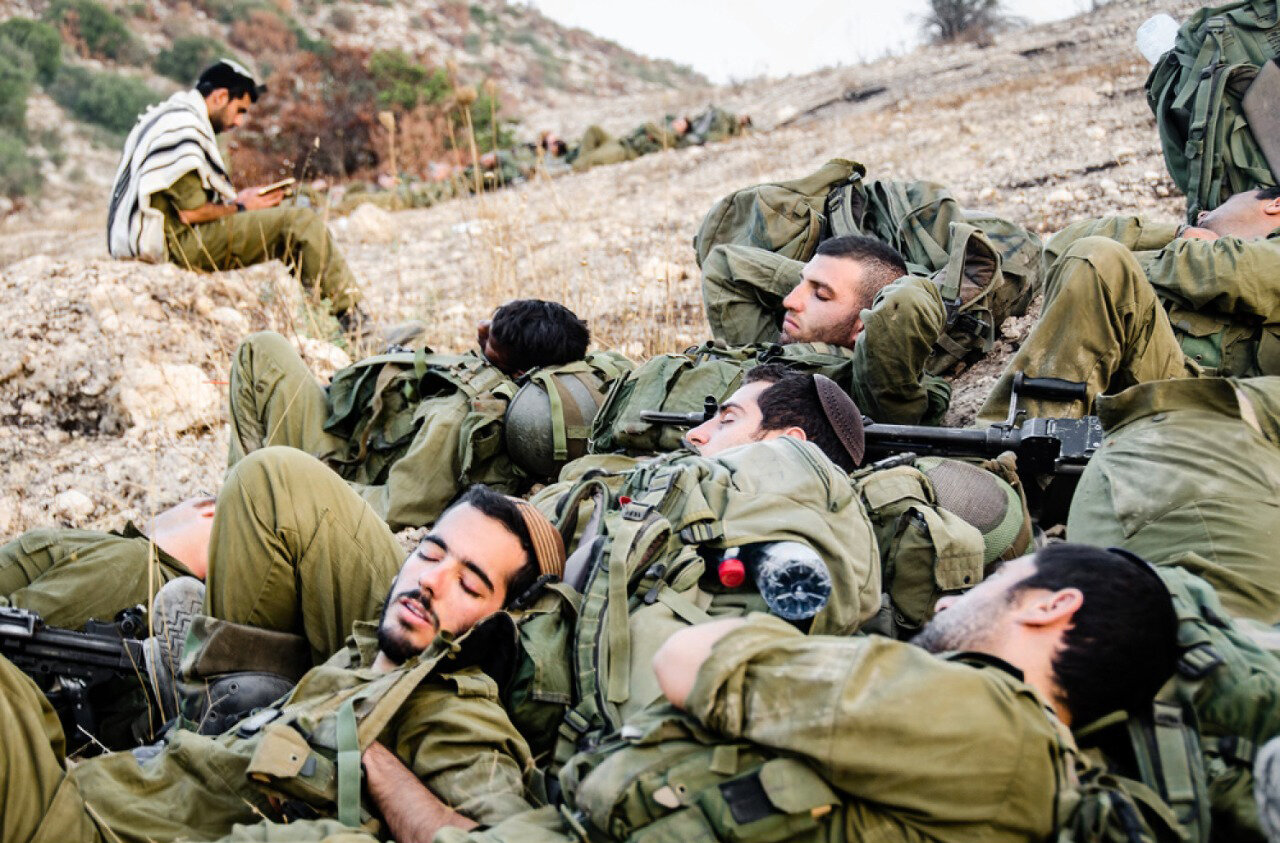
The IOF has entered a period of human attrition never seen before since its founding. The reserve forces have turned into a regular army by force. Entire brigades within the IOF have been serving their seventh round of duty since October 2023. Individual soldiers have logged more service days than an ordinary soldier would have done over several decades.
This pressure has worn down motivation among many soldiers. This drop in morale is fueled by infighting over who should carry the burden, the drafting of those who dodged service, and the high cost of wages paid to reserve soldiers (reaching 1.5 billion shekels in just two weeks). More importantly, this pressure has hit the core of readiness and deployment.
The severe shortage of qualified combat personnel now limits how the IOF General Staff can move forces between fronts. The IOF has to pull units from one front to support another. This explains why the regime has pulled back from some secondary battlefields to focus on the north, for example, or why the IOF has had to rebuild brigades, divisions, and units using volunteers who are past retirement age.
The regime's air force, long seen as the unbeatable long arm of the IOF, now faces a tough choice between flight hours and the lifespan of its aircraft. In one single month, pilots flew more hours than they would in an entire year of warfare. This has put the fleet under huge maintenance pressure and limited the number of planes able to keep fighting over time.
The biggest limit shows up in how intelligence and operational attention are spread. Facts on the ground have proven that the IOF cannot keep the same momentum going in Lebanon and Iran at the same time. The air force had to stop flights over Iran 24 hours before starting large operations in Lebanon (as happened during the war in Lebanon). This is a clear admission that building a target list and finishing strikes properly requires the IOF to focus on one front at a time. When attention is divided between two fronts, both operations suffer.
This forced division of attention gives the Axis of Resistance an advantage in timing and freedom to maneuver. Every minute of attention aimed at the north is a pure gain for Tehran, allowing it to strengthen its positions or finish its specialized programs. The same is true in reverse.
Looking at how the IOF uses up ammunition shows a shocking fact: the Zionist regime entered the war with a stockpile of 15,000 munitions, according to Hebrew reports citing a senior IOF officer. But the IOF ended up using 150,000 munitions. This turned reliance on American military supply flights from a backup option into a necessity for survival.
Reports from the regime indicate that the IOF has used up critical categories of its specialized missiles at rates that cannot be sustained:
Air defense: Use of Arrow-2 and Arrow-3 missiles reached about 81%. If the battle had continued at the same speed, IOF stocks would have run out completely within a few days.
Offensive weapons: Missiles like the Rampage and Blue Sparrow saw consumption rates above 50%. This forces the military leadership of the Zionist regime into painful choices: either cut back on precision strikes or accept greater risks to aircraft by using “dumb” or less accurate bombs, which is exactly what happened.
This industrial weakness is also tied to global supply chain problems and shortages of basic materials. This means that replacing what the IOF lost in just 16 days, as noted in reports, could take years. This explains why the IOF is moving more toward offensive defense with fewer resources and lower risks.
Even though the Zionist regime has five layers of protection, the limits of its defensive umbrella showed up clearly in its failure to stop drones and missiles from hitting strategic targets. The problem is no longer about technology but about the economics of war. Using interceptor missiles that cost millions of dollars each to shoot down cheap drones is a path to financial and logistical collapse for the IOF.
Putting defensive resources where they matter most (protecting gas platforms and bases like Palmachim) has left the home front and the north relatively exposed. The IOF has adopted a flexible interception policy, which in practice means letting missiles fall in some areas to save stock for the most vital targets.
Resource depletion is no longer limited to smart bombs and defensive systems. It has now hit the core of ground forces through a desperate practice: the IOF is forced to strip usable parts from old, decommissioned vehicles (such as Achzarit carriers) to keep newer ones running. This is a clear admission that the IOF cannot get spare parts and tank drive systems because global production is slow and supply chains are strained.
This reality has forced the regime to shift into emergency measures. These include extending the life of worn-out equipment by an extra ten years and recycling old explosives stored for years to use on the battlefield. Tank companies within the IOF operate with incomplete units due to engine shortages, while crews extend the life of mortar barrels by hand.
All this proves that the IOF, once seen as a high-tech army, has resorted to a patchwork policy to make up for resource gaps. This sharply lowers the quality of military performance, raises the risk of technical breakdowns during combat, and turns the idea of fighting a long war on several fronts into a series of gambles filled with deadly risks.
The current battle in Lebanon against Hezbollah and the deeper battle against Iran have shown that the Israeli regime is fundamentally weak in its basic resources. For the Zionist regime, spreading resources around is no longer a tactical choice. It is the result of the IOF being unable to cover all battlefields with the same strength.
Hezbollah, by keeping an active second front during the illegal war on Iran, succeeded in draining resources that were meant for Tehran. This turned the war for the Zionists from a fight for military victory into a test of logistical endurance.
The predicted timeline for when IOF ammunition will run out has become the real limit. This limit forced the Israeli regime to set a schedule, one that, as in the war against the Islamic Republic, did not go beyond 40 days before it started looking for diplomatic exits or lowering its goals, for fear of hitting a zero hour with empty warehouses and a depleted IOF.
Leave a Comment