Support package for industrial units, projects damaged by war approved
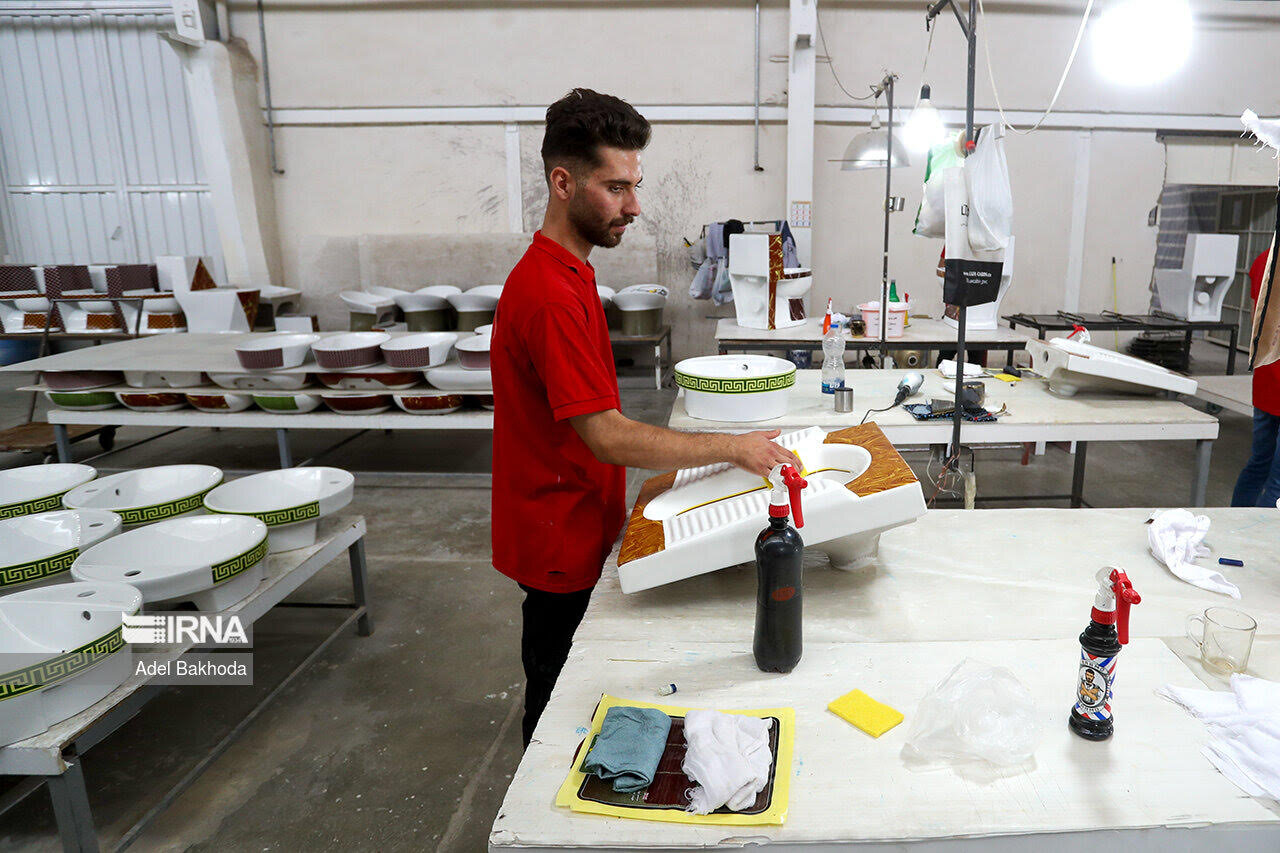
TEHRAN- A comprehensive support package for projects and industrial units damaged during the recent wars (the 12-Day War and the Ramadan War), proposed by the Small Industries Deputy of the Small Industries and Industrial Parks Organization of Iran (ISIPO) and approved by the organization's Board of Directors (General Assembly of Provincial Companies), has been issued.
According to IRNA reporting from the Ministry of Industry, Mining and Trade, this package has been issued in line with the implementation of support policies within the framework of assigned missions, aligned with the Cabinet's support package, the approvals of the Headquarters for Facilitating and Removing Production Barriers, and aimed at supporting production and employment in the country.
Granting extensions for debt payments, settling remaining debts of damaged projects and units located in industrial towns and zones, and accelerating the possibility of operation and commencement of production for damaged projects are among the provisions approved in this support package.
Additionally, damaged units, in order to return to the production cycle and preserve employment, can benefit from facilities and incentives in the area of land allocation or land relocation within the country's industrial towns and zones.
Allocation of land exploitation rights in industrial towns and zones outside of auction with grace periods and long-term installments is another measure allocated to damaged units within the framework of this support package.
Special incentives, including leasing existing ready-made workshops at minimum cost for damaged units producing basic household goods such as food, medicine, hygiene products, and medical equipment, have also been included in this package to help sustain production.
* Businesses that do not lay off workers will receive government facilities
Seyyed Ali Madanizadeh, Minister of Economic Affairs and Finance, stated that businesses which do not lay off workers will receive government facilities, adding that the government will provide 100% support to these production units.
According to an IRNA report, Madanizadeh said in an interview, referring to the fact that during the days of the imposed war we were able to pay employees' salaries: Many businesses and wholesalers conduct their bulk sales in Esfand (late winter), and most of the country's tax revenues are also realized in Esfand. However, since an economic shock had been inflicted on the people in Esfand of last year, we could not impose tax pressure, so measures were taken to forgive or defer tax payments for the general public above a certain income threshold.
The Minister of Economy continued: Many actions were taken in the tax organization and also in customs so that people would have peace during New Year's Eve and the month of Ramadan, which coincided with the days of the imposed war, while economic activities continued to operate.
He said: Although many bank employees were afraid to be present in branches, nevertheless, a large portion of bank employees showed up at their workplaces and bravely served the people.
Madanizadeh added: The same was true in the insurance sector; many truck drivers were worried about cargo insurance during those days, but with the cooperation of insurance companies, the truckers' goods were insured.
The Minister of Economy emphasized: All these actions happened with centralized planning that was managed.
Madanizadeh continued: In the 12-Day War, residential home insurance had been defined for wartime, but during the third imposed war, its promotion was done again so that households interested in insuring their homes could submit their insurance policies.
He said: The top priority of the government's economic team was to ensure that during the war, the goods and services that are basic needs of the people are delivered or provided.
Madanizadeh stated: Our people, with their magnanimity, prevented the kind of panic that occurs during wars in the world, which empties store shelves, from happening in our country.
* Explanation of government's plans for reconstruction of large & medium industries
The Minister of Economy added: One of the aggressive actions by the American-Zionist enemy was the attack on the country's economic infrastructure and factories. A statistical report of the damages has been prepared showing how much damage was inflicted on each economic enterprise, how much money is needed for reconstruction, and what the loss of profit for each enterprise has been during this period.
Madanizadeh said: The plans prepared for the reconstruction of damages to economic infrastructure are in several layers, the first layer of which is large industries. A plan has been prepared for the reconstruction of the steel and petrochemical industries, as well as the Assaluyeh complex in the gas sector. The relevant ministries will be responsible for implementing these plans.
Stating that part of the financing for the reconstruction of large industries has been delegated to the Ministry of Economy, he added: A meeting was held on this matter today at the Ministry of Economy.
The Minister of Economy continued: The most important support program for the reconstruction and renovation of large industries is the granting of fixed facilities at preferential rates. We will also use the capacity of Article 165 of the Direct Taxes Law – for industries that invest in the reconstruction of the steel and petrochemical industries, we will consider tax credits equal to the amount they spend.
Madanizadeh said: In the second layer, facilities will be granted to small and medium industries that have suffered direct damage; for these companies, in addition to fixed capital facilities and tax credits, tax and social security insurance deferrals have also been considered. We have submitted the proposal to the Cabinet for approval at the first government session.
* Granting facilities to damaged economic enterprises conditional on maintaining workforce and no layoffs
He added: We have many industries and companies that were in the production chain and network that have been indirectly damaged due to damage inflicted on upstream industries such as steel and petrochemicals.
The Minister of Economy said: Also, in cities where the number of attacks was high and many people from those cities had traveled, we witnessed a sharp decline in sales, especially for service businesses; for these companies, we have also considered facilities, which are mainly working capital facilities at preferential rates, as well as tax and social security insurance deferrals.
Madanizadeh added: Implementation of these programs requires approval by the Cabinet, which I hope will be approved within the next week or two.
The Minister of Economy emphasized: The provision of all these facilities to companies and enterprises is conditional on no workforce reductions.
He added: In these war conditions, we expect that if production or service units and economic enterprises have the ability, they should not lay off workers so that we do not face the problem of worsening unemployment.
Madanizadeh said: One of the actions taken in the past week or two for micro businesses and those with fewer than 50 employees was the granting of salary payment facilities equivalent to 22 million tomans per employee. Small and medium businesses could register on the Ministry of Economy's KAT system and receive these facilities.
The Minister of Economy added: For these businesses, the condition for granting facilities was maintaining up to 80% of the workforce – meaning an economic enterprise with 10 employees is allowed to reduce a maximum of two people.
* Central Bank governor announces design of national economy reconstruction financing program
The Governor of the Central Bank announced the design of a national economy reconstruction financing program and said: We have developed a comprehensive program for financing the reconstruction of infrastructure and damaged units in the production chain and key sectors.
According to IRNA reporting from the Central Bank, at the first meeting of the special monetary and foreign exchange policy session in the current Iranian calendar year ( started on March 21), Abdolnaser Hemmati, while explaining the bank's performance and plans for financing the national economy with inflation control considerations, announced the continuation of the policy of prioritizing credits and resources for leading economic sectors and production and supply chains, and full readiness for the reconstruction period.
The Governor of the Central Bank, referring to the critical situation of the war and the necessity of comprehensive support for the country's economy, said: The Central Bank acted with all its strength from the very first hours to manage the national economy and monetary policy.
He added: We have not stopped monetary, foreign exchange, and banking support for the national economy for a moment; while focusing our main efforts on financing production, employment, and people's livelihoods, we have simultaneously and carefully followed liquidity control considerations and managing the cost pressures caused by the war on the general price level.
Emphasizing the Central Bank's readiness for war conditions and the reconstruction period, he added: One of our immediate priorities was facilitating the supply of basic goods. Despite the limitations caused by the war, which in many countries leads to restrictions on consumers, through targeted financing of domestic production and import of basic goods, as well as allocating resources for the commodity voucher scheme, we did not allow people's tables to be empty of basic goods. In this process, we had full coordination with the Ministry of Agriculture Jihad, the Ministry of Industry, Mine and Trade, and the Ministry of Welfare.
The Governor of the Central Bank described financing production as one of the bank's core missions and reported performance exceeding the banking network's target.
The head of the Central Bank's Supreme Council, emphasizing that extensive financing does not mean neglecting liquidity control, stated: "Simultaneously with this great support, we designed and implemented packages for liquidity control and absorption and targeted financing of priority sectors and production chains. These packages have been carried out with the approval and support of the members of the Central Bank's Supreme Council."
Regarding the policy for the new period, he said: The Central Bank at this stage emphasizes targeted financing with priority given within the supply chain. We want liquidity, instead of wandering, to be directed precisely toward production drivers and damaged parts of the supply chain. This is the approach that both prevents inflation and keeps the economy's wheels turning powerfully.
He concluded by stating: "The Central Bank, in the toughest of circumstances, relying on knowledge, experience, and full coordination with all economic institutions of the country, continues to finance production and livelihoods, and during the reconstruction period, it will be the driving engine of the national economy."
* Efforts of agricultural sector to sustainably supply people's tables, support for producers continues
The Deputy of Planning and Economy of the Ministry of Agriculture announced the continued provision of basic goods, production inputs, and financial support for agricultural producers, saying: All activists in the agricultural field are trying to ensure that the minimum needs of people's tables, including proteins, dairy products, and basic calories, are supplied sustainably.
According to IRNA reporting from the Ministry of Agriculture, Akbar Fathi, referring to the importance of providing daily food for the people, stated: Food constitutes the main part of household tables, and people deal with it daily in their meals; therefore, precise planning and coordination are needed in the production and supply sector so that products are produced with quality and appropriate final cost and are made available to consumers on time.
Emphasizing the role of farmers, he added: Farmers are active on the front lines of production in all parts of the country, and it is the duty of the government, and the Ministry of Agriculture Jihad on its behalf, to provide the arrangements and prerequisites for production and make them available to producers.
* Improving productivity with a knowledge-based approach
The Deputy of Planning and Economy of the Ministry of Agriculture stated: Improving productivity through the introduction of knowledge-based approaches to the agricultural sector is on the agenda so that the final cost of products can compete with foreign counterparts.
He added: In this process, our colleagues in the provincial agriculture departments and district managements are present in the field alongside farmers. This ministry is among the few organizations that have active service centers in all districts and even sub-districts.
Fathi further referred to past concerns about the supply of certain imported goods and raw materials, said: At times, there were concerns about providing inputs needed for production, but by amending regulations and removing obstacles, effective measures were taken so that livestock and poultry farmers could access their needed inputs without worry.
According to him, during periods of economic pressure, by adopting new management methods, conditions were managed in such a way that concerns turned into opportunities, and the supply of raw materials even at times proceeded better than normal conditions.
The Deputy Minister of Agriculture noted: During the planting season, the fertilizers, pesticides, and seeds needed by farmers were provided on time, and the performance of specialized colleagues in this area improved compared to previous years. Also, by observing passive defense principles, farmers stored some of the inputs in their warehouses to ensure sustainable access to raw materials.
* Financial support and working capital provision
The Deputy of Planning and Economy of the Ministry of Agriculture, speaking about financial support, said: The liberalization of the forex rate had the greatest impact on the agricultural sector, and the need for working capital increased.
* Market regulation and export development
Fathi, referring to export policies, stated: At the beginning, due to the special circumstances, some restrictions were imposed, but gradually the export of goods surplus to domestic needs was facilitated. Currently, for most products, in addition to meeting domestic needs, export is also possible.
He stated: If a balance is created between supply and demand, both the producer will benefit and the consumer will have access to the goods they need.
The Deputy of Planning and Economy of the Ministry of Agriculture added: Given the country's geographical capacities and the efforts of producers across Iran, we have overcome obstacles with minimal problems, and peace in the area of food security continues for both producers and consumers. All activists in this field are trying to ensure that the minimum needs of people's tables, including proteins, dairy products, and basic calories, are supplied sustainably.
EF/MA
Leave a Comment