Iran: Lebanon must be included in any final agreement to end regional conflict
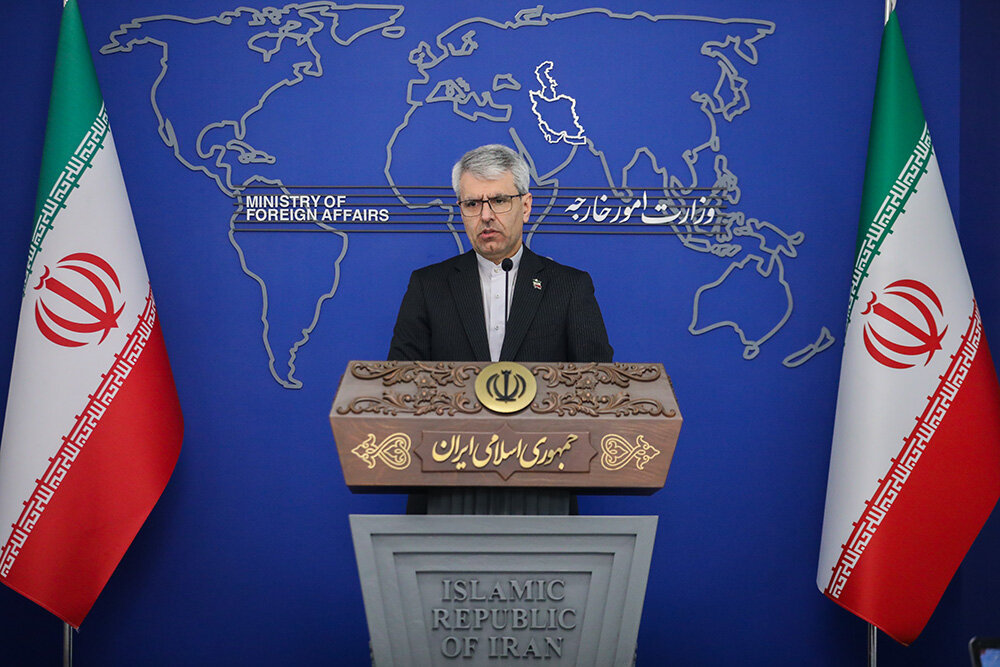
TEHRAN- Iranian Foreign Ministry spokesperson Esmaeil Baqaei has emphasized that any future agreement between Iran and the United States aimed at ending the ongoing regional conflict must include a comprehensive and lasting ceasefire in Lebanon, describing the issue as inseparable from broader efforts to restore stability in the region.
Speaking at his weekly press conference in Tehran on Monday, Baqaei said recent developments in Lebanon demonstrate that the country continues to face serious security challenges despite the announcement of a ceasefire earlier this year. He accused Israel of repeatedly violating Lebanese sovereignty and carrying out actions that undermine regional peace and security.
According to Baqaei, Lebanon remains subject to continued military pressure, resulting in civilian casualties and displacement. He argued that the situation reflects a broader pattern of instability driven by Israeli policies in both Lebanon and the Palestinian territories.
“Iran's position is clear: a ceasefire in Lebanon is an integral and inseparable part of any final agreement aimed at ending the war and establishing sustainable peace in the region,” he said.
The spokesman described Israel as “the greatest threat to international peace and security,” stating that ongoing actions in Lebanon and Gaza have contributed to a worsening humanitarian and security situation. He also criticized international institutions, particularly the United Nations and the UN Security Council, for 'insufficient action in response to repeated violations and escalating tensions.'
Baqaei stated that recent incidents represented clear breaches of the April 8 ceasefire framework and warned that the failure of the international community to address such violations could have consequences beyond West Asia. He argued that continued impunity for military actions and violations of sovereignty risks undermining international law and weakening global security mechanisms.
Addressing Lebanon specifically, Baqaei reiterated Tehran’s support for the country's sovereignty and territorial integrity. He said that defending national borders is the responsibility of every government and stressed that Lebanon has the right to protect itself against external threats.
The diplomat also highlighted the role of Lebanon’s resistance movement, describing it as a major factor in preventing further Israeli expansionism over the past several decades. According to Baqaei, recent events have once again demonstrated the importance of local resistance forces in defending Lebanese territory and deterring external aggression.
“We consider ourselves committed to doing everything possible to help Lebanon preserve its security, stability, and sovereignty,” he said.
Beyond developments in Lebanon, Baqaei addressed the broader state of Iran-US interactions and ongoing diplomatic efforts. He said that progress toward a potential understanding between Tehran and Washington has been slowed by 'inconsistent and contradictory positions' adopted by the United States throughout the negotiation process.
According to the spokesman, one of the primary obstacles to achieving progress has been the repeated introduction of new demands and changing positions by American officials. He argued that these shifting messages have complicated negotiations and prolonged efforts to reach an understanding.
“When one side continuously changes its views, raises new or contradictory demands, and sends conflicting messages through different channels, it is natural that the negotiation process becomes longer and more difficult,” Baqaei said.
He stressed that Iran entered negotiations fully aware of the deep mistrust that exists between the two countries and noted that diplomacy should not be confused with trust.
“Negotiations are not based on trust. Diplomacy is a tool for managing differences and advancing national interests. The talks do not mean that distrust has disappeared,” he said.
Baqaei further added that recent US actions have reinforced Iranian concerns regarding Washington’s intentions. Referring to 'repeated American violations of the April 8 ceasefire and attacks on the southern parts of Iran,' he said such actions demonstrated bad faith and undermined confidence-building efforts.
“These violations are evidence of the United States’ misconduct and ill will. They only deepen the mistrust that already exists between the two sides,” he stated.
The spokesman argued that such actions go beyond simple ceasefire violations and constitute acts of aggression under international law.
He said Iran reserves the right to respond in accordance with the principle of self-defense as recognized by the United Nations Charter.
At the same time, Baqaei stressed that Iran remains focused on ending the conflict and achieving regional stability. He noted that discussions at the current stage are centered primarily on ending hostilities and reducing tensions rather than addressing detailed nuclear-related issues.
“There have been no negotiations at this stage regarding the details of nuclear matters. The immediate focus remains on ending the war and creating conditions for stability,” he said.
The Iranian official also reiterated Tehran’s demand for the release of Iranian assets frozen abroad. He described the issue as one of Iran’s fundamental rights and said the country is seeking the restoration of assets that were blocked through 'unlawful measures.'
Concluding his remarks, Baqaei warned against actions that could further destabilize sensitive waterways and strategic routes in the region, including the Persian Gulf, the Sea of Oman, and the Strait of Hormuz. He called on international actors to avoid steps that could increase tensions and instead focus on supporting diplomatic efforts to achieve a comprehensive settlement.
Leave a Comment