The language of threat: How Western discourse constructs Iran
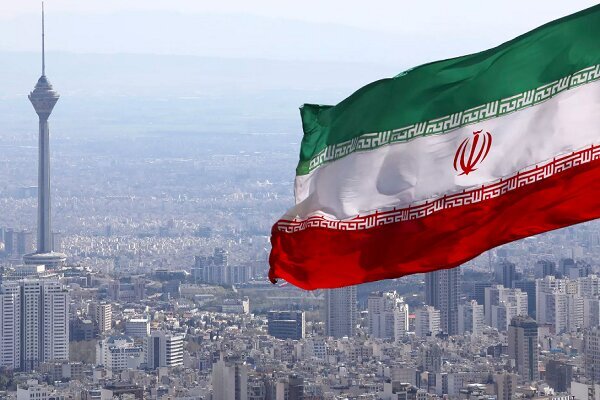
MADRID - The most consequential political fictions are those that no longer need defending. They operate below the threshold of argument, embedded in vocabulary, presupposed in syntax, circulating with the self-evidence of shared common sense. The Western, and particularly American, discourse on Iran offers a remarkably clean example of this mechanism.
What presents itself as threat assessment is, on closer inspection, a sustained act of political construction: the production of Iran as an entity whose dangerousness precedes any specific accusation and survives any particular refutation. The mechanism has a specular logic: by representing Iran as dangerous and irrational, the United States simultaneously constitutes itself as the opposite pole, a rational and moderate subject speaking on behalf of what the discourse calls the «international community». This community is, of course, a selective construction whose members are not chosen by vote, but its repeated invocation serves a precise legitimising function: it converts American positions into positions of the civilised world, and Iranian positions into challenges to that order rather than political demands with their own history.
This is an argument about the discursive conditions under which Iranian foreign policy becomes legible, or more precisely, the conditions under which it is systematically rendered illegible as policy and re-encoded as pathology.
The vocabulary does the work
Teun van Dijk's concept of the ideological square identifies a pattern observable across political discourse: the systematic amplification of the adversary's negative attributes alongside the minimisation of one's own. The American lexical repertoire on Iran executes this pattern with unusual consistency. Iranian actions are «destabilising», «malicious», «irresponsible», «illicit». Expressions such as «Iran's dangerous and destabilising behaviour in the region», «Iran's persistent threat to security», «reckless and malicious conduct» constitute only a sample of the vocabulary deployed. The same actions, performed by allied states, attract no comparable register. The asymmetry is load-bearing and its effects are cumulative: each deployment reinforces the field of associations already in place, so that the vocabulary eventually requires no argument to support it because it has become the argument.
Two terms merit particular attention. «Adventurism» does something more precise than condemn. It forecloses the possibility of strategic rationality: the adventurer does not calculate, he lunges. Iranian foreign policy decisions, however explicable in terms of regional security interests, are pre-emptively removed from the domain of comprehensible political behaviour and assigned to a register of impulsive, ungovernable excess. A state whose actions are defined as adventurist cannot be negotiated with, only contained.
«Regime», applied with such regularity to the Iranian government that its ideological charge has become nearly invisible, operates through presupposition rather than assertion. It does not argue that the Iranian state lacks legitimacy; it assumes it, and invites the reader to assume it alongside. Washington's allies remain «governments» and «administrations». Iran is always the regime. The terminological asymmetry installs a political judgment in the vocabulary itself, which then requires no burden of demonstration.
What is not said functions with equal efficiency. The Iranian nuclear programme has been treated, across two decades of American political and media discourse, as self-evident evidence of weapons intent, a presupposition so thoroughly embedded that challenging it requires the dismantling of an entire epistemological architecture. This is the particular force of implicature in political discourse: the cost of interrupting a presupposition falls entirely on the one who interrupts it, not on the one who installed it. Consensus is defended by the asymmetry of labour, not by the weight of evidence. Iranian concerns are presented as unfounded; its complaints, as lacking legitimacy. The governed object need not be heard, only managed.
Accumulation as argument
The hyperbolic register in which Iran is routinely discussed, existential threat, global danger, uniquely destabilising force, is structural necessity rather than rhetorical accident. A proportionate threat invites proportionate responses, including diplomatic ones. The inflation of the threat pre-empts that possibility, producing a political landscape in which negotiation appears naive and containment appears reasonable before any specific policy debate has taken place. The argumentation that fills this landscape rests on three recurrent axes, terrorism, regional destabilisation, missile development, that function less as analytical categories than as accumulative repertoires of imputation. Their cumulative weight derives not from the quality of any individual claim but from the coordinated repetition of all three simultaneously, producing an image of comprehensive, multidimensional threat more convincing as a totality than any of its components would be in isolation.
The terrorism axis is structurally privileged within this architecture, for reasons that have less to do with Iran than with the transformation of American political discourse after September 2001. The label activates a pre-loaded field of association, illegitimacy, irrationality, existential danger, that requires no further specification. Its particular utility is taxonomic: Hezbollah and Ansarallah, organisations with distinct histories, distinct political contexts, and distinct relationships to their respective constituencies, are assimilated into a single threatening configuration, their differences dissolved in the solvent of the category. The analytical cost of this assimilation, the loss of any genuine understanding of why these movements exist, what they want, and how regional politics actually functions, registers within the discourse as no cost at all. The elimination of complexity is the point.
The actor who cannot speak
Edward Said demonstrated that the Orient produced by Western discourse was the construction of a governed object rather than the description of an existing reality. The Orient constructed by Occident does not act: it is acted upon. It does not speak: it is spoken. What orientalism attributes to its objects, irrationality, violence, backwardness, incapacity for self-governance, functions not as description but as normative repertoire: an inventory of traits that circulates with the appearance of evidence and operates with the efficiency of verdict. Four decades after the publication of Orientalism, that repertoire remains active in the discourse on Iran with a persistence that speaks less to Iranian reality than to the durability of Western discursive structures.
The cumulative effect of these devices is an image of Iran as a political actor disqualified from politics itself. Its concerns are unfounded, its grievances illegitimate, its government a regime, its strategic behaviour adventurism. The distinction between a «we», the United States and its allies, associated with rationality, reliability and a humanism presented as universal, and a «them» is articulated in essentialist terms, as though the traits attributed to each pole derived from ontological difference rather than from historical relations of power with identifiable dates and beneficiaries. The binary is self-sealing. An Iran with legitimate security concerns, a foreign policy shaped by its own history and geography, a government capable of rational calculation, finds no place within this discursive frame, not because the evidence is absent, but because the frame determines what can count as evidence in the first place. What is produced, in the end, is a political technology for managing the conversation about Iran: one that operates most effectively when it has become invisible, when the threat no longer needs to be demonstrated because it has become the ground on which all demonstration takes place.
Leave a Comment