Caspian port can offset pressures on southern Iranian ports: official
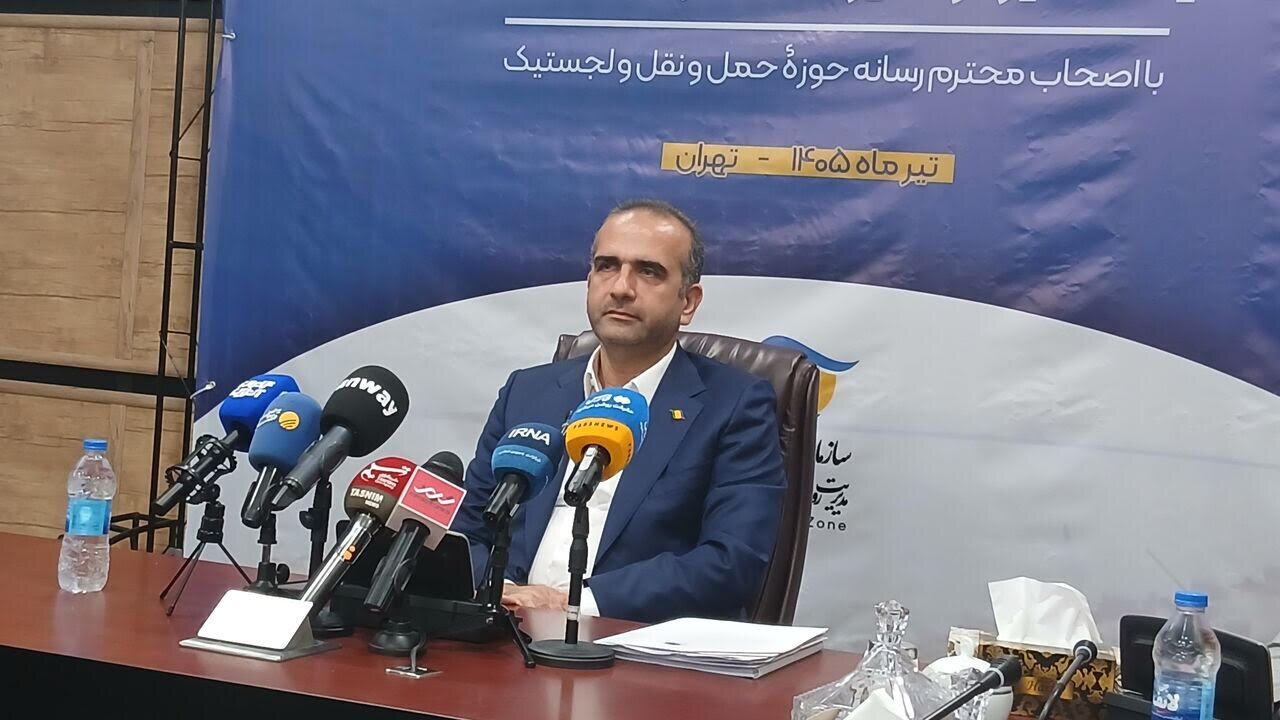
TEHRAN-The CEO of the Anzali Free Zone Organization has announced a significant 58% growth in loading and unloading operations at Iran's Caspian Port, emphasizing that the development of this northern port is crucial for securing essential commodities and enhancing the country's transit capacity.
Speaking at a press conference, Mostafa Ta'ati-Moghaddam outlined the port's potential to reduce pressure on Iran's southern ports, which have faced severe disruptions due to recent U.S. military aggression and maritime blockades.
According to the official, the port recorded approximately 760,000 tons of cargo handling in the Iranian year 1403 (ending March 2025), which surged to 1.2 million tons in 1404. This year alone, performance has grown 35% compared to the same period last year.
* A port born from strategic vision
Ta'ati-Moghaddam explained that the Caspian Port project faced significant opposition from its inception in the early 2000s. Some viewed it as a competitor to existing ports in the Caspian Sea. However, a group of experts concluded that Iran urgently needed a modern, internationally standardized port on its northern shores.
"Before the Caspian Port, Anzali and Nowshahr were the main traditional ports in the north," he said, "while some others were originally fishing ports later converted to commercial use. The Caspian Port was designed with new standards and has greater capacity for operational expansion."
The official further emphasized the port's growing importance in light of U.S. attacks on Iran and the imposition of a naval blockade on southern waters. With restrictions on commercial shipping in the Persian Gulf and Gulf of Oman, the Caspian Port has emerged as a vital alternative route.
Since the beginning of the current Iranian year (March 2026), nearly 110,000 tons of essential goods have entered the country through this northern port. "Considering the current warehouse capacity, we have almost reached saturation," Ta'ati-Moghaddam warned. "To increase import volumes, we need to simultaneously expand storage capacity, ground transport, and rapid cargo clearance."
The organization has signed an agreement with an operator to use the previously dormant Pier No. 1 for direct "one-stop" cargo handling—prioritizing the swift movement of essential goods without lengthy storage in the port area. This approach reduces warehousing costs, accelerates cargo turnover, and enables the port to accept more vessels.
In the area of liquid bulk imports, approximately 75,000 tons of vegetable oil have been imported through the Caspian Port to date, with over 100,000 tons entering the country last year.
However, Ta'ati-Moghaddam noted that changes in Russia's fuel export policies have redirected many tanker vessels from carrying vegetable oil to transporting fuel, causing shipping costs to spike from $35 to $105 per ton. Such volatility, he argued, undermines the ability of traders to plan for cost and delivery timelines, reducing competitiveness.
One of the most critical challenges facing maritime transport in the Caspian Sea is the absence of regular shipping lines, the official stated.
"The issue isn't just about the number of vessels," he explained. "For a sustainable trade flow, we need proper planning for regular routes with fixed schedules, origins, destinations, cargo types, and capacities. Without this, cargo owners cannot predict transport times and costs, making it difficult to attract stable cargo volumes."
While over 100 Iranian-flagged vessels now operate in the Caspian Sea—compared to none after the Soviet collapse—the official stressed that quantity alone is insufficient.
Ta'ati-Moghaddam highlighted a critical shortage of specialized vessels, particularly tankers, container ships, and Ro-Ro (roll-on/roll-off) ships capable of carrying trucks directly to ports.
"We have fewer problems with bulk carriers for grains and dry cargo, but to adopt modern shipping methods, serious investment and planning are needed," he said.
The official pointed out that while the Ro-Ro infrastructure exists at the Caspian Port, the absence of suitable vessels has prevented full utilization. "If we had Ro-Ro ships, we could move trucks through the Caspian Port to Dagestan's ports like Makhachkala, reducing pressure on the Astara land border," he added.
The CEO stressed that infrastructure development must be coordinated with fleet expansion. "If we build a pier but don't have the matching vessels, part of the investment remains unused," he noted, citing the example of the Ro-Ro railway pier at Amirabad Port, which is near completion but lacks an appropriate vessel.
He argued that northern port development must be viewed as an integrated chain: piers, hinterlands, warehouses, tanks, fleet, rail and road networks, handling equipment, and regular shipping lines.
* Caspian port as a complement, not a replacement
Addressing the possibility of replacing southern ports with the Caspian Port, Ta'ati-Moghaddam emphasized that northern and southern ports serve distinct functions and should not be seen as rivals.
"It's not about complete replacement," he clarified. "The Caspian Port can serve as a complementary and strategic route, covering a portion of the country's cargo—especially essential goods, grains, oil, transit cargo, and trade with Russia and Caspian Sea states."
The recent disruptions in southern routes, he noted, have underscored the necessity of diversifying import and export pathways. A developed standard port in the north can enhance economic and logistical resilience.
The official also addressed the importance of completing the Caspian Port's railway connection. When the port was first inaugurated, it lacked a train station—the nearest being 15 kilometers away in Khomam. Plans to integrate a shunting yard with the main station are underway, and two additional kilometers of railway track have been completed even during the recent conflict period.
"The internal railway lines of the Caspian Port are expected to become operational this year," Ta'ati-Moghaddam said. "Once completed, we will no longer face serious concerns about cargo transport, especially when road fleets are constrained."
* International corridors and economic diplomacy
The official emphasized that activating international transport corridors requires more than just infrastructure—it demands active economic diplomacy.
"We've discussed the North-South and East-West corridors since the 2000s, but the question is how far these have progressed in practice," he said.
He noted that during the tenure of former Roads Minister Rostam Ghasemi, approximately $300 million was allocated from the National Development Fund to accelerate railway projects. The hope is that renewed focus under the current minister will bring these initiatives back to the forefront.
"If the economy stabilizes, the Caspian Port can become a highly effective container transport route," Ta'ati-Moghaddam said. "With its rail connection, cargo could even be sent onward to India."
The port's current container volume is unprecedented among Iran's northern ports, he claimed. Operational space has become extremely limited, with Piers No. 1 and 2 now operating at near-full capacity.
Looking ahead, the official noted that with proper planning, the Caspian Port could play a significant role in rail transport of goods to Iraq—particularly through the Khosravi border crossing—supplying essential commodities and grains from Kazakhstan and Russia.
"Many of these routes, if prioritized in the Roads Ministry's programs, could play a crucial role in Iran's rail and maritime transport," he concluded. "Iran could then become a key supplier for neighboring countries, including Iraq."
The Caspian Port represents a critical component of Iran's strategy to diversify its trade routes and enhance economic resilience in the face of external pressures. While significant progress has been made, the full realization of its potential depends on coordinated investment in infrastructure, fleet expansion, regular shipping lines, railway connectivity, and sustained diplomatic efforts to activate international corridors. As U.S. aggression continues to disrupt southern ports, Iran's northern gateway has proven its capacity to step into the breach—but it cannot do so alone.
EF/MA
Leave a Comment