‘Economic blockade is difficult in a multipolar world’
TEHRAN- The head of the Iran-Russia Joint Chamber of Commerce, stating that the aim of US sanctions is to increase the costs of Iran's economic transactions, said: "In today's multipolar world, an absolute economic blockade against Iran is difficult, and shared economic interests are an important strategy for countering these oppressive measures."
Hadi Tizhoush Taban, in an exclusive interview with IRNA, referred to the US Treasury Secretary's announcement of intensifying sanctions and a naval blockade against Iran, and stated: "An economic blockade should not be understood merely as restrictions on trade routes, because at the same time, pressure is also applied to foreign exchange earnings from oil sales, transportation, insurance, banks, and payment networks in order to place Iran in a situation where the cost of trade for the country increases."
He added: "One of the goals of US economic pressure is to reduce the Iranian government's accessible resources, especially oil revenues, increase the costs of circumventing sanctions, and limit the country's financial capacity. Sanctions have also increased Iran's transaction costs by targeting shipping networks, intermediary companies, shadow banking, and even some cryptocurrency exchanges."
Tizhoush Taban, emphasizing that the main issue is not just the sanctions themselves, clarified: "The most important issue is the cost that sanctions impose on Iran's economy; higher discounts on oil sales, increased transportation and insurance costs, reduced investment, inefficient transfer of resources, and increased opportunities for corruption are among the consequences of this situation."
The head of the Iran-Russia Joint Chamber of Commerce, referring to the multi-polarization of the global economy, said: "Although the US can increase the cost of Iran's trade, imposing an absolute economic blockade against Iran is difficult, because today's global economy is multipolar and countries such as China, India, Russia, and the Persian Gulf states have independent economic interests."
He continued: "Iran also possesses diverse capacities and must use these capacities to reduce the economy's vulnerability. Geographic diversity, numerous neighbors in Central Asia, the Caucasus, and South and East Asia, as well as diversity in goods and services, are opportunities that can be utilized to develop foreign trade."
Tizhoush Taban emphasized: "Crude oil should not be the country's only source of foreign currency, and the share of petrochemicals, petroleum products, industrial goods, technical services, agriculture, and technology in foreign trade must increase."
Developing alternative trade routes is essential
Referring to the importance of diversifying trade routes, he stated: "Iran should not be heavily dependent on one or two trade routes, and multiple land, sea, and combined routes must be established for trade; the development of regional corridors is of great importance in this regard."
The head of the Iran-Russia Joint Chamber of Commerce added: "Sanctions are not just a banking issue, but also a logistics issue. If Iran can reduce the cost and time of goods transit, it will effectively neutralize part of the effects of sanctions."
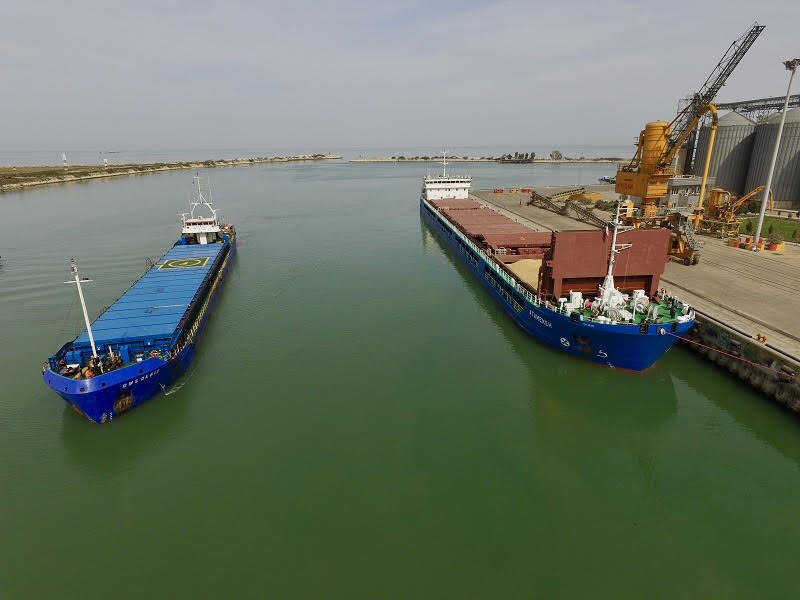
Referring to the capacity of the country's northern routes, he said: "Northern trade routes can play a role in reducing dependence on southern ports, but none alone can fully replace southern routes, and a set of reliable and competitive routes must be established."
Tizhoush Tab?n emphasized: "Developing corridors is not just a construction project; it is part of the country's economic security infrastructure. Of course, these routes will only be effective if they can compete with alternative routes in terms of cost and time."
Financial Transactions Must Be Streamlined
Stating that one of the most important weaknesses of Iran's foreign trade is the method of transferring and receiving money, he said: "Iran may be able to sell goods, but if the exporter cannot receive and utilize export revenues at a reasonable cost, exports will be conducted through multiple intermediaries and with heavy costs, and such a model is not sustainable."
The head of the Iran-Russia Joint Chamber of Commerce identified the establishment of reciprocal accounts, the use of joint and regional banks, and the development of regional and digital payment systems as solutions to mitigate this problem, and added: "Eliminating the dollar alone will not solve the problem, because the dollar is not just a currency, but a financial and banking network. If a transaction is conducted in another currency but the bank or insurance company is still connected to a network that fears US sanctions, the risk of sanctions will still exist."
Tizhoush Taban, also referring to the possibility of developing trade in local currencies, said: "A portion of Iran's trade with Russia can be conducted in the national currencies of the two countries, but one important problem is the cost of currency conversion for economic actors."
He added: "In the current situation, an economic actor may face a significant loss in value when converting currency, and in some cases this reduction reaches about 20 to 25 percent. This imposes a heavy cost on the exporter."
He emphasized: "The government should not create a mechanism that increases the exporter's cost for supplying currency to the importer; rather, the exporter's currency should be converted at a fair rate with a very small margin compared to the real market rate."
The head of the Iran-Russia Joint Chamber of Commerce concluded: "By reducing currency conversion costs, developing trade in national currencies, and establishing regional payment mechanisms, some of the problems of Iran's foreign trade can be alleviated, and the groundwork can be laid for developing economic relations with neighboring countries and trading partners."
MA
Leave a Comment