Export from West Azarbaijan province up 57% in 8 months on year
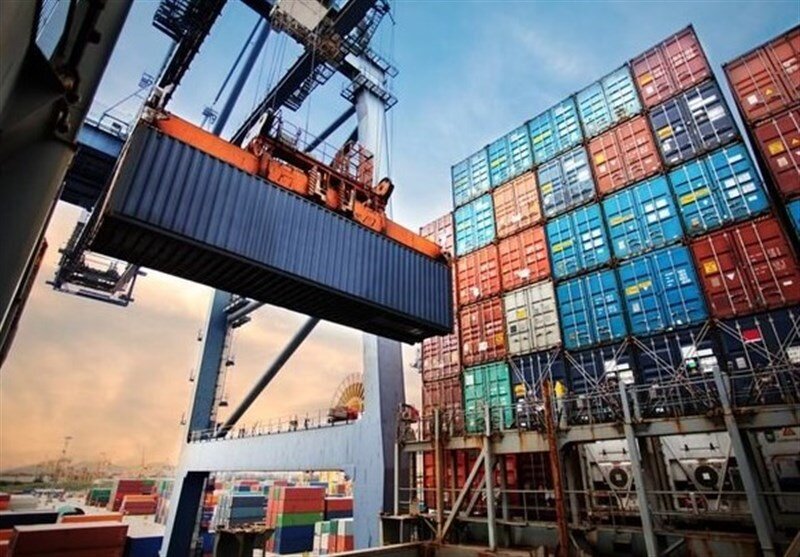
TEHRAN The value of export from West Azarbaijan province, located in northwestern Iran, increased by 57 percent during the first eight months of the current Iranian calendar year (March 21-November 21), as compared to the same period of time in the past year, an official with the province’s customs department announced.
West Azarbaijan province, is a strategically and economically significant region. Its economy is characterized by a diverse mix of agriculture, industry, mining, and trade, heavily influenced by its border geography.
Khaled Jangjou, an official with the province’s customs department, reported a significant surge in trade exchanges, stating that in the mentioned eight months, more than 2.9 million tons of goods worth approximately $2 billion have been exported from the province. Imports, focused on essential goods and industrial raw materials, have also exceeded $731 million.
He said: "Based on registered statistics, we have witnessed dynamic growth in the field of foreign trade during this period."
Jangjou stated that during this period, over 2,984,000 tons of goods worth about $2 billion were exported from the customs offices of the province, marking a 57-percent increase in value and a 42-percent increase in weight compared to the same period last year.
He added: "Steel ingots, copper cathodes, plastic products, copper ingots, and reinforced bars were among the most important export items of the province."
The official continued: "Additionally, 1,818,000 tons of declared export goods from other customs offices across the country were cleared and exported through the borders of the province."
Regarding the import situation, he said: "Over the past eight months, more than 259,000 tons of goods worth $731 million, including essential goods, industrial raw materials, machinery, and capital goods, have entered the country through the customs offices of the province."
Jangu listed the borders of Bazargan and Piranshahr as the most important trade routes of the province, saying: "The Bazargan border accounts for 37 percent and the Piranshahr border for 13 percent of the total exports and imports of the province."
According to him, Urmia Customs also holds the first rank among the internal customs offices of the province with a 25-percent share.
The official further emphasized the development of electronic systems and the facilitation of customs processes, stating: "Our goal is to increase the speed of goods movement, expand non-oil exports, and strengthen the position of West Azarbaijan as one of the important hubs of foreign trade in the country."
In conclusion, he thanked the efforts of the customs staff in the province and said: "The registered statistics can serve as motivation for more precise planning and the continuation of the growth path."
West Azarbaijan province is a dynamic border economy driven by a strong agricultural base, growing industrial sector, and, most importantly, its pivotal role as Iran's primary overland trade corridor with Turkey, Europe, and Iraq.
The province is a major producer of apples, grapes, walnuts, and tomatoes. It's often called the "Orchard of Iran," with cities like Urmia and Mahabad being central hubs.
Livestock and dairy is a traditional and vital sector in the province. West Azarbaijan is one of Iran's top producers of red meat, poultry, milk, and dairy products (especially cheese and butter).
The strong agricultural base supports a thriving food industry, including fruit processing (juices, concentrates), tomato paste factories, meat processing, and dairy plants.
The province also hosts significant heavy industries, including automotive manufacturing, cement production, chemical and petrochemical production, as well as textile and mining units.
Trade and border dynamics is the defining feature of the province's economy. West Azarbaijan shares borders with Turkey, Iraq, and Azerbaijan's Nakhchivan Autonomous Republic. This makes it Iran's gateway to Europe and West Asia.
Bazargan Border (with Turkey) is the most important and busiest road border crossing for Iran-Turkey trade. It handles a massive volume of transit and bilateral goods.
Piranshahr/Sero Border (with Iraq) is a crucial crossing for trade with the Iraqi Kurdistan Region.
Razi Border (with Nakhchivan/Azerbaijan) facilitates trade with the Caucasus region.
The province is a critical link in international North-South and East-West transport corridors, generating significant revenue from logistics and services.
The province’s major future outlook and focus is on expansion of Trade Zones (development of special economic zones near borders to attract investment and boost value-added re-export activities), logistics and transit (continued investment in road, rail, and customs infrastructure to solidify its role as a continental transit hub), value-added agriculture (moving from raw agricultural exports to more processed food products), and tourism potential (leveraging historical sites, and the potential revival of Lake Urmia for ecological tourism).
MA
Leave a Comment