Iranology goes beyond academia, Armenian researcher says
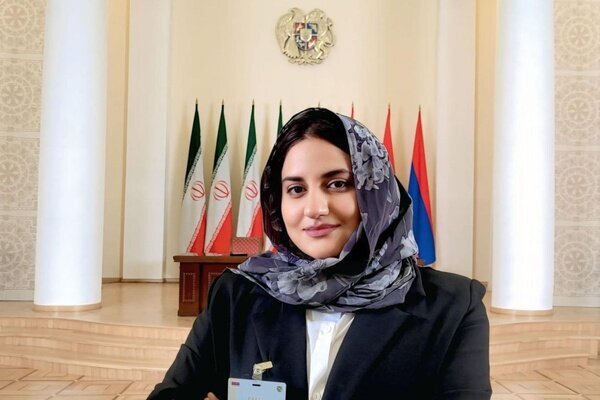
TEHRAN—Iranology is a quiet diplomacy between Iran and Armenia. Mariam Zazyan, an Armenian Iranologist, believes that being an Iranologist has a responsibility beyond academic study and can play an effective role in strengthening the cultural and friendly relations between the nations.
During her trip to Iran, Zazyan, in an interview with Mehr news agency, considered Iranology not a random path, but a purposeful choice based on a deep interest in culture, language, and regional relations.
Zazyan said: “When I was accepted to the chair of Iranology at Yerevan State University, I started learning Persian from scratch. Iranology was a completely conscious choice for me. I have been interested in the cultures, civilizations, and political issues of different nations since school days, and language and literature have always had a special place in my interests. For this reason, entering the field of Oriental Studies, and especially Iranology, was a natural and logical path for me.”
The Iranologist said: “If I were to go back in time, I would still choose this field. This field provides researchers with deep and multi-layered knowledge and allows for professional activity in a field where language, culture, and regional issues play a direct role in the development of international relations.”
She said about what he defines as being an Iranologist: “For me, being an Iranologist means responsibility; a responsibility that is not limited to knowing the language and culture, but also includes the readiness to help strengthen the stable and friendly relations between Iran and Armenia. It is this perspective that has made my educational and professional path meaningful.”
In response to the question of how your trips to Iran have affected your view, she said: “I have traveled to Iran several times so far in the framework of various programs. Within the framework of cooperation between the Cultural Consultation of the Embassy of the Islamic Republic of Iran in Armenia and the Chair of Iranology at Yerevan State University, we participated in a two-week training course at Imam Khomeini International University of Qazvin.”
“This experience was very valuable and unforgettable for me, because the theoretical learnings of years of study were placed in the field of objective and lived reality.”
She added: “During these trips, from Qazvin to Tehran, we visited the museums, traditional markets, mosques and historical streets of cities. Also, being among the
Armenian community of Isfahan, New Jolfa and Hamedan was a special and impressive experience for me. Honestly, every time I encounter Iran, I feel like I am in heaven.”
The Armenian Iranologist stated: “I consider Iran’s cultural heritage a unique treasure for the region and the world. Over thousands of years, Iran has shaped a culture that is a mixture of language, literature, architecture, philosophy and diverse arts. Dozens of works registered on the UNESCO World Heritage List, literary classics and continuous cultural dynamism introduce Iran not only as a preserver of history, but also as a living and active center for culture and art.”
For an Iranologist, this heritage is not simply a subject of study; it is a world that is being discovered every day and has a profound impact on the cultural dynamics of the region, communication, and understanding between nations, she added.
Armenian Iranologist explained about the translation of the book ‘The Drop of Blood that Became a Ruby’ which has been written by Ayatollah Seyyed Ali Khamenei, the Leader of the Islamic Revolution.
“Given my interest in cultural diplomacy, it was a great honor for me to receive the book by Ayatollah Khamenei as a gift from the Cultural Affairs Office some time ago.
Reading this book had a profound impact on me and doubled my motivation. I plan to translate and publish this work in Armenian language, and my goal is to complete the translation process by the anniversary of his birth. It is a great honor for me, as an Armenian translator, to make one of Ayatollah Khamenei's works available to the
Armenian-speaking audiences. This book, which narrates memories of his prison life, presents a solid, resilient, and dignity-based image of him; a story of struggle, spiritual stability, and upholding human and national values.”
She said: “I am currently pursuing my PhD in Iranology, and my main focus is on foreign relations and diplomatic issues. My personal motto is that the best successes are achieved with the greatest effort and suffering. I am interested in Iranian cuisine, and among them, “Zereshk-Polo Ba Morgh” (barberry pilaf with fried chicken) is my favorite. The first time I came to Iran, I dedicated a poem to this country: ‘I asked where is heaven? It said, look at the heart that can love you. O Iran, my dear’.”
Zazyan, who speaks Persian fluently, said about her encounters with Iranians: “In almost all meetings, when Iranians realize that I speak Persian, they speak with admiration for the fluency, tone, and eloquence of my language, and sometimes they do not recognize that Persian is not my native language. This feedback is encouraging, but at the same time it reminds us of the important point that a language survives only through continuous practice and daily learning.”
She said: “I especially appreciate the continuous and extensive activities of the Cultural Counseling Office of the Embassy of the Islamic Republic of Iran in Armenia. The meetings, literary and cultural programs, and active cooperation with Iranologists have provided valuable opportunities for a deep, multifaceted, and scientific understanding of Iranian culture and civilization.”
KD
Leave a Comment