Seymareh Valley landscape seeks UNESCO tentative listing
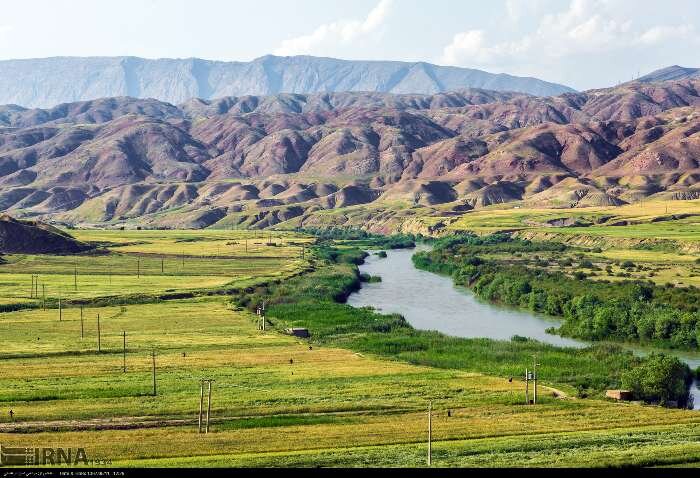
TEHRAN – The cultural heritage chief of Ilam province said on Monday plans to submit a preliminary dossier for the natural and historical landscape of Seymareh Valley to the Ministry of Cultural Heritage, Tourism and Handicrafts for review and placement on the country’s tentative list for UNESCO World Heritage status.
Farzad Sharifi, director general of Cultural Heritage, Tourism and Handicrafts of Ilam province, told IRNA that the dossier was completed after initial research and cooperation among experts in various fields and has been sent to the ministry to undergo administrative procedures.
He said the proposed property has been prepared as a mixed site, combining natural and cultural values, in accordance with the criteria of the World Heritage Committee under the World Heritage Convention.
Sharifi said the landscape stretches continuously between Ilam and Lorestan provinces and reflects the interaction between active tectonic forces of the Zagros mountain range and sustained human habitation from the Paleolithic period to the present.
He said the area represents one of the most significant global examples of the impact of a major geomorphological event, referring to the massive Kabirkuh landslide, on the formation of natural landscapes, ecological systems and human settlement patterns.
“The Kabirkuh landslide, recognized as the largest known landslide in the world, presents a unique example of active geological processes in the Zagros,” Sharifi said.
He added that evidence of continuous settlement, migration and cultural adaptation in the Seymareh and Kashkan valleys over 85,000 years demonstrates a long-term relationship between humans and a changing natural environment.
Sharifi said the proposed cultural and natural landscape includes the Seymareh and parts of the Kashkan valleys, the northern slopes of Kabirkuh, the massive landslide body, natural dam lakes, sedimentary terraces, the eleven wetlands of Pol-e Dokhtar, and a network of valleys and gorges.
He said submitting the dossier marks the first step toward World Heritage inscription. After review by the ministry and consideration by Iran’s National World Heritage Committee, the site could be placed on the country’s tentative list before a formal nomination is sent to UNESCO.
Sharifi said World Heritage listing could contribute to long-term conservation, academic research, sustainable tourism development and increased participation of local communities.
Historical sources describe Seymareh as a fortified city with two strongholds that was abandoned around 1,000 years ago. Many historians attribute its destruction to a major earthquake.
The region’s fertile soil and water resources have supported human settlements for thousands of years. Prehistoric geological events, including the Kabirkuh landslide that altered the river’s course and created lakes and wetlands, shaped the area’s current landscape.
According to Sharifi, more than 3,000 historical and cultural sites have been identified in Ilam province, of which 932 have been registered nationally. More than 5,000 historical objects are held in provincial collections.
AM
Leave a Comment