Spain reopens its embassy in Tehran in bold challenge to US-Israeli war strategy
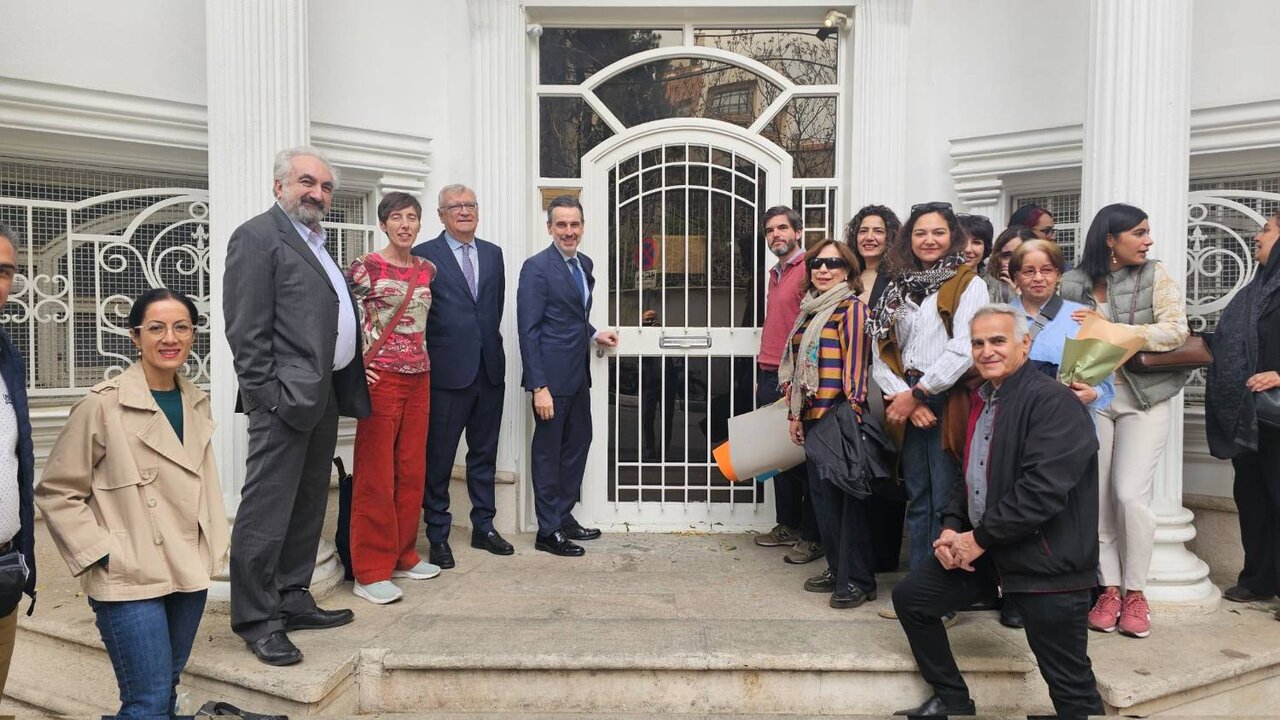
TEHRAN - Spain’s decision to reopen its embassy in Tehran has become the clearest demonstration yet of Madrid’s steadfast opposition to the US‑Israeli military campaign against Iran, launched on February 28.
Spain formally reopened its embassy in Tehran on Monday, becoming the first Western country to restore a diplomatic presence in Iran since a two‑week ceasefire between Iran and the United States took effect on April 8. Spain’s move signals both its rejection of the conflict and its desire to help facilitate de‑escalation and renewed dialogue in the region.
“We return to Tehran. The Spanish Embassy in Iran reopens after the ceasefire. Ambassador Antonio Sánchez‑Benedito Gaspar, together with the diplomatic team and local staff, resumes his work with the commitment to support peace,” the embassy said in a post on social media.
The Spanish ambassador returned to Iran via the Astara border crossing on the Caspian Sea coast in northern Iran, accompanied by his diplomatic staff, formally announcing the resumption of the embassy’s activities.
Sanchez-Benedito Gaspar wrote on X that he has returned to Tehran together with his "committed team" in order to "join in efforts for peace from every possible quarter," following instructions from Spanish Foreign Minister Jose Manuel Albares.
Spain has emerged as Europe’s most outspoken critic of the US-Israeli war on Iran.
On the first day of the conflict, Prime Minister Pedro Sánchez strongly condemned the aggression. “We reject the unilateral military action by the United States and Israel, which represents an escalation and contributes to a more uncertain and hostile international order,” he said in a message posted on X on February 28.
In separate remarks later the same day, the Spanish premier said the war waged by US President Donald Trump and Israeli Prime Minister Benjamin Netanyahu was making the world less stable. A day later, he described the war as “unjustified and dangerous” and said it was “outside international law.”
These rebukes were reinforced by Spain’s refusal to allow the United States to use its military bases in Rota and Morón for strikes against Iran. On March 2, Albares said Spain would under no circumstances permit its bases to be used in the war on Iran.
Defense Minister Margarita Robles also confirmed that neither of the Spanish bases had been used in the US military operation against Iran. In late March, Spain further escalated its opposition to the US‑Israeli war by closing its airspace to American aircraft involved in attacks on Iran.
Spain’s stance against the US‑Israeli war in the Middle East was also highlighted during Sánchez’s visit to China. On Tuesday, during a meeting with Chinese President Xi Jinping in Beijing, Sánchez said lasting peace could be achieved by adhering to multilateralism and fostering a multipolar world. Later, at a press conference, Sánchez said China is the only global player he could envision helping to end wars in Iran and in other conflict zones, including Ukraine.
Sánchez also said Spain seeks to avoid impunity for those who commit crimes in places such as Gaza, where he stated that a “genocide” has been committed. “International law is being violated today, fundamentally by one country: the government of Israel,” he said.
Observers in Tehran describe Spain’s actions over the past weeks as a thoughtful and principled stance, particularly its clear objections to the military campaign against Iran. Many in Iran say Madrid’s willingness to speak plainly during a tense period may well go down in history as an example of steady, independent leadership at a moment when calm judgment is in short supply.
Leave a Comment