Iran urges release of commercial vessel from US ‘piracy’
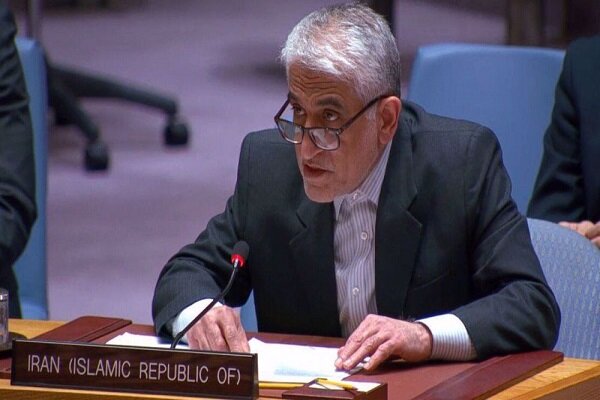
TEHRAN– Iran has formally accused the United States of an act of “piracy” in the Sea of Oman, calling for the immediate release of an Iranian commercial vessel and declaring that a continued American naval blockade must be lifted before any new negotiations can resume.
The diplomatic efforts, delivered in a letter to UN Secretary-General António Guterres and a subsequent press conference by Iran’s ambassador to the world body, come just days before a 20-day ceasefire brokered by Pakistan is set to expire.
In a letter to Antonio Guterres and the presidency of the UN Security Council, Iran's permanent ambassador to the United Nations, Amir Saeid Iravani, described a hostile encounter involving the Iranian commercial vessel “Toska” near Iranian territorial waters. “On 19 April 2026, in the vicinity of the coasts of Iran in the Sea of Oman, US military forces carried out a hostile and unlawful attack against the Iranian commercial vessel ‘Toska’,” the letter reads. According to Iravani, the American action involved “acts of coercion, intimidation, and the reckless endangerment of the vessel’s crew and their families.” He argued that such conduct “bears the hallmarks of piracy in nature” and constitutes a “grave and manifest violation of the fundamental principles of international law, including the peremptory norm prohibiting aggression.”
The letter further asserts that the attack represents a “clear and material breach of the ceasefire of 8 April 2026” and qualifies as an act of aggression under Article 3(c) of UN General Assembly Resolution 3314 (1974). Iran has called on the Security Council to take an “immediate, firm, and principled position” by unequivocally condemning the act, ensuring full accountability for those responsible, and demanding the “immediate and unconditional release of the vessel, its crew and their families, and all those affected by this incident.”
Also, speaking to reporters later on Tuesday at UN headquarters, Ambassador Iravani expanded on Tehran’s political conditions. He explicitly labeled the US naval presence in the region a “blockade,” stating that it violates the existing ceasefire and must be lifted before any new round of negotiations can begin. “The US naval blockade is a violation of the ceasefire,” Iravani said. “The lifting of the blockade is a condition for the resumption of negotiations.”
He speculated that once Washington ends the naval blockade, the next round of talks could be held in Islamabad – a reference to Pakistan’s role as the mediator that brokered the April 8 truce. Iravani reiterated that the United States initiated the war against Iran, which began on February 28 when Washington and Israel launched a “war of aggression” that included the assassination of Iran’s Leader, Ayatollah Seyyed Ali Khamenei, and several top military commanders. “If Washington seeks to return to the negotiating table and find a political solution, we will be ready,” the ambassador said. But he struck a markedly different tone in the same breath: “If they want to enter a war, then Iran is also ready for that.”
Asked about the prospects for renewed dialogue, Iravani offered a cautiously hopeful response. “An opportunity must be given,” he said. “We are hopeful.” The April 8 ceasefire, brokered by Pakistan after 40 days of open warfare, was intended to be followed by negotiations to permanently end the conflict. But the attack on the Toska and the ongoing US naval blockade, in Iran’s view, have already undermined that agreement.
Leave a Comment