Why has Israel entered direct talks with Lebanon?
LONDON - The Islamic resistance of Lebanon emerged to fill a vacuum during a time of absolute Israeli dominance of the country following the 1982 invasion. Its resistance finally led to the liberation of Lebanon.
Successive governments were completely submissive to the Western agenda. Therefore, the Lebanese resistance front became the force in Lebanon that enabled this small country to be the only Arab state capable of establishing an effective deterrence equation against the Israeli occupation entity. This preserved Lebanon’s independence to some extent and kept it from being dominated between 2006 and 2023.
However, during this time, it never confronted internal opposing factions aligned with submissive Arab or Western agendas. Instead, it coexisted with them. It did not impose its agenda. Its presence and strength prevented Israeli intervention in the country.
After Operation Al Aqsa Flood and the open “Ul? al-Ba’s” battle (Arabic for “Battle of the Mighty”), the U.S. and Israeli occupation entity assumed that the resistance movement had been defeated, especially in the period following the supposed ceasefire on November 27, 2024. This assumption came after major losses, including the pager massacre and the killing of the resistance movement's Secretary General, Sayyed Hassan Nasrallah, and first and second-tier military leadership. The party adhered to a unilateral ceasefire, while the occupation regime did not, and continued its attacks.
At that point, it was assumed that the Lebanese resistance movement had been defeated and that the political consequences of this supposed defeat must follow. The U.S. administration, in cooperation with the Saudi alliance, brought in a President and Prime Minister suited to this phase to comply with American demands, especially since the resistance party had been in a state of dormancy for 15 months, without firing a single shot. The resistance movement went along with the system in approving the President and Prime Minister in their positions.
Then came the opportunity during the U.S.-Israeli war on Iran, after the blood of Sayed Ali Khamenei unified all, reshuffling the cards. The Lebanese resistance front returned to its core purpose, while the authorities reverted to illusory political effects that do not match reality, pushing toward recognition of the Israeli occupation regime and direct negotiations.
The entity had previously refused direct negotiations with Lebanon. It considered the Lebanese government incapable, as it had failed to dismantle the resistance movement or disarm it, despite U.S. dissatisfaction with Lebanon’s official role and its unsuccessful attempts.
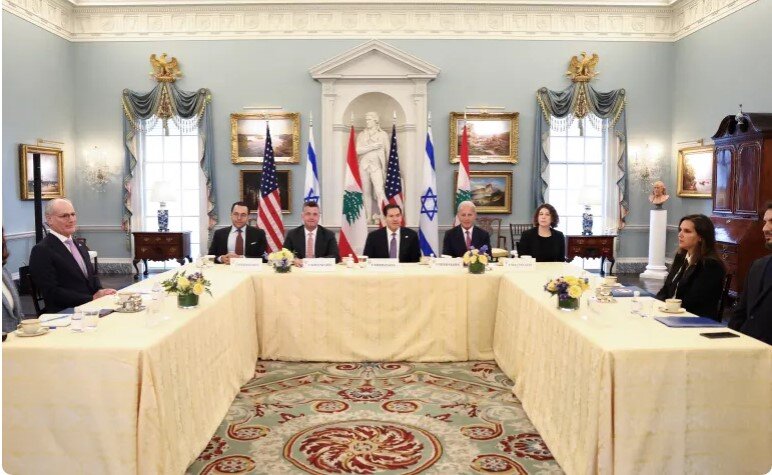
Lebanon issued many decisions, from those of August 5th and September 5th, to criminalize the resistance movement in the south and plans to withdraw weapons, but failed to implement them. This failure was a source of dissatisfaction for both the U.S. and the Israeli occupation entity. Now, suddenly, they have agreed to begin direct negotiations after previously rejecting the idea. Clearly, the main goal is to remove Lebanon from the Iranian-American negotiation table. The aim is not to give Lebanon anything, even symbolically, but to impose what it must do instead of the Israeli occupation entity, namely directly confronting the resistance movement.
Leave a Comment